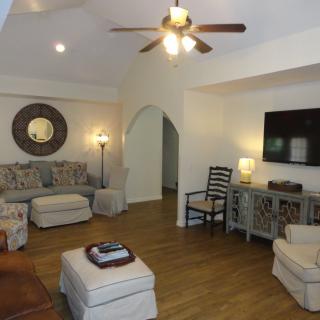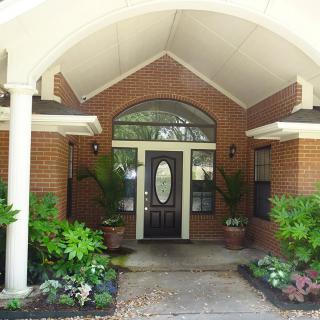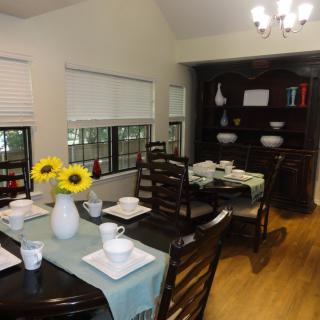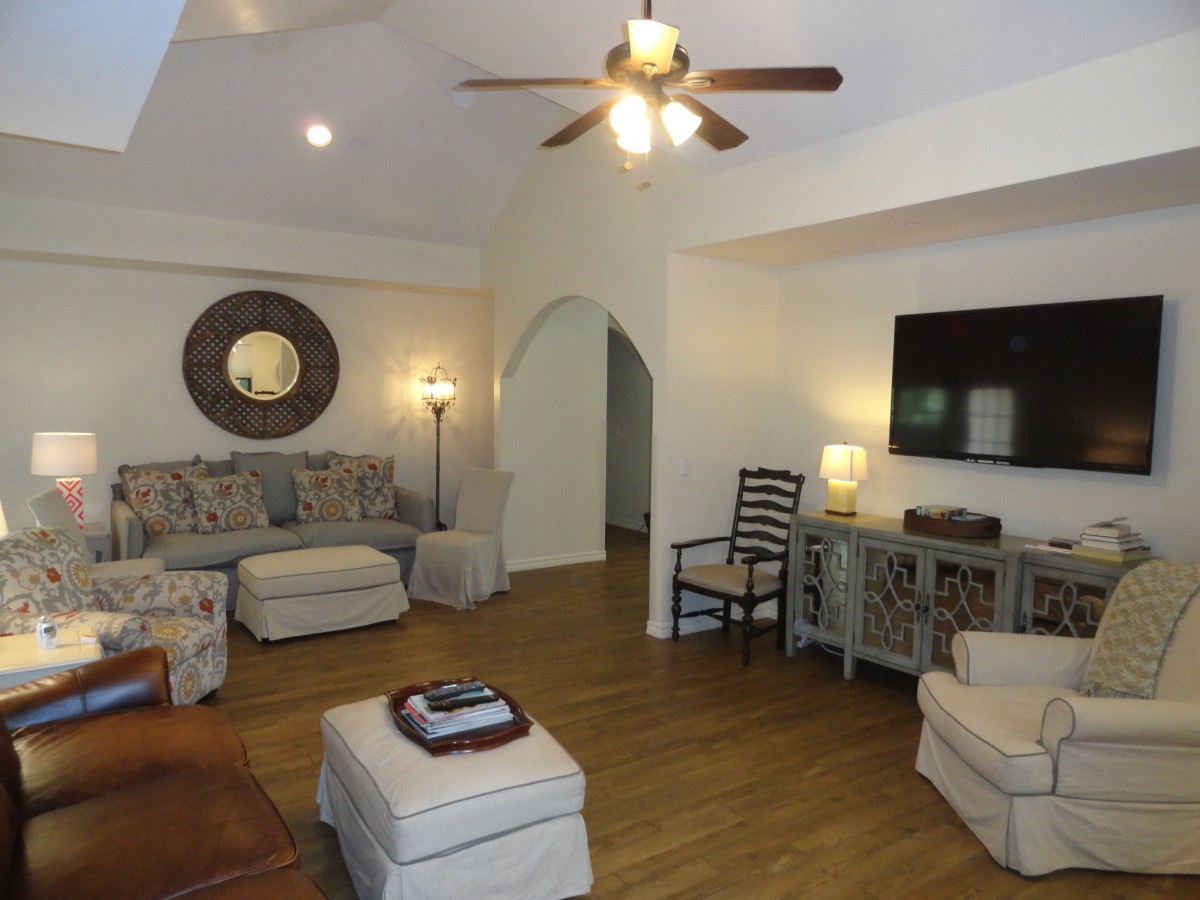
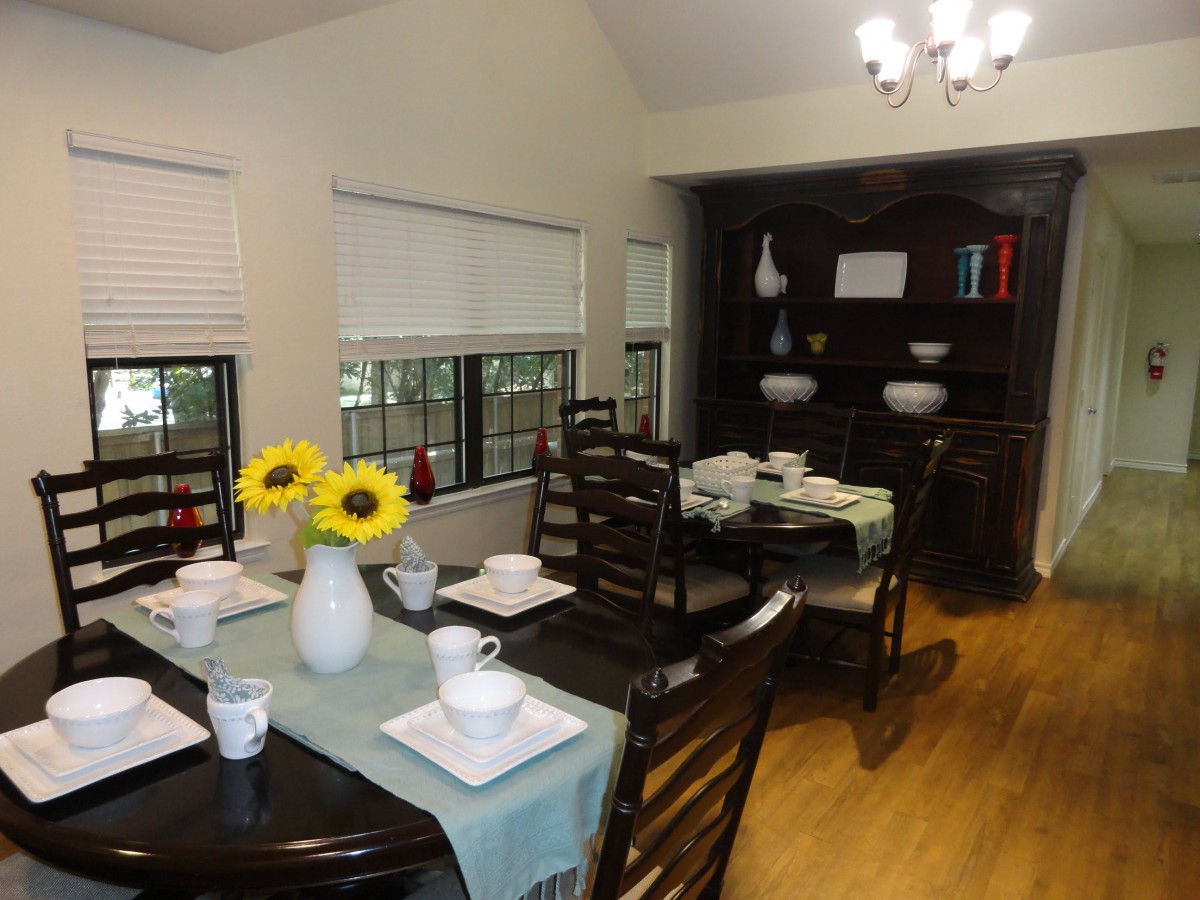
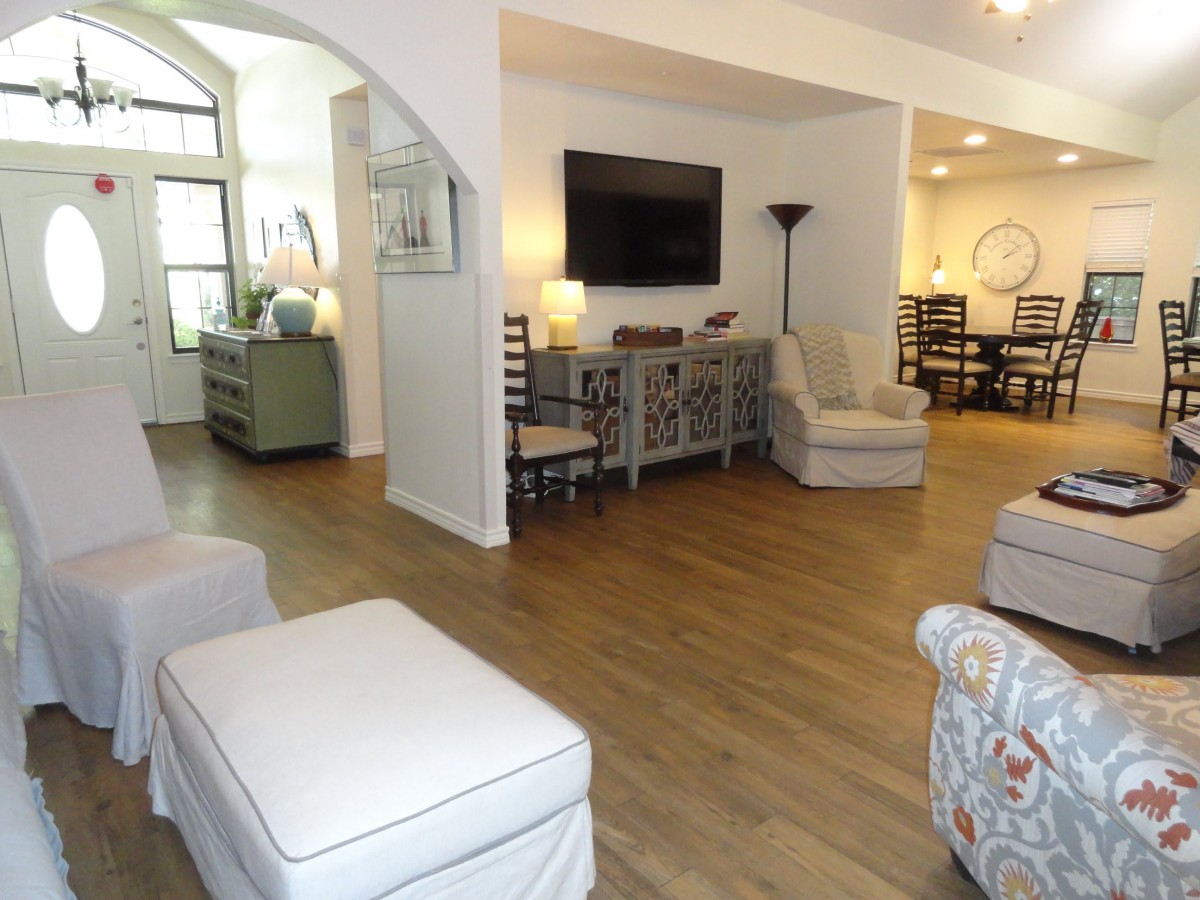
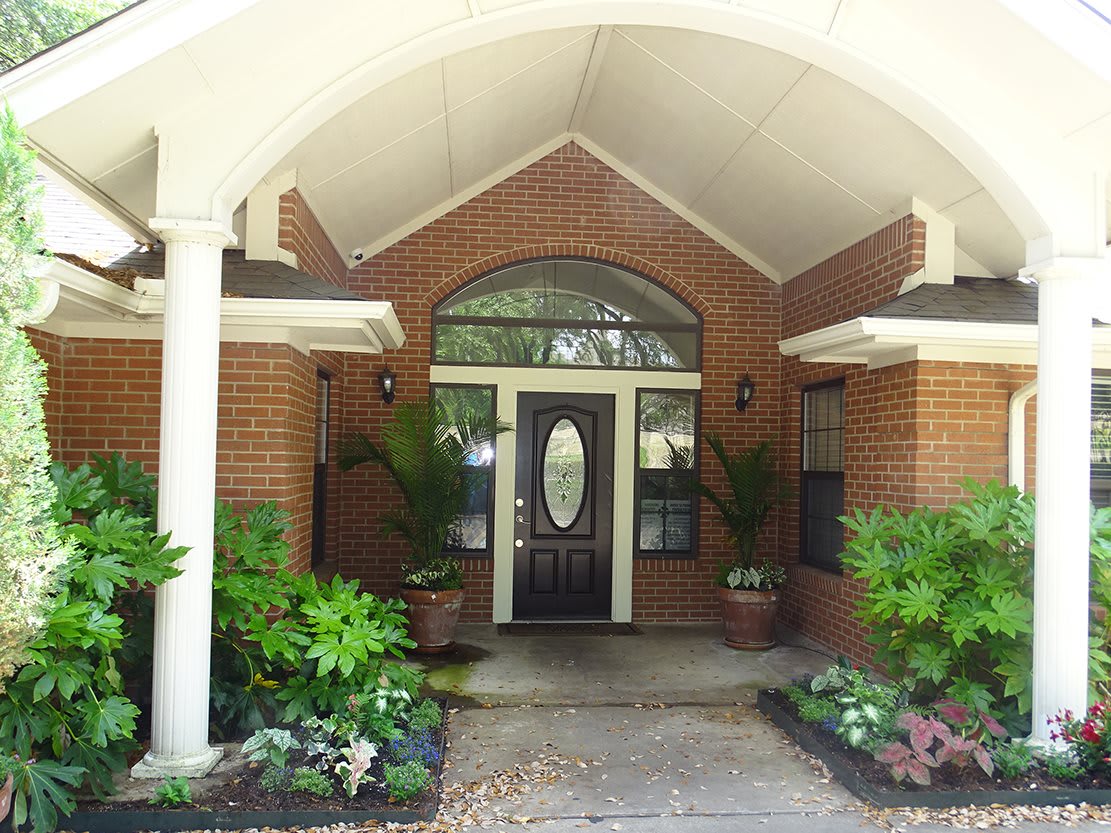

6946 Forest Lane, Dallas, TX 75230
To contact a resident: (214) 403-0445
For more information about senior living options: (866) 208-4318
At Home Luxury Assisted Living LLC Costs & Pricing
At Home Luxury Assisted Living LLC offers competitive pricing for its services compared to the broader market in Dallas County and the state of Texas. For semi-private accommodations, residents can expect a monthly cost of $2,600, which is significantly lower than the county average of $3,535 and the state average of $3,680. When it comes to private rooms, At Home provides a range between $4,200 and $7,550 that remains appealing relative to Dallas County's average of $4,702 and Texas' average of $4,096. This positioning highlights At Home Luxury Assisted Living as an attractive option for families seeking quality care without the financial burden typically associated with assisted living facilities in the region.
| Floor plans | At Home Luxury Assisted Living LLC | Dallas County | Texas |
|---|---|---|---|
| Semi-Private | $2,600 | $3,535 | $3,680 |
| Private | $4,200 to $7,550 | $4,702 | $4,096 |
Memory care communities with a similar price nearby
-
from +$400 / mo
Residential Care
$3,000 / month17.8 miles away -
from +$400 / mo

Sophyas Assisted Living
$3,000 to $4,200 / month16.8 miles away -
from +$400 / mo
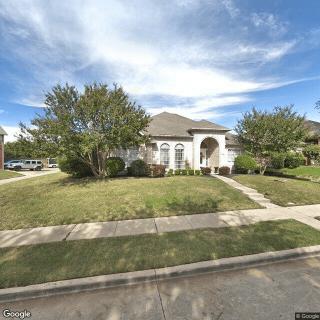
The Mulberry House 1
$3,000 to $3,500 / month19.3 miles away -
from +$200 / mo

B & Y Care Home
$2,800 to $4,000 / month6.4 miles away -
from +$400 / mo

Sparks Loving Care Home
$3,000 to $3,800 / month15.7 miles away
Overall Review of At Home Luxury Assisted Living LLC
Pros
 They are happy with the care provided here.
- The staff is very good.
- The food is outstanding.
- Within two weeks, the aunt looked better, healthier, and her mind seemed clear.
- They would recommend this community for overall good care.
Cons
 The experience was not positive for their family.
- Their relative was not happy.
- Communication with the owners was odd.
- The owners refused requests for a doctor's appointment.
- They paid penalty fees for early removal, and the owners did not follow through with their commitment, which seemed wrong.
- The aunt was a shocking sight when they got her.
- The doctor appointment that was refused was very much needed.
- Finding a home during a pandemic is emotional and stressful, and it's a huge financial loss if it isn't a good fit.
Review
This community is best suited for families that prize attentive front-line staff and solid daily living care, plus exceptionally good meals, and that can actively oversee medical coordination and the fine print of the contract. It is not a fit for households requiring consistent, proactive physician access and flawless communication with ownership. In other words, those who want a hands-off experience or who need ironclad guarantees around medical appointments and penalties should consider alternatives.
On the plus side, the care team earns real credit for day-to-day reliability. Reviews flag staff as notably good, and meals are described as outstanding, which makes a meaningful difference in quality of life for residents who are mostly mobile and engaged. There is also evidence of improvement in a relative after relocation, with observers noting better appearance, health, and mental clarity within a short window. This suggests the environment can support tangible, observable gains when care is consistent and resident needs align with the program offered.
However, the flipside is substantial and not easily dismissed. Communication with the owners felt awkward or irregular, and a request for a doctor’s appointment was declined, an issue that goes beyond courtesy and touches core safety and medical oversight. When a family bears early removal penalties after a departure due to unmet commitments, the experience becomes emotionally and financially painful, casting a shadow over otherwise positive daily care. The bottom line is that medical coordination and trust are not as dependable as they should be for a community that markets itself as a luxury option.
These tensions between strong daily care and weaker systemic reliability create a clear trade-off. The staff and food deliver meaningful daily benefits, yet the main cons, difficulty getting timely medical access, questions about billing and commitments, and the risk of penalties, can erode confidence in the overall value proposition. For residents whose needs are largely custodial and social, where medical oversight can be managed by family or external providers, the positives may outweigh the negatives. For those with ongoing or complex medical requirements, the gaps in physician engagement are a meaningful red flag.
To minimize risk, prospective families should enter conversations with a precise plan. Demand written policies on medical appointments, escalation paths for urgent needs, and a transparent, enforceable understanding of any penalties for early departure. Request a clear outline of what constitutes “care” beyond meals and staffing, including frequency of wellness checks and how medical coordination is actually handled. Consider bringing a family liaison or advocate to joint meetings, so expectations are aligned before any commitment is made. In short, insist on clarity and leverage opportunities to test whether the level of medical oversight can be guaranteed.
Ultimately, the decision hinges on risk tolerance and oversight capacity. If the aim is to secure good daily care and meals while personally managing medical coordination, this community can be a sensible fit. If certainty around physician access, consistent owner communication, and predictable contract terms are non-negotiable, more reliability-focused options should be pursued. The reality is that a favorable staff and dining experience are strong positives, but they are not enough to overlook the highlighted concerns for families navigating serious health care needs and financial commitments.
 Board and Care Home
 Memory Care
 Activities on-site
 Bath tubs
 Beautician on-site
 Devotional services on-site
 Indoor common areas
 Outdoor common areas
 Private
 Private bathrooms
 Respite or short term stays offered
 Wheelchair accessible showers
 Dallas Love (6 miles away)
 Ambulatory care
 Diabetic care
 High acuity care
 Incontinence care
 Medication management
 Kosher



 Understanding Dementia Through Its Seven Stages: A Comprehensive Look at Progression and Expectations
 Safeguarding Your Memory Through the Golden Years: Eight Ways to Preserve Cognitive Health
 Comprehensive Insights into Activities of Daily Living (ADLs) and Their Assessment