
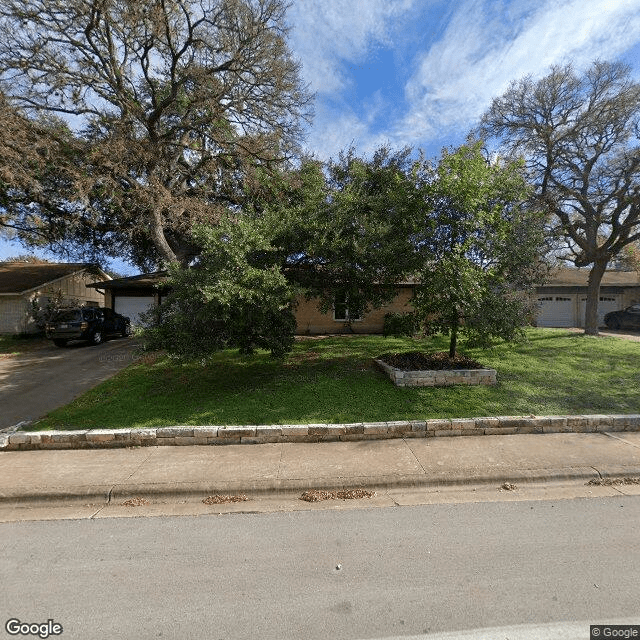
2525 Berkeley Ave, Austin, TX 78745
To contact a resident: (512) 502-5816
For more information about senior living options: (866) 208-4318
South Austin Personal Care Home of Texas Costs & Pricing
South Austin Personal Care Home of Texas offers competitive pricing in comparison to both Travis County and the broader state of Texas. For a semi-private room, residents can expect to pay $2,500 per month, which is significantly lower than the county's average of $4,300 and the state average of $3,680. Similarly, for a private room, the cost at South Austin is $3,000 - again more affordable than Travis County's average of $4,194 and Texas's average of $4,096. This positioning not only highlights South Austin Personal Care Home as an economical choice but also emphasizes its commitment to providing quality care without compromising financial accessibility for families seeking personal care services.
| Floor plans | South Austin Personal Care Home of Texas | Travis County | Texas |
|---|---|---|---|
| Semi-Private | $2,500 | $4,300 | $3,680 |
| Private | $3,000 | $4,194 | $4,096 |
Senior living communities with a similar price nearby
-
from +$414 / mo

Maravilla at the Domain
$2,914 / month13.9 miles away -
About the same
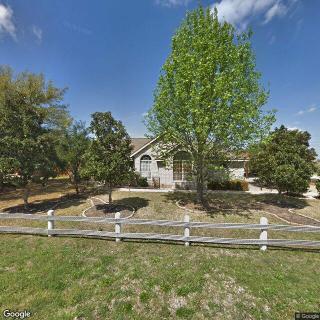
Shenandoah Villa
$2,500 to $3,500 / month18.4 miles away -
from +$135 / mo
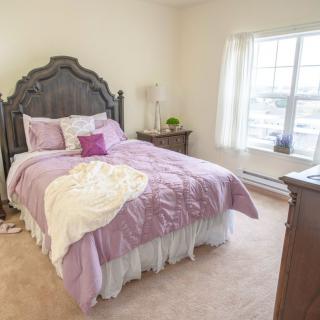
Maple Ridge Gracious Retirement Living
$2,635 to $4,495 / month19.2 miles away -
from +$395 / mo

The Conservatory at North Austin
$2,895 to $3,245 / month17.7 miles away -
from -$405 / mo

The Clairmont Retirement Community
$2,095 to $2,695 / month16.1 miles away
Overall Review of South Austin Personal Care Home of Texas
Pros
 She is a really nice lady.
Cons
 She could not offer the care that Mom requires.
- She could not offer the care that Mom requires.
Review
South Austin Personal Care Home of Texas is best suited for seniors who want a small, intimate living environment where warmth and personal attention are the priority, and whose care needs are stable and largely non-medical. The setting appears to reward a home‑like rhythm, with caregivers who know residents well and respond quickly to daily needs. For families seeking a place that feels like a neighborly, comfortable apartment-sharing arrangement rather than a crowded campus, this option can deliver a sense of familiarity and dignity. It’s a fit when independence sits in the foreground and medical complexity remains minimal.
That said, there is a clear buyer beware for loved ones who require ongoing skilled care. The strongest caveat from the feedback is the facility’s limited ability to provide the care that some residents require on a daily basis. This points to gaps in licensed nursing support, advanced assistance, and comprehensive safety monitoring. For anyone needing regular medical management, wound care, consistent mobility help, or more intensive supervision, alternatives with staffed nursing coverage and higher-acuity programming should be explored. In short, this home’s strengths become liabilities as care needs rise.
On the upside, the standout strength centers on the caregiver relationship, the warmth and personal approach that tends to accompany smaller operations. A compassionate, attentive owner/operator dynamic can translate into quicker responses, flexible routines, and authentic communication with families. Residents often experience more personalized meal planning, activity choices, and day-to-day adjustments that reflect a true regard for individual preferences. This level of direct, human attention is a meaningful contrast to the impersonal pace that can characterize larger facilities.
The main drawbacks, however, are not subtle. The limited capacity to meet escalating care requirements introduces real safety and stability concerns as health or mobility changes occur. The reviews consistently imply that when higher-level help is needed, the facility’s structure may not support timely or adequate care delivery. That gap means potential delays in addressing medical tasks, falls risk management, or medication oversight, and it raises the prospect of disruptive transitions to another setting. For families, the risk is a schedule and environment that might not keep pace with evolving needs.
Balancing the positives against the cons yields a clear decision framework. This community earns its keep for seniors who want companionship, daily living help, and a home-centric vibe, with the understanding that care demands remain within a light to moderate range. For those anticipating changes in health, mobility, or cognitive support, the calculus tilts toward alternatives with licensed staff, more robust supervision, and specialized programming. In many cases, the right move is to preserve a warm, low-stress environment only if stability is guaranteed and care needs are clearly bounded.
Practical next steps guide the way. Prospective families should obtain concrete details on staffing levels, the presence of any on-site licensed nurses, and how emergencies are managed. A written care plan, a clear medication protocol, and explicit policies for transitions if needs increase are essential. Consider arranging a trial stay with defined milestones, and insist on a contingency plan that outlines timelines and options if higher care becomes necessary. Ultimately, this community serves as a heartfelt, home-like option for seniors with lower care needs, while families should actively compare it against facilities that offer stronger medical staffing and higher levels of supervision to avoid a mismatch between expectations and reality.
 Board and Care Home
 Activities on-site
 Bath tubs
 Beautician on-site
 Devotional services on-site
 Indoor common areas
 Outdoor common areas
 Private
 Respite or short term stays offered
 Austin-Bergstrom International (8 miles away)
 Ambulatory care
 Diabetic care
 High acuity care
 Meals provided


 Highly Beneficial Low-Impact Exercises for Senior Living Residents
 Is In-Home Healthcare Tax Deductible? Your Comprehensive Guide
 Nurturing Well-Being Through Gardening: A Detailed Guide for Senior Enthusiasts