

1102 S. Williams, Atlanta, TX 75551
To contact a resident: (903) 796-6300
For more information about senior living options: (866) 208-4318
Wesley House - Atlanta Costs & Pricing
Wesley House in Atlanta offers competitive pricing for its accommodations, with studio apartments available at $2,400 per month, aligning with the rates seen in Cass County. This makes it an appealing option for residents looking for affordability relative to their local market. In contrast, the costs of similar living arrangements in Texas reflect a significant increase, with studio and one-bedroom apartments priced at $3,758 and $3,761 respectively. In comparison to both county and state averages, Wesley House stands out as a cost-effective choice without compromising on quality or community engagement.
| Floor plans | Wesley House - Atlanta | Cass County | Texas |
|---|---|---|---|
| Studio | $2,400 | $2,400 | $3,758 |
| 1 Bedroom | $3,600 | $3,600 | $3,761 |
Overall Review of Wesley House - Atlanta
Pros
 They love this place and hope to be living there soon.
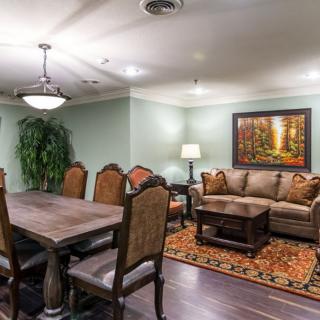
- They are impressed with the facility, finding it bright and airy, and praise the staff as joyful and hardworking.
Review
Wesley House in Atlanta, TX is best suited for seniors who want a lively, community-oriented living experience anchored by a bright, welcoming environment and a staff that radiates energy and commitment. It appeals to residents who value frequent social contact, easy access to helpful assistance, and spaces that feel uplifting rather than clinical. The tone from the reviews suggests a place where optimism is contagious and daily life is infused with purposeful activity. Those seeking a quiet, ultra-low-stimulation setting or requiring a high level of on-site medical oversight or specialized memory-care services should consider alternatives.
The facility’s core appeal rests on two durable strengths: the physical environment and the caregiving team. Review descriptions emphasize bright, airy spaces that invite movement, conversation, and easy navigation, an important practical factor for safety and mood. Equally compelling is the staff, described as joyful and hard-working, delivering consistent responsiveness and care. Taken together, these elements project a culture where residents feel seen, engaged, and supported, which can translate into steadier routines, better socialization, and reduced isolation, outcomes families notice and value.
Yet no explicit drawbacks surface in the available feedback, which is one of Wesley House’s most persuasive signals. Still, prudent planners will weigh the usual trade-offs that accompany any assisted-living choice. Cost value remains a universal consideration, even when not itemized in praise, because it governs long-term feasibility and access to preferred levels of service. The extent of medical oversight, including the availability of on-site clinicians or partnerships for therapy, memory care, and chronic-disease management, should be verified to ensure alignment with evolving needs. Transportation, activity calendars, and the breadth of available enrichment programs are practical factors that can shape daily satisfaction over months and years.
The upbeat staff culture has practical implications beyond first impressions. When caregivers are described as joyful and diligent, families can infer more reliable communication, quicker responsiveness to requests, and a consistently implemented routine. A bright, well-designed environment supports physical safety, clear sight-lines, visible cues, and activity-friendly spaces, and also fosters cognitive stimulation through engaging surroundings. In day-to-day terms, these attributes can reduce friction for families during transitions, increase participation in programs, and help residents feel comfortable inviting social involvement, three concrete advantages that often dictate long-term happiness more than architectural polish alone.
For families weighing alternatives, the decision becomes sharper when resident needs might outpace what Wesley House currently offers. Residents who require highly structured medical management, intensive memory-care programming, or access to a broader medical network may find it necessary to compare with communities that highlight deeper clinical capabilities or broader specialty services. Location and proximity to loved ones, as well as transportation options for appointments and events, can also influence choice, especially for families balancing work schedules and travel constraints. In short, Wesley House presents a compelling fit for many, but those with evolving or specialized clinical demands should confirm that the on-site offerings will scale appropriately.
The bottom-line takeaway is straightforward: Wesley House stands out for a bright setting and a caregiving team that appears genuinely engaged and dependable. It is a compelling recommendation for seniors who prize social vitality, a warm culture, and daily life that feels personally attended. Before any commitment, a thorough on-site tour should be complemented by conversations with the administrator and frontline caregivers about exact care levels, pricing, and what a typical week looks like for residents with varying needs. Seek specifics on staffing ratios, emergency responsiveness, and the availability of any specialized programs, then request sample activity menus and dining plans. With explicit clarity on care scope and costs, Wesley House can be an excellent, well-supported home for those who value atmosphere coupled with attentive hands-on care, while keeping in mind that alternatives may better serve certain medical or financial priorities.
 Assisted Living
 Activities off-site
 Beautician on-site
 Devotional services off-site
 Indoor common areas
 Outdoor common areas
 Respite or short term stays offered
 Wheelchair accessible showers
 Ambulatory care
 Diabetic care
 Medication management
 Meals provided






 Medicare Coverage for Assisted Living: An In-Depth Exploration
 Choosing the Right Senior Care: A Detailed Exploration of Assisted Living and Nursing Homes
 Understanding the True Cost of Assisted Living in 2025: A Comprehensive Guide