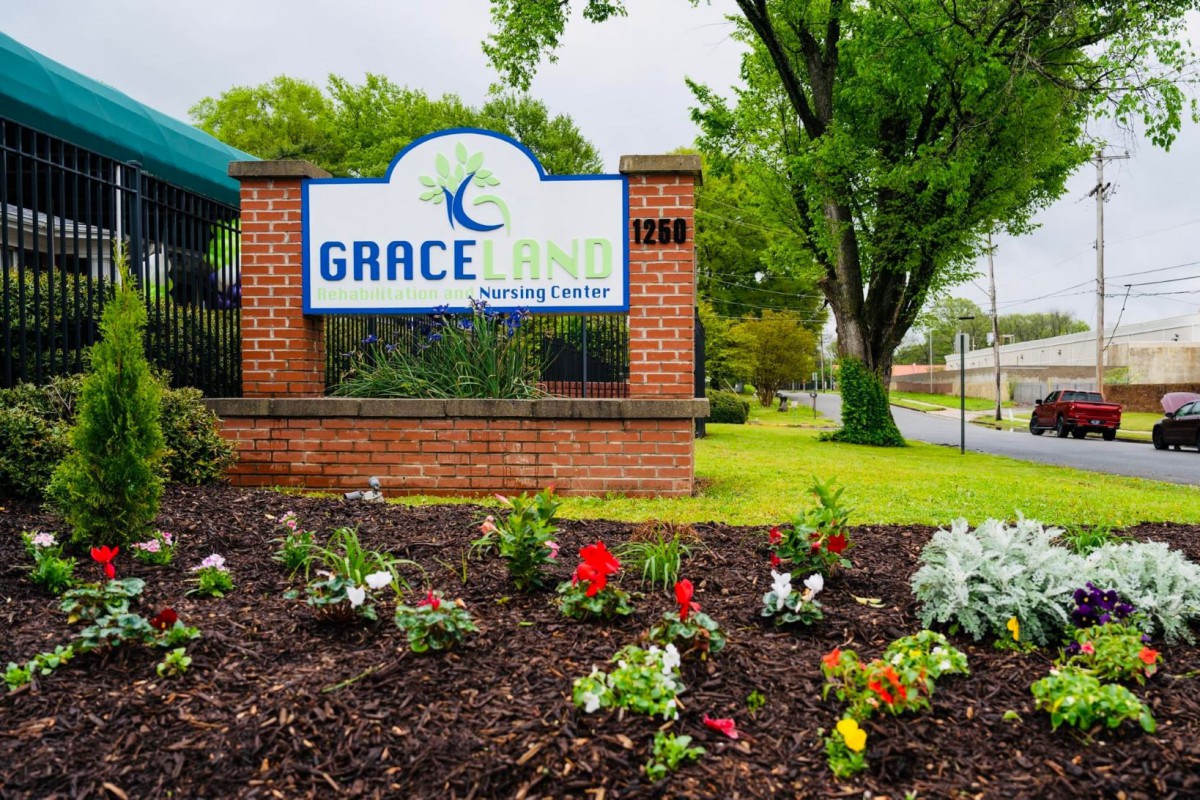

1250 Farrow Road, Memphis, TN 38116
For more information about senior living options: (866) 208-4318
Overall Review of Graceland Rehabilitation and Nursing Center
Pros
 The facility is clean and the staff are excellent and caring.
- Graceland is a wonderful home for the elderly, with much love and compassion from the staff and leadership.
- The staff were nice and the building was clean when visited.
- The cleaning staff were patient and in good spirits, keeping the lobby clean and accessible.
- The nurses were great and the front desk staff was awesome.
- The staff are attentive, knowledgeable, patient, and full of love.
- The rooms are clean, the staff is helpful, and it is a place to recommend.
Cons
 They claim their mother-in-law died there and that they have been suing the facility for years, suggesting a long-standing negative reputation.
 - They report that their mother’s belongings keep disappearing from her room.
- They allege showers aren’t being handled properly and that hand-washing items aren’t provided to patients.
- They state staff are unprofessional, with some arriving in street clothes, and that loud music on carts prevents rest.
- They say meals are not healthy (hotdogs on white bread with fries) and that patients are not attended to in a timely manner and are dirty.
- They claim rehab care is slim to none and that those in charge seem to be there for a paycheck.
Review
Graceland Rehabilitation and Nursing Center in Memphis is best suited for seniors who need short-term rehabilitation and for families that prize a warm, people-focused staff and a clean, home-like atmosphere. The facility shows up consistently as a place where aides and clinicians appear engaged, ready to coordinate appointments, manage transportation, and structure light outings that can support recovery and ease a transition back to home. When care is framed around hands-on assistance, clear routines, and visible attentiveness, residents often experience smoother mobility training, better adherence to therapy, and a sense of personal regard from caregivers.
However, prospective residents should consider alternatives if leadership stability and accountability are non-negotiable. Several reviews raise concerns about management responsiveness and postures toward care oversight, including allegations of missing personal items and perceived inconsistencies in supervision. For families prioritizing transparent incident handling, formal responses to complaints, and a calm, predictable daily cadence, other communities may offer more assurance. In short, the governance factor at Graceland is a legitimate determinant for those who cannot tolerate ambiguity in administration.
On balance, the strongest positives center on compassionate care and practical rehab support. The staff are described as attentive and patient, with the facility consistently praised for cleanliness and orderly daily routines. For a rehab-focused stay, the ability to move residents to appointments, coordinate with therapists, and facilitate participation in activities, such as outings to local attractions, can translate into meaningful functional gains and improved morale. These benefits show that, when operations function smoothly, Graceland delivers the warmth and hands-on assistance that families seek during recovery.
Yet the negatives should not be dismissed. Some reviewers recount unprofessional appearances and disruptive environments, including loud music that disturbs rest and concerns about meals not meeting expectations for nutrition. Others describe delayed or uneven attention to needs, and at least one account references a breakdown in communication with leadership. These themes imply that, despite strong interpersonal care, there can be inconsistency in day-to-day responsiveness and safety-related practices. The contrasting experiences underscore how much depends on the specific shift, unit, and leadership moment.
The practical path forward involves targeted due diligence. Prospective families should tour with an eye toward therapy capacity and schedule: how many sessions are available daily, which therapists rotate through the patient, and whether transportation and appointment logistics are reliably managed. Scrutinize staffing patterns during peak hours, assess fall-prevention protocols, and sample meals to gauge nutritional suitability. Request access to current care plans and incident logs, and seek candid conversations with administration about how complaints are handled and what changes have been enacted in response to past concerns.
Overall, Graceland presents as a credible option for a rehab-focused stay and for long-term residents who prize a friendly, clean environment and tangible staff involvement. The facility tends to deliver on warmth, practical rehabilitation, and daily structure, which are compelling advantages for families prioritizing functional recovery and personal attention. Caution is warranted for those who cannot tolerate reports of management gaps, potential item misplacement, or environmental disruptions; in such cases, it is prudent to compare with other Memphis-area communities known for stricter governance and more consistent safety practices. The best decision emerges from an in-person evaluation that weighs the visible compassion and rehab capabilities against the risks highlighted by the more troubling reviews.
 240 resident community capacity
 Assisted Living
 Memory Care
 Skilled Nursing Facility
 Air-conditioning
 Beauty salon
 Cable or satellite TV
 Computer center
 Dining room
 Fitness room
 Fully furnished
 Gaming room
 Garden
 Housekeeping services
 Kitchenette
 Laundry
 Move-in coordination
 Outdoor space
 Overnight guests
 Private bathrooms
 Restaurant-style dining
 Small library
 Telephone
 VA Benefits Consultation
 Wellness center
 Wi-Fi/high-speed internet available
 Memphis International (3 miles away)
 Community operated transportation
 24-hour call system
 Activities of daily living assistance
 Assistance with bathing
 Assistance with dressing
 Assistance with transfers
 Diabetes diet
 Hospice care
 Medication management
 Personal care assistants
 Physical therapy
 Special dietary restrictions
 Arts and crafts
 Book club
 Concierge services
 Games
Games Live musical performances
 Planned day trips
 Religious services



 Dementia, Paranoia, and Caregiver Guidance: Understanding the Connection
 Engaging Memory Care Activities That Enhance Quality of Life
 When to Transition from Assisted Living to Memory Care: Key Indicators, Steps, and Finding the Right Community