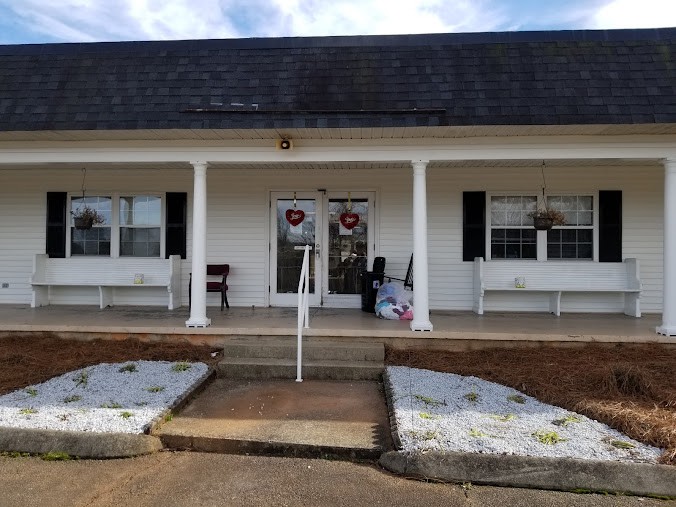



402 West Main Street, Taylors, SC 29687
For more information about senior living options: (866) 208-4318
Overall Review of Carriage House Senior Living Of Taylors
Pros
 The facility feels very welcoming and warm.
- The environment is secure and safe.
- There are great relationships between staff and residents.
- The staff are friendly and residents are treated like family.
- The Carriage House of Taylors was the best option among several facilities and offered care at a lower cost.
- The staff go above and beyond to care for residents.
- The on-site licensed RN provides reassurance about the quality of care.
- The daily programs keep residents active and engaged.
Cons
 The reviewer calls the place the worst to seek help, with calls repeatedly ignored by staff.
- The facility is described as smelling like urine and housing roaches.
- The building is old and looks nothing like other facilities.
- Most rooms are shared (two people per room) with only one bathroom for four.
- A staff member was observed yelling at a resident.
- Management is described as awful, with refunds delayed and residents without heat.
- The food is nasty and residents are not heard.
- The director allegedly took months to file correct Medicaid paperwork.
- Residents pay out of pocket due to mismanagement.
- There have been numerous thefts, including a stolen wheelchair, with little investigation.
- The facility is chronically understaffed, especially on weekend overnights.
- Meals are mostly carbs with no fresh fruit or vegetables.
- The facility had five administrators in three years.
- Reimbursement issues are unresolved and inquiries are ignored.
- Some reviewers compare it to a concentration camp for seniors and allege shady practices.
Review
Carriage House Senior Living of Taylors is best suited for families seeking a warm, home-like assisted living that prioritizes personal relationships and a lower-cost option, provided the resident can tolerate a dated building and some ongoing administrative instability. It works well for seniors who want regular daily programming, a sense of community, and staff who genuinely mix warmth with attention to daily needs. The strongest case is made for those who value personal connections and a staff culture that treats residents like family, rather than those who demand pristine facilities, exacting heat and atmosphere standards, or flawless administrative execution. For families needing high-level medical oversight, frequent administrative responsiveness, or private rooms with modern amenities, alternatives deserve serious consideration.
The facility’s most compelling positives center on a welcoming atmosphere and visible commitment from front-line caregivers. Residents and families report secure, seemingly safe surroundings and relationships that foster a feeling of belonging. There is a consistent emphasis on activity and engagement, with a licensed RN on site noted in some visits, and programs that rotate throughout the day to keep seniors mentally and socially active. The ability to personalize spaces by bringing in own furniture is a practical plus that enhances comfort and a sense of ownership. When care works as intended, the environment can feel like a supportive, affordable stepping-stone for aging in place.
Yet the strongest drawbacks are equally hard to ignore and tend to dominate the decision calculus. The building’s age, odor concerns, and reports of roaches create an initial negative impression that can undermine confidence in daily life quality. Shared rooms with limited bathrooms, coupled with inconsistent heat in winter and intermittent food quality, signal structural and service gaps that affect dignity and satisfaction. Management appears erratic across reviews, with frequent turnover and complaints about billing, refunds, and delays in Medicaid processing. Reports of medication management lapses, theft, and understaffing, especially on overnight shifts, contribute to a sense of vulnerability and unpredictability for families and residents alike.
Those pros and cons do not cancel each other out; they offset only under specific circumstances. For a resident who thrives on routine, meaningful programs, and personal attention from a stable, caring staff, the emotional and social benefits can outweigh some physical shortcomings. However, the repeated concerns about financial handling, communication breakages, and safety lapses create a risk profile that makes reliable outcomes uncertain. Families must decide whether the value of companionship and lower cost justifies ongoing exposure to administrative churn, potential room-sharing, and basic comfort trade-offs. In short, the positives can deliver genuine quality of life improvements, but only if the operational issues are actively managed and transparent.
Practical next steps are essential in evaluating fit. Prospective families should verify room configurations, heating reliability, and current meal quality, and insist on written policies for refunds, billing corrections, and Medicaid processing timelines. Demand clear communication protocols: who answers inquiries, typical response times, and how emergencies are escalated. Interview multiple staff members, including the administrator, and request current references from residents and families. Probe for details on theft prevention, incident reporting, and staffing levels during weekends and nights. Finally, compare costs against nearby options that offer private rooms, stronger maintenance, and more consistent administrative oversight to determine whether the trade-offs at Carriage House Taylors align with long-term care goals.
In the end, Carriage House Senior Living of Taylors represents a pragmatic choice for families prioritizing a heartfelt, community-oriented atmosphere and affordability over pristine facilities and ironclad administrative reliability. It can deliver meaningful quality of life for residents who value daily engagement and personal warmth, but the decision hinges on tolerance for ongoing management challenges, billing questions, and facility age. For those who cannot live with potential heat shortages, odor concerns, or inconsistent responsiveness, it is prudent to explore alternatives with steadier leadership, clearer financial practices, and more modern infrastructure. A measured tour, candid conversations, and a transparent comparison to other local options will reveal whether this community aligns with the elder-care objectives and financial realities at hand.
 44 resident community capacity
 Assisted Living
 Beauty salon
 Cable or satellite TV
 Dining room
 Fully furnished
 Garden
 Housekeeping services
 Kitchenette
 Move-in coordination
 Outdoor space
 Restaurant-style dining
 Small library
 Telephone
 Wi-Fi/high-speed internet available
 Greenville-Spartanburg (5 miles away)
 24-hour call system
 Activities of daily living assistance
 Assistance with bathing
 Assistance with dressing
 Assistance with transfers
 Diabetes diet
 Medication management
 Mental wellness program
 Special dietary restrictions








 Exploring the Path to Senior Living: A Comprehensive Look at Independent Living and Assisted Living
 Is Assisted Living Deductible on Your Taxes? Understanding the Complexities of Assisted Living Expenses and Deductions
 Assisted Living Support for Veterans: A Complete and Detailed Overview