

101 South Broad Street, New Freedom, PA 17349
For more information about senior living options: (866) 208-4318
Accolades Costs & Pricing
Accolades offers competitive pricing for its room types, particularly when compared to the broader costs in York County and the state of Pennsylvania. For a semi-private room, Accolades charges $2,250 per month, significantly lower than the county's average of $3,483 and the state average of $3,542. Similarly, those seeking a private room will find Accolades' rate of $2,500 to be quite favorable compared to the higher costs of $4,937 in York County and $4,890 statewide. These rates reflect Accolades' commitment to providing quality care at an accessible price point, making it an attractive option for residents and their families.
| Floor plans | Accolades | York County | Pennsylvania |
|---|---|---|---|
| Semi-Private | $2,250 | $3,483 | $3,542 |
| Private | $2,500 | $4,937 | $4,890 |
Assisted Living communities with a similar price nearby
-
About the same
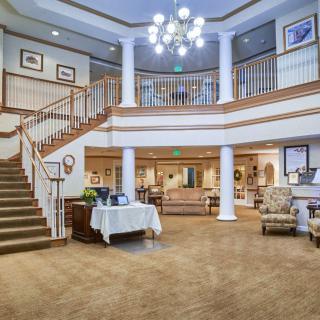
Sunrise of Pikesville
$2,280 to $4,225 / month24.8 miles away -
from +$250 / mo
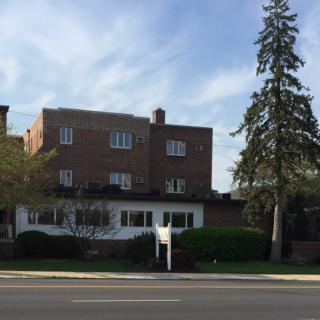
Autumn House West
$2,500 to $4,400 / month15.3 miles away -
About the same

You First Personal Care
$2,250 to $4,200 / month15.7 miles away -
from -$250 / mo

Sharon's Personal Care Home
$2,000 to $2,200 / month13.8 miles away -
from +$250 / mo

Golden Crest Corporation III
$2,500 to $2,900 / month13.0 miles away
Overall Review of Accolades
Pros
 Accolades Inc offers more one-on-one attention due to the smaller number of residents.
- The staff members are attentive and there were no issues.
- The facility looks very clean.
- They offer nails and hair services, bingo, game nights, and walks.
- Private rooms are available for residents.
- The care provided is personalized and impressive.
Cons
 The rooms are on the smaller side.
Review
Accolades in New Freedom, PA, is best suited for seniors who prize an intimate, individualized approach to care delivered in a calm, low-traffic setting. It works well for residents who can thrive on substantial one-on-one attention from staff, who value the privacy of a private room, and who prefer a clean, straightforward environment over a bustling campus. In short, this community aligns with families seeking consistent, personal care where overstimulation is minimized and dependable routines govern the day.
Those looking for a larger social scene, more expansive common areas, and a broader menu of activities may want to explore alternatives. A bigger community often offers more peers, more frequent programming, and a wider array of services that can be important for residents who define engagement as social interaction plus a rich activity calendar. If mobility or transportation are manageable concerns, the trade-off of a livelier campus may be a decisive factor.
On the upside, a low resident count translates into meaningful, tangible advantages. Staff capacity appears attentive, and reviewers report no issues in interactions, with care that feels personal rather than rushed. The private room is a clear win for privacy and comfort, and clean surroundings aid in reducing daily life anxiety. Activities like nails and hair, bingo, game nights, and walks create structured opportunities for gentle engagement without forcing a crowded, frenetic pace. Taken together, these elements deliver a high-touch experience that centers the resident, which can offset the drawback of smaller rooms.
Another strong point is the perceived emphasis on personalized care. When staff know residents by name and tailor routines, daily life becomes predictable in a comforting way. The mix of routine services and familiar faces lowers decision fatigue and helps families feel confident about supervision and safety. The absence of crowded common spaces means conversations feel more meaningful, and the ability to tailor activities to individual interests is more feasible. For seniors who value dignity, respect, and privacy, these conditions translate into a meaningful advantage.
Yet the trade-offs are real. The rooms themselves are smaller, which can constrain space for personal belongings and may feel limiting for residents who eventually need more expansive living arrangements. With fewer residents, the social stimulus is more modest, and some families may worry about limited incidental interactions or fewer spontaneous gatherings. For seniors who rely on a broad activity repertoire or who crave the energy of a larger community, the compact footprint may feel constraining over time. The balance hinges on whether the priority is quiet, personalized care or constant, bustling social engagement.
Decision-makers should verify a few practical particulars during visits. Confirm room dimensions in person, assess how much private space is truly available, and evaluate staffing levels across shifts to sustain meaningful one-on-one attention. Probe the activity calendar to ensure a consistent cadence of programs aligned with the residentā€™s preferences, and ask about transportation for appointments and excursions. If family involvement and privacy matter most, Accolades presents a compelling, well-run option. For those who place a premium on a wider social network and more expansive accommodations, alternatives with larger scales deserve serious consideration.
 16 resident community capacity
 Assisted Living
 Board and Care Home
 Respite Care
 Cats allowed
 Dogs allowed
 Activities off-site
 Beautician on-site
 Cable or satellite TV
 Cafe
Cafe Devotional services off-site
 Dining room
 Fully furnished
 Garden
 General store
 Guest parking
 Housekeeping services
 Indoor common areas
 Laundry
 Move-in coordination
 Outdoor common areas
 Overnight guests
 Party space
 Private
 Private bathrooms
 Small library
 Spa
Spa Telephone
 Wheelchair accessible showers
 Wi-Fi/high-speed internet available
 24-hour supervision
 Ambulatory care
 Assistance with bathing
 Assistance with dressing
 Assistance with transfers
 Companion care
 Diabetes diet
 Diabetic care
 High acuity care
 Incontinence care
 Meal preparation and service
 Medication management
 Special dietary restrictions
 Arts and crafts
 Book club
 Educational speakers / life long learning
 Games
Games Live musical performances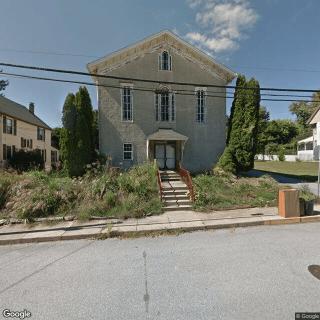



 Vibrant Senior Living: A Comprehensive Guide for Active Older Adults
 When to Transition from Assisted Living to Memory Care: Key Indicators, Steps, and Finding the Right Community
 Assisted Living and Memory Care: Understanding Their Core Differences