
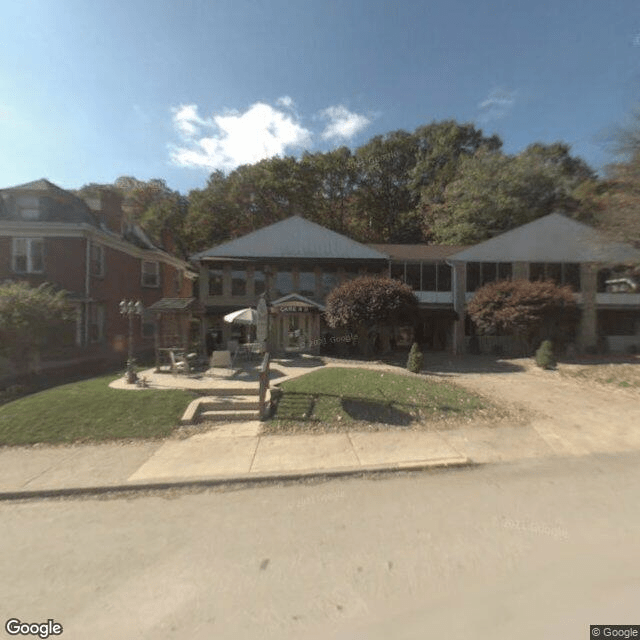
120 Allegheny Avenue, Kittanning, PA 16201
For more information about senior living options: (866) 208-4318
Overall Review of Rivercliff Terrace
Pros
 Rivercliff Terrace is very neat.
- The staff are very friendly.
- The rooms are nice.
- The meals are home-cooked.
- The facility has porches with a riverfront view.
- It offers exercises and other activities.
- The atmosphere feels home-like.
- The rooms are spacious.
Cons
 They note that the facility will keep their friend only as long as she can feed herself or walk.
Review
Rivercliff Terrace in Kittanning, PA is best suited for seniors who want a home-like setting with easy access to care resources, who value social programming, and who can manage daily tasks with light assistance. The community’s appeal is rooted in practical comforts: neat rooms, friendly staff, and a culture of activity that keeps residents engaged. For a resident who remains relatively autonomous but desires structured support and easy visitation, Rivercliff Terrace offers a balanced environment that avoids the impersonal feel of larger campuses.
The strongest positives are concrete and relatable. Reviews highlight a welcoming, home-like atmosphere reinforced by personable staff who interact well with residents. Rooms are described as nice and spacious, with a downstairs option that accommodates mobility needs. The building’s two floors, porches, and a riverfront view contribute to a relaxing, inviting setting. The activity slate, exercises and a variety of programs, provides a meaningful routine, while home-cooked meals appeal to families prioritizing comfort and familiar nutrition. Proximity to a hospital adds a practical layer of safety for families weighing medical contingencies.
However, not every signal is equally rosy. One reviewer’s sharp note signals a potential misalignment for residents with significant memory-care needs: the facility may keep residents only as long as they can feed themselves or walk, suggesting limited capacity for advanced dementia care or intensive supervision. This candid assessment, though from a single voice, echoes a broader caution about the facility’s capabilities when cognitive decline accelerates. Taken with the otherwise solid feedback, it frames Rivercliff Terrace as strong for assisted living with modest supports, but less suitable for those requiring memory-care-focused environments or heavy on-site medical oversight.
In practical terms, the positives offset the concerns for a large segment of potential residents: the social and physical environment can sustain quality of life for those who can participate in activities and manage with moderate assistance. The home-like ambiance, warmth from staff, and the comfort of spacious rooms make daily life more livable than typical institutional settings. The riverfront view and outdoor seating spaces support relaxation and family visits, while routine programming helps residents stay engaged. The downstairs-access option on the lower floor is a tangible convenience for residents facing mobility challenges, and the overall setting cultivates a sense of dignity and belonging that families often seek.
Those who should consider alternatives are those with explicit memory-care needs or plans that may require robust, around-the-clock clinical supervision. If dementia-specific programming, higher staff-to-resident ratios, or dedicated memory-care wings are non-negotiable, a community with a clearly defined memory-care focus will likely serve better. If rehabilitation intensity, continuous nursing, or more intensive medical oversight are anticipated, seek a setting designed to accommodate those requirements from day one. Rivercliff Terrace appears well-matched to a trajectory of light-to-moderate assistance within a social, homelike frame, not to a model built around intensive memory or clinical care.
Bottom line: Rivercliff Terrace is a practical choice for families prioritizing a warm, engaged, neighborly atmosphere with accessible help and a pleasant river-view lifestyle. It delivers on home-like rooms, friendly staff, and steady programming, with hospital proximity adding a meaningful safety net. Yet for residents approaching or entering advanced dementia or needing robust on-site medical care, alternatives offering memory-focused care and stronger supervision are likely to be more appropriate. Prospective movers should arrange a thorough tour and probe floor plans, meal options, activity calendars, staff ratios, and memory-care capabilities to confirm alignment with long-term care goals.
 34 resident community capacity
 Assisted Living
 Respite Care
 Activities on-site
 Beauty salon
 Cable or satellite TV
 Devotional services off-site
 Dining room
 Fully furnished
 Garden
 Housekeeping services
 Indoor common areas
 Kitchenette
 Move-in coordination
 Outdoor space
 Restaurant-style dining
 Small library
 Telephone
 Wi-Fi/high-speed internet available
 24-hour call system
 Ambulatory care
 Assistance with bathing
 Assistance with dressing
 Assistance with transfers
 Diabetes diet
 Diabetic care
 Medication management
 Mental wellness program
 Special dietary restrictions






 Understanding the Distinctions: Assisted Living and Memory Care Explained
 Guiding Elderly Parents Who Refuse Assisted Living: 6 Practical Steps
 Your Comprehensive Guide to Luxury Assisted Living: Elevated Facilities, Amenities, and Costs