
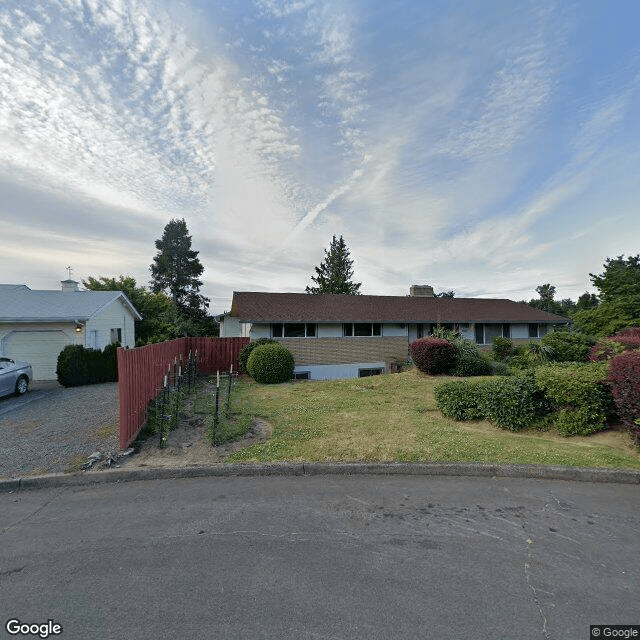
16001 NE Morris St, Portland, OR 97230
To contact a resident: (503) 253-5826
For more information about senior living options: (866) 208-4318
Dobra ACH Costs & Pricing
Dobra ACH offers a competitive monthly rate for private rooms at $2,000, which is significantly lower than the average costs in both Multnomah County and the broader state of Oregon. In Multnomah County, the cost for similar accommodations averages around $3,227, while the statewide average reaches approximately $3,424. This pricing structure reflects Dobra ACH's commitment to providing accessible and affordable living options without compromising quality, making it an attractive choice for those seeking housing solutions in a region where costs can be high.
| Floor plans | Dobra ACH | Multnomah County | Oregon |
|---|---|---|---|
| Private | $2,000 | $3,227 | $3,424 |
Senior living communities with a similar price nearby
-
from +$200 / mo
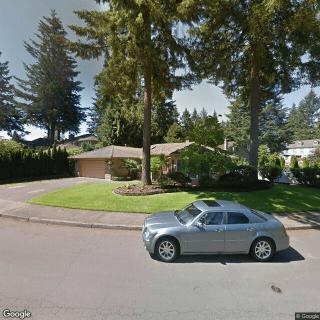
The Peace and Joy Garden
$2,200 / month6.6 miles away -
About the same

Alliance Home Health
$2,000 / month7.0 miles away -
from -$200 / mo

Love and Care ACH II
$1,800 / month8.6 miles away -
from +$219 / mo

Aegis Senior Case Management
$2,219 / month7.8 miles away -
from -$350 / mo
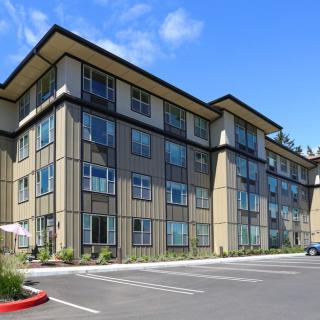
The Lofts by Cogir
$1,650 to $2,440 / month9.1 miles away
Overall Review of Dobra ACH
Pros
 They were satisfied with the quality of the care their dad received.
- He had a nice, big room with an outside entrance.
- The administrator has nearly 20 years of experience, which helps her handle Medicaid matters.
Cons
 They had issues with Medicaid and the hospice care people.
- The family didn’t know the protocol or who was responsible for what.
- The administrator, despite many years in the business, talked to others about Medicaid rather than the family.
- The family had to tell her to involve the sister-in-law who handles the money, not the rest of them.
- She didn’t work well with the hospice nurses.
Review
Dobra ACH in Portland is best suited for families who prize attentive, hands-on caregiving in a setting that offers real privacy and easy outdoor access, and who are ready to engage actively in the administrative side of senior care. The community is led by a seasoned operator with nearly two decades of experience, and the staff tends to keep a steady, practical focus on the daily needs of residents. The care quality is a core strength, and residents can expect a roomy living environment with features such as an outside entry that support independence and a sense of home. For families facing Medicaid and hospice navigations, the combination of capable caregiving and a well-established leadership channel can be a meaningful match.
However, potential residents should consider alternatives if the priority is a fully coordinated, friction-free Medicaid and hospice process. The available feedback notes confusion about who handles what in Medicaid and hospice, and suggests that miscommunication can escalate when protocols are not clear. If immediate, seamless liaison with Medicaid agencies and hospice teams is non-negotiable, other communities with dedicated clinical social workers or integrated case managers may reduce the administrative burden. Those who do not want to shoulder the coordination role or tolerate some interpersonal friction between administration and clinical partners may prefer a facility with a more explicit division of responsibilities.
On the upside, the strongest pro is the evident care commitment. The reviewer consistently felt that the dad received good care, and the large room with an outside entrance supports dignity and autonomy. A nearly 20-year veteran running the operation translates into practical know-how about who to talk to and how to move bureaucratic processes forward. These factors can translate into reliable day-to-day care and fewer gaps once families establish a clear point of contact. Yet the main con, communication gaps between leadership and hospice staff, shows that a well-meaning administrator cannot entirely compensate for a fragile coordination framework. When the primary liaison is busy or unclear, families find themselves stepping in to fill the void.
Prospective buyers should demand a concrete plan for Medicaid and hospice coordination before moving in. Ask for the exact workflow: who is the contact for billing, who coordinates with hospice providers, what is the chain of escalation for issues, and how are changes communicated to families. Request a written care plan that aligns medical directives, social work support, and family preferences. Confirm that the administrator's long tenure translates into a stable, transparent point of contact for Medicaid and that there is a documented process to avoid elder-family confusion. Also verify the room availability and outdoor access as a standard feature, since that element supported the resident's sense of space.
Care quality remains the anchor of this community. The reviewer’s impression that care was consistently good, coupled with the positive note about a large, accessible room, suggests residents may experience steady daytime support and a reasonable amount of personal space. The downside is the risk that administrative friction can spill into the patient-nurse relationship, if hospice coordination falters. In practice, this means the facility can deliver solid day-to-day caregiving, but families should not assume the system is automatically frictionless; they must be prepared to advocate and to verify how every care decision is wired to Medicaid and hospice partners.
In the end, Dobra ACH offers dependable care paired with a practical, veteran leadership approach and comfortable living space. It is a strong fit for families who want tangible caregiving quality and are comfortable navigating Medicaid and hospice coordination with a seasoned administrator guiding the process. Those who require a perfectly streamlined integration, where revenue cycle, care planning, and hospice liaison operate invisibly in the background, should consider alternatives that emphasize formalized case management and interagency collaboration. For the right family, the combination of care fidelity and occupant-friendly design justifies the tradeoffs; for others, a different community with more integrated care coordination may be the safer long-term bet.
 Board and Care Home
 Cats allowed
 Dogs allowed
 Private
 Private bathrooms
 Portland International (6 miles away)
 Diabetic care


 9 Stimulating Memory Activities for Seniors: Puzzles, Cards, and Much More
 Managing Nursing Home Expenses After Medicare Coverage Ends
 Is a Geriatric Care Manager the Right Choice for Your Family?