
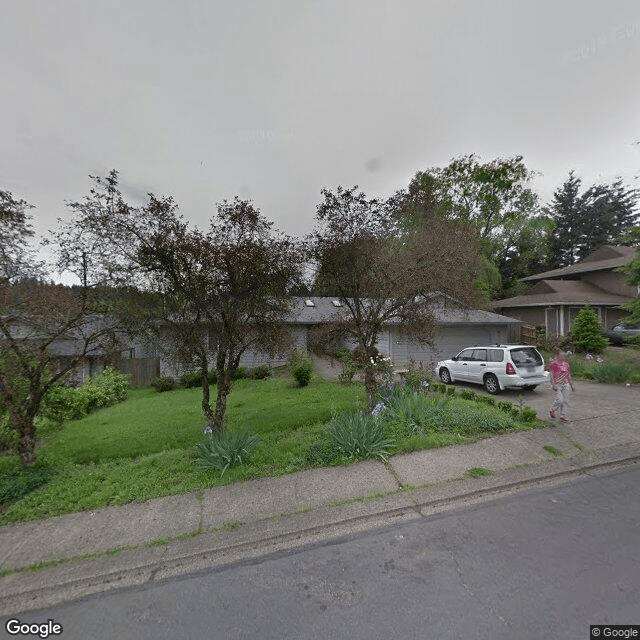
11460 SE Viewmount Lane, Tigard, OR 97223
To contact a resident: (503) 290-8429
For more information about senior living options: (866) 208-4318
Comfort Living II Costs & Pricing
Comfort Living II offers private room accommodations at a competitive rate of $2,800 per month. This pricing stands favorably against the broader market, as the average cost for similar private rooms in Washington County is approximately $3,261, and even higher at $3,424 across the state of Oregon. By choosing Comfort Living II, residents can enjoy quality care and comfortable living without stretching their budgets, making it an attractive option for those seeking affordability alongside essential services in a vibrant community setting.
| Floor plans | Comfort Living II | Washington County | Oregon |
|---|---|---|---|
| Private | $2,800 | $3,261 | $3,424 |
Senior living communities with a similar price nearby
-
from +$200 / mo
A Piece of Heaven
$3,000 / month9.3 miles away -
from -$300 / mo

Mapleview Manor, LLC
$2,500 / month9.9 miles away -
from +$200 / mo
Yamhill Senior Care Home
$3,000 / month15.6 miles away -
from +$200 / mo
Peaceful Lighthouse Adult Care Home
$3,000 / month18.1 miles away -
from -$300 / mo
A Gentle Care Home
$2,500 / month13.9 miles away
Overall Review of Comfort Living II
Pros
 They were completely impressed by the professionalism and customer service.
- The customer service is the best they've ever seen, and the owner is kind and understanding.
- The facility is amazing, and the owner is understanding, caring, and aware of everything going on.
- The staff and the owner are very nice.
- The licensee is amazing and the home is very welcoming.
- They enjoy working there and taking care of the residents.
- The home is warm and welcoming, very clean, and has personal touches that make it feel homier.
Cons
 The customer service was bad; the owner promised to meet on three separate occasions but didn't show up, forcing others to adjust their schedules three times.
- The owner's stories were vague and unprofessional, which was very disappointing.
Review
Comfort Living II in Tigard, Oregon is best suited for families seeking a small, home-like assisted living where hands-on, owner-led attention shapes daily life. The community exudes warmth, with a welcoming, intimate atmosphere that makes residents feel seen and valued. The staff comes across as genuinely caring, and the environment rewards personal connections over formality. For anyone who prioritizes a homelike setting, practical kindness from a stable team, and a sense that every resident matters, this option stands out as a compelling choice.
Those evaluating alternatives should consider whether a larger, more structured operation with formalized processes is essential. If the priority is guaranteed administrative reliability and predictability in scheduling, some bigger facilities may deliver steadier assurances. For residents who require robust medical oversight, a broader menu of therapies, or a campus with more built-in programming, Comfort Living II may feel more intimate than indispensable. In short, when scale and formal governance matter, it’s prudent to compare other options that offer that depth of coverage.
The strongest pros center on people: exemplary customer service and a genuinely kind owner who understands how to respond to questions with care. The owner’s understanding and attentiveness come through as a defining strength, paired with a staff that is often described as the nicest and most welcoming. Residents and families repeatedly note a warm, homelike vibe, where the home is clean and thoughtfully maintained, with personal touches in the decor and landscaping that convey time, effort, and affection. This combination, humane leadership, attentive caregivers, and a tidy, inviting setting, creates a daily living experience that feels both comfortable and respectful.
At the same time, the main drawbacks are not trivial. Some reviewers flag inconsistent meeting follow-through: promises to meet with prospective families were not kept, and explanations tended to feel vague or unprofessional. Such missteps can erode confidence in coordination and responsiveness, especially for families seeking clear, reliable communication about care plans and scheduling. While the care team and environment inspire trust, these gaps in administrative consistency pose a real consideration for anyone weighing how much emphasis to place on governance and predictability alongside warmth.
Despite these caveats, the positives offset many potential concerns when viewed against the core mission of Comfort Living II: to provide a nurturing, human-centered home where residents are known by name and routine is guided by personal relationships. The intimate size of the community makes it easier for staff to notice subtle changes in mood or appetite, tailor routines, and create a sense of belonging that larger campuses struggle to replicate. Cleanliness, genuine hospitality, and a visible pride in the home’s appearance reinforce a day-to-day experience that feels stable and affirming, particularly for residents who flourish when surrounded by familiar faces.
In the end, Comfort Living II functions best for families prioritizing a warm, personally connected living environment over scale or aggressive programming. It is a sensible choice for transitioning into assisted living where the human element, caregiver kindness, a welcoming owner, and a thoughtfully kept home, takes precedence. Prospective residents should enter with clear expectations about communication norms and request concrete details on how scheduling and meetings will be handled. A guided tour paired with direct questions about staff-to-resident ratios, owner involvement, and response times will clarify whether the current strengths align with the resident’s care needs and family expectations.
 Board and Care Home
 Cats allowed
 Dogs allowed
 Activities off-site
 Bath tubs
 Beautician on-site
 Devotional services off-site
 Indoor common areas
 Outdoor common areas
 Private
 Private bathrooms
 Respite or short term stays offered
 Wheelchair accessible showers
 Portland International (15 miles away)
 Ambulatory care
 Diabetic care
 High acuity care
 Incontinence care
 Meals provided





 Navigating Medicare Coverage for In-Home Care Services
 In-Home Care Costs in 2025: A Detailed State-by-State Exploration
 Understanding Home Health Care: A Comprehensive Guide