For more information about senior living options: (866) 208-4318
4.3 from 45 reviews
5 stars
31
4 stars
7
3 stars
2
2 stars
0
1 stars
5
Village at Oakwood Costs & Pricing
At Village at Oakwood, residents can enjoy remarkable affordability compared to the broader market rates in both Oklahoma County and the state of Oklahoma. The cost for a studio or one-bedroom suite is fixed at an attractive $599 per month, which stands in stark contrast to the average county pricing of $3,717 for studios and $3,467 for one-bedroom units. Similarly, this offering is significantly lower than the statewide averages of $3,629 and $3,565 respectively. Such competitive pricing positions Village at Oakwood as a desirable option for individuals seeking quality living arrangements without the hefty financial burden typically associated with similar accommodations in the region.
Floor plans
Village at Oakwood
Oklahoma County
Oklahoma
Studio
$599
$3,717
$3,629
1 Bedroom
$599
$3,467
$3,565
Overall Review of Village at Oakwood
common26 reviews mention this
Friendly, helpful staff stands out
Residents and families repeatedly describe staff as friendly and helpful.
Across reviews, people say staff members are welcoming, responsive, and easy to interact with day to day. Several residents mention staff going out of their way for practical help, like assisting with personal needs or simple tasks. Families also describe staff as knowledgeable during move-in paperwork and ongoing care coordination. Even when reviews include some mixed impressions during a tour, most of the conversation still centers on staff attitude and support.
common12 reviews mention this
Restaurant-style dining and snack options
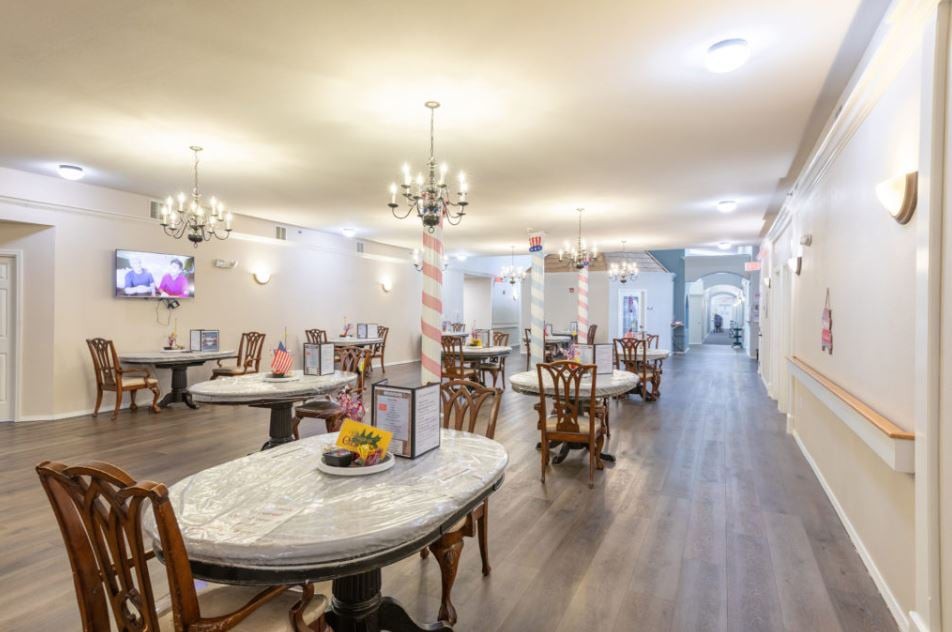
Dining is a strong part of life here, with restaurant-style service and daily meals.
Many reviews highlight three meals a day and describe the dining experience as restaurant-style, not cafeteria-style. Residents also mention being able to choose from a menu with a broad variety, plus snack availability during the day. A few reviewers focus on the dining room atmosphere and cleanliness when meals are served. The overall takeaway is that food service is a consistent, well-liked routine.
common14 reviews mention this
Activities keep residents busy
Reviews describe plenty of on-site activities and scheduled group time.
Residents and families mention a steady calendar of activities, including games, chair yoga, and religious events. Several reviews call out both in-property options (like game nights, arts and crafts, and small-group events) and outings such as shopping trips. Some mention entertainers or special visits, and others describe activities happening regularly throughout the day. Overall, people describe an environment where there is usually something to do.
differentiator2 reviews mention this
Strong value, priced far below benchmarks
Pricing is described as a good value by multiple reviewers.
A couple of reviews directly connect affordability with satisfaction, saying the community delivers good value for the cost. This lines up with the listed monthly pricing being far below county and state reference points for studio and one-bedroom units. For families weighing options, that cost advantage is part of why some felt confident about choosing this community.
caveat2 reviews mention this
Some areas look dated or cluttered
A few reviews note condition concerns in specific spaces.
While many reviews emphasize cleanliness and being well kept, a couple of reviewers mention spaces that felt dated or not fully organized. One review also points out limitations with outdoor space, describing it as not very attractive and mentioning barriers to access. Another notes there wasn’t a designated smoking area on the premises. These comments are more about particular areas and setup than an overall cleanliness breakdown.
How we summarize
Counts show how many written reviews mention each theme; a review can touch several themes, and only frequently mentioned themes are displayed.
Features
Housing
1-bedroom apartments
Types of Care
Assisted Living
Amenities
Activities off-site
Activities on-site
Beautician on-site
Cable or satellite TV
Devotional services off-site
Devotional services on-site
Dining room
Garden
Guest parking
Housekeeping services
Indoor common areas
Laundry
Outdoor common areas
Party space
Resident parking
TV room
Wheelchair accessible showers
Transportation
Will Rogers World (4 miles away)
Transportation & parking
Care Services
Ambulatory care
Diabetic care
Incontinence care
Medication management
Personal care assistants
Dining
Meals provided
Activities
Activities off-site
Activities on-site
Arts and crafts
Cooking club
Devotional activities offsite
Devotional activities on-site
Games
Gardening club
Live musical performances
Religious services
Tai Chi
Nearby Places of Interest
This part of Oklahoma City, Oklahoma offers a variety of amenities that cater to seniors looking for convenience and accessibility. With several pharmacies within a short distance, access to healthcare is readily available. Additionally, there are numerous dining options ranging from fast food to fine dining, providing a range of choices for meals. The presence of places of worship nearby allows for spiritual fulfillment and community engagement. The close proximity to Will Rogers World Airport provides easy access for travel, and the Regal Warren Moore theater offers entertainment options for leisure activities. Overall, this area offers a mix of services and facilities that can contribute to a comfortable and enriched senior living experience.
At Village at Oakwood, residents can enjoy remarkable affordability compared to the broader market rates in both Oklahoma County and the state of Oklahoma. The cost for a studio or one-bedroom suite is fixed at an attractive $599 per month, which stands in stark contrast to the average county pricing of $3,717 for studios and $3,467 for one-bedroom units. Similarly, this offering is significantly lower than the statewide averages of $3,629 and $3,565 respectively. Such competitive pricing positions Village at Oakwood as a desirable option for individuals seeking quality living arrangements without the hefty financial burden typically associated with similar accommodations in the region.
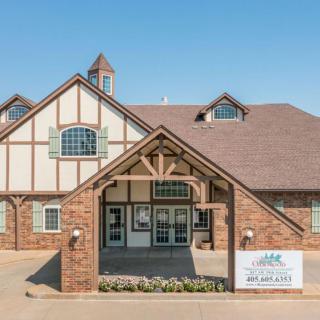
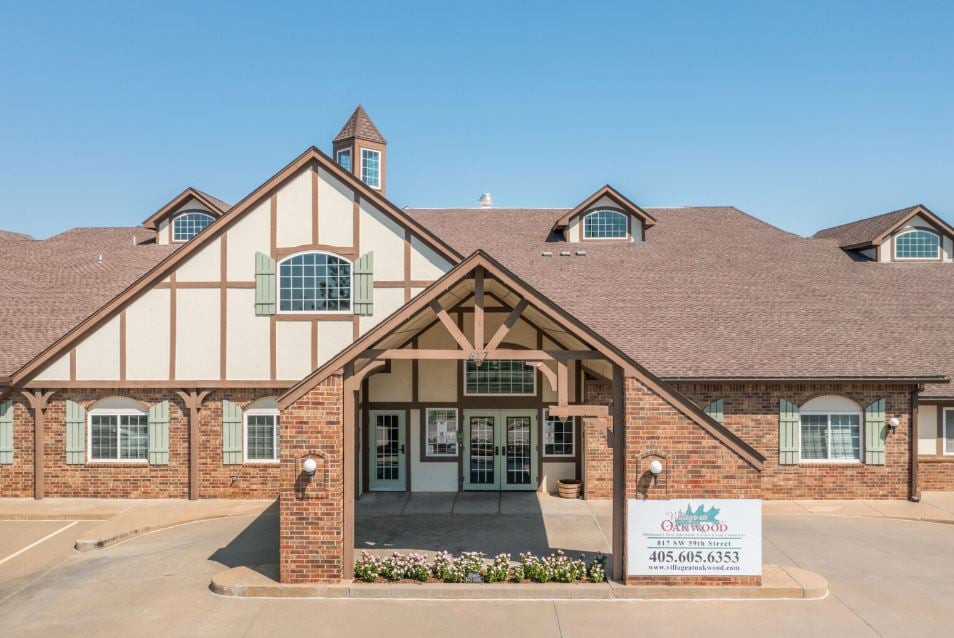
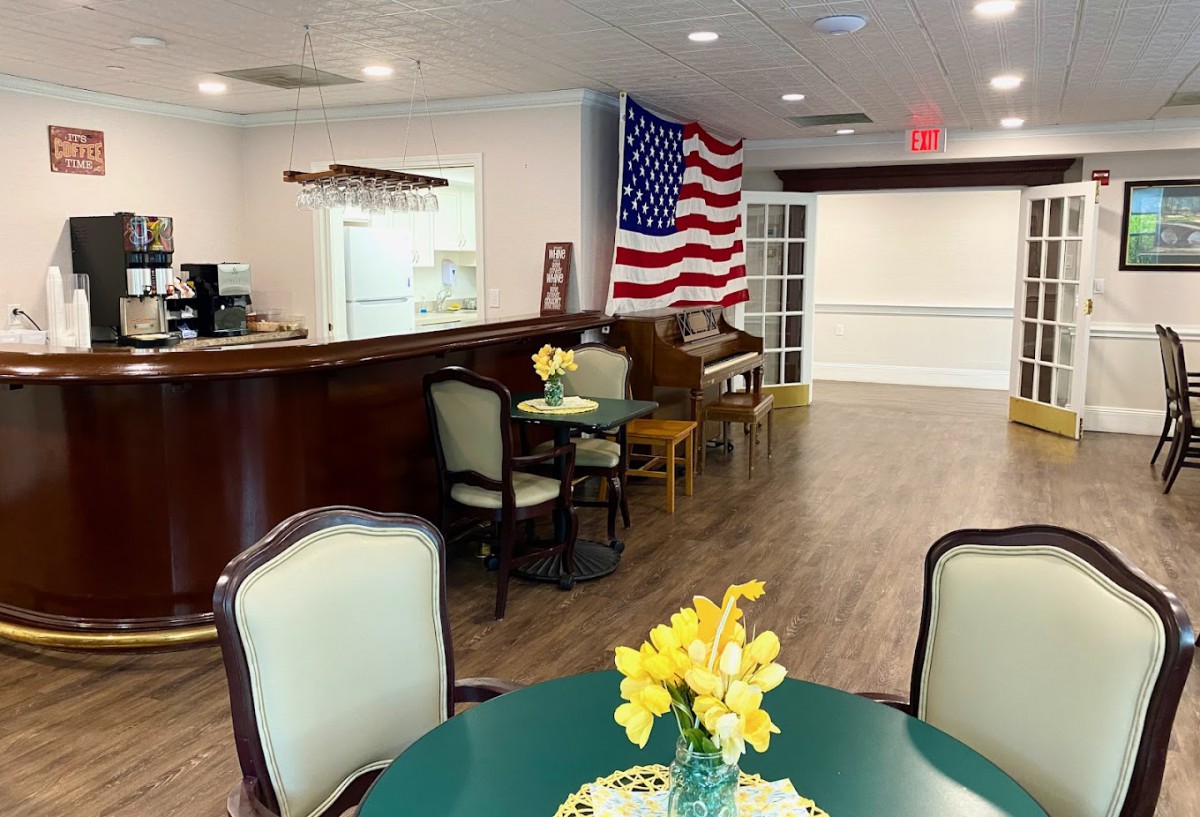
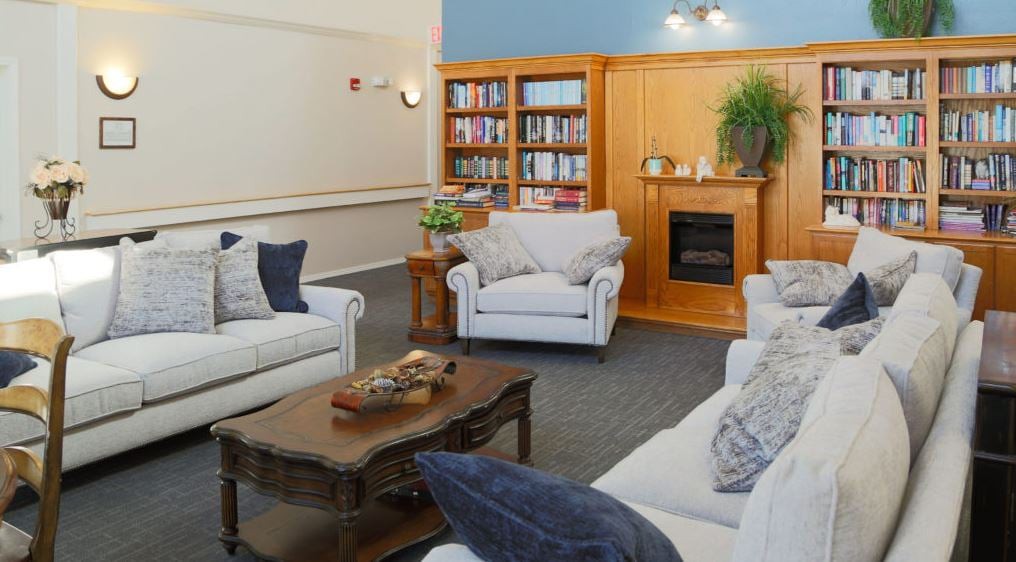
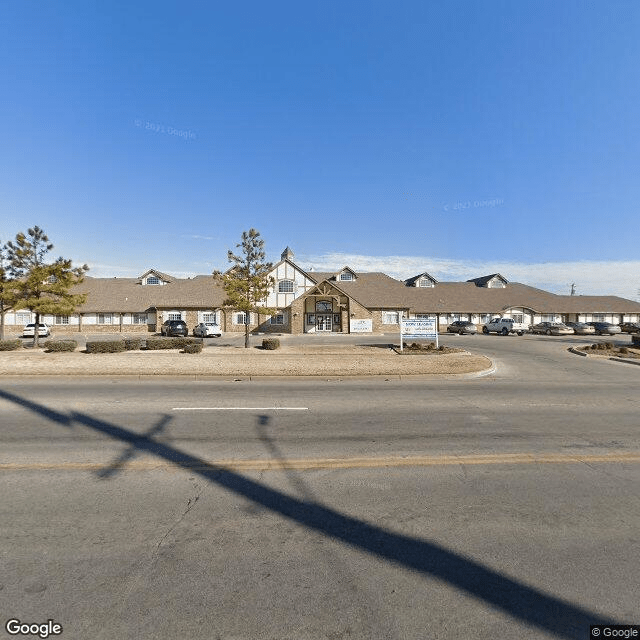
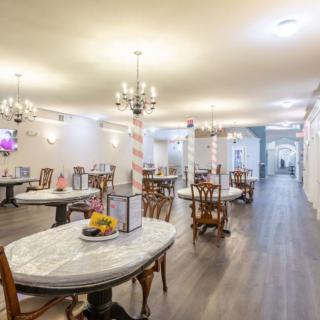
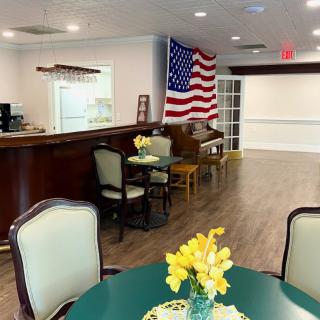
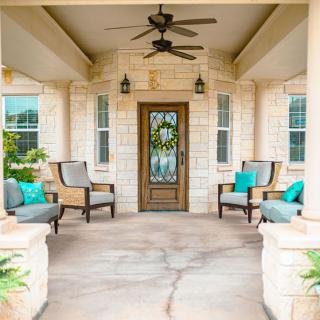
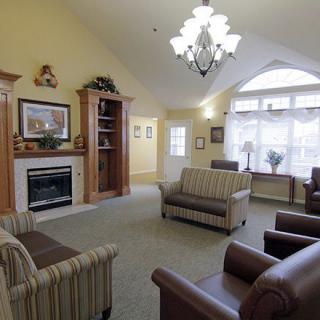
Village at Oakwood on seniors.fyi includes 5 photos including images showing dining, interior, seating area, bookshelves, fireplace, decor, building, architecture, and more.
Nearby Communities
Southwestern Convalescent Mnr
Oklahoma City, OK
3.6 from 100 reviews
Close access to healthcare, dining, and services in a comfortable, caring setting.
Shartel Towers
Oklahoma City, OK
3.6 from 46 reviews
Comprehensive assisted living with diabetic care, on-site activities, and easy access to nearby healthcare and amenities.
Emerald Care Center Southwest
Oklahoma City, OK
3.7 from 115 reviews
Some staff showed dedication and prompt emergency response.
Hillcrest Senior Ctr
Oklahoma City, OK
4 from 11 reviews
Convenient access to nearby dining, pharmacies, healthcare, transportation, and places of worship.
Crystal Place
Oklahoma City, OK
3.7 from 23 reviews
$2,250 to $3,495 / month
Competitive pricing with comprehensive amenities (on-site services, diverse dining options, activities, and pet-friendly).
Gardens At Reding Apts
Oklahoma City, OK
2.9 from 60 reviews
Independent living with easy access to nearby restaurants, pharmacies, healthcare, and transportation.
Meadowlake Estates
Oklahoma City, OK
2.7 from 116 reviews
Caring staff and a pleasant, well-maintained environment with engaging activities.
Jasmine Estates of Oklahoma City
Oklahoma City, OK
4.4 from 51 reviews
$4,795 to $6,295 / month
Caring staff, engaging activities, and a clean, welcoming environment.
Brookdale Oklahoma City Southwest
Oklahoma City, OK
4.6 from 92 reviews
$3,000 to $7,570 / month
Caring staff and engaging activities create a welcoming community.
Medicare does not cover assisted living costs, as it focuses on acute medical needs and short-term care, with exceptions for certain medically necessary services like physical therapy. Individuals must explore other options such as Medicaid, veterans' benefits, or long-term care insurance to manage these expenses effectively.
Choosing between assisted living and nursing homes involves evaluating emotional and financial factors, with assisted living offering independence and support for daily activities at a lower cost, while nursing homes provide intensive medical care for individuals with significant health needs. The decision is influenced by personal preferences, health status, cognitive function, and varying Medicaid coverage across states.
Assisted living in 2025 offers a crucial balance of independence and support for seniors, with costs varying from $2,500 to over $7,000 per month based on factors such as location and care level. Understanding pricing complexities, including regional differences and potential hidden fees, is essential for families to plan financially while ensuring quality care for their loved ones.
Decor, Living Room, Fireplace, Seating Area, and Bookshelves
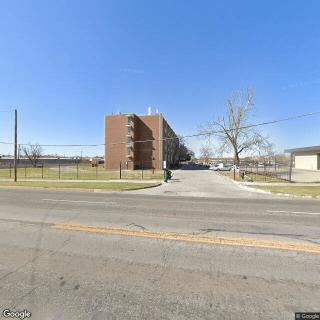
Building, Architecture, and Exterior
Chandelier
Lobby, Flag, and Facility
Get PricingAsk A QuestionSchedule A TourContact Senior Advisor
By clicking submit, you agree to our Partner's Terms of Use. You
also consent to receive calls and texts, which may be autodialed, from our Partner. Your consent is not a condition to
using our Partner's service. Please visit our Partner's Privacy Policy for information about their privacy practices.

 1-bedroom apartments
 Assisted Living
 Activities off-site
 Beautician on-site
 Cable or satellite TV
 Devotional services off-site
 Dining room
 Garden
 Guest parking
 Housekeeping services
 Indoor common areas
 Laundry
 Outdoor common areas
 Party space
 Wheelchair accessible showers
 Will Rogers World (4 miles away)
 Transportation & parking
 Ambulatory care
 Diabetic care
 Incontinence care
 Medication management
 Personal care assistants
 Meals provided
 Arts and crafts
 Cooking club
 Games
Games Live musical performances
 Tai Chi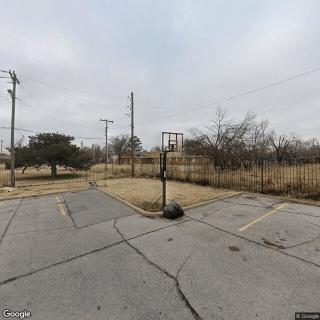
 Close access to healthcare, dining, and services in a comfortable, caring setting.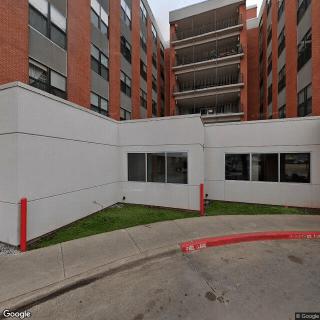



 Medicare Coverage for Assisted Living: An In-Depth Exploration
 Choosing the Right Senior Care: A Detailed Exploration of Assisted Living and Nursing Homes
 Understanding the True Cost of Assisted Living in 2025: A Comprehensive Guide