
370 E Howard St, Willard, OH 44890
To contact a resident: (419) 935-0148
For more information about senior living options: (866) 208-4318
Overall Review of Willard Healthcare
Pros
 The staff are amazing in their attentiveness, compassion, care, support, and genuine kindness.
- The administration goes above and beyond to make transitions smooth and easy.
- The nurses and aides provide compassionate, thorough care.
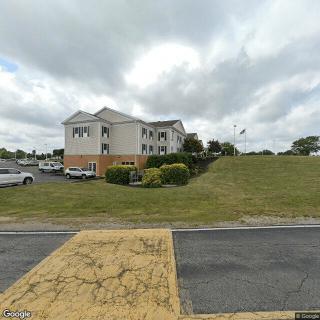
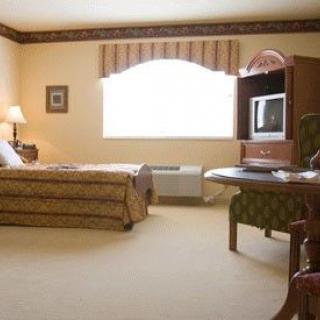
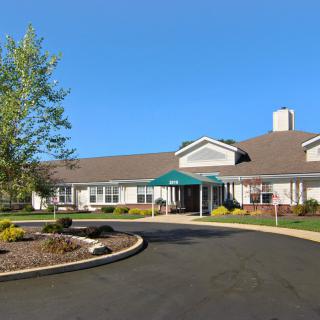
- The facility is clean, well-maintained, and welcoming.
- The team has become like family to residents and their families.
- The staff are friendly, accommodating, and informative.
Cons
 They describe it as the worst facility for agencies, claiming that all they do is lie.
- They warn the place is becoming a bad place to place the elderly, noting that one of their employees gave their mom COVID and that vaccination checks aren’t performed.
- They allege that the agency does not pick up there, that a worker wasn’t paid for hours, that the place is full of scammers, and that workers have double patient loads.
- They say the whole staff is rude and worthless.
Review
Willard Healthcare, operating as the Embassy of Willard, shines for families seeking a small, homey setting where caregivers know residents by name and treat them with real warmth. This community is best suited for seniors who place a premium on personal connections with staff and on a culture that feels like extended family. The strongest endorsements come from families whose loved ones respond to attentive nurses and aides who demonstrate compassion in day-to-day care and who can facilitate smooth transitions into nursing care or hospice support. It works best for residents who are comfortable in a close-knit environment and for families who value ongoing, visible involvement from frontline staff and administration. When a resident needs ongoing hands-on assistance, and the family needs reassurance that care comes with genuine kindness, Embassy of Willard delivers a compelling answer.
However, this is not a one-size-fits-all option. Alternatives should be considered by families needing highly consistent governance, strict adherence to staffing ratios, or a more formalized, less intimate atmosphere. The community's mixed reviews point to real risk in variability: several accounts describe rude staff or administrative issues, and some relate conflicts with agency workers or payroll misunderstandings. For families relying heavily on external agencies for daily care or seeking a facility with rock-solid front-line accountability, these reports warrant caution. Prospective renters should scrutinize leadership responsiveness, current staffing stability, and the ability to establish reliable, direct communication with both the director and the nurse manager. If such reliability is non-negotiable, exploring other options with steadier management may be prudent.
Yet the positives do not vanish in the face of these concerns. The most persuasive proof lies in the staff's capacity for compassion and attentiveness, nurses and aides described as the best, with care and empathy that many families value above all. Residents and families repeatedly highlight cleanliness, the ease of integrating into nursing care, and staff who feel more like a chosen extended family than a temporary caregiver. The facility's ability to handle transitions, particularly when hospice services are involved, is frequently praised, with administrators coordinating smoothly with outside teams. In practical terms, these strengths can translate into calmer days for residents and meaningful interactions with loved ones. When these elements align, the care experience can feel both competent and emotionally supportive, which is exactly what families seek in sensitive moments.
To make a balanced decision, act as if evaluating any high-stakes care partner: insist on a transparent tour, a conversation with frontline leaders, and candid references from current residents and their families. Ask to review staffing schedules, the nurse-to-patient ratio on different shifts, and the process for escalating concerns. Verify how the administration handles disputes with external agencies and whether there is a stable, full-time caregiving core. Clarify how care plans are drafted and revised, how hospice inclusion is managed, and what constitutes a “good day” in terms of resident experience. The goal is to confirm that the parts that have earned praise, compassion, cleanliness, and family-like atmosphere, are consistently available to every resident, not just the exceptions.
Price and value cannot be inferred from anecdotes alone, but these numeric variances matter. A community with a 3.1 overall rating and a notable split between five-star praise and one-star warnings signals that outcomes hinge on who is on shift and who is at the desk. Families should inquire about current occupancy levels, turnover rates among nurses and aides, and any ongoing staff development or quality improvement programs. The upside is clear: for the right resident, the warmth and personalized attention can outweigh occasional missteps. The risk, however, is persistent inconsistency that undermines trust over time. A realistic plan should include a backup option and a trial period that allows a loved one to test the neighborhood's daily rhythms without committing long-term.
In summary, Embassy of Willard is a prudent choice for families prioritizing intimate, compassionate care and a home-like environment, especially when hospice or end-of-life care is part of the plan and the staff demonstrate sustained empathy. It is not the default pick for those demanding unflappable governance, uniform staff behavior, and seamless agency coordination on every shift. When due diligence uncovers robust leadership accessibility, reliable staffing, and clear pathways for escalation, the positives can far outweigh the drawbacks. For other families, it may be wiser to compare a few nearby communities with steadier management and fewer red flags before committing. The key is to engage early, verify current staffing practices, and insist on measurable assurances about consistency, communication, and resident safety.
 Assisted Living
 Independent Living
 Activities on-site
 Devotional services off-site
 Indoor common areas
 Ambulatory care
 Diabetic care
 Meals provided




 How and When Medicaid May Cover Assisted Living Costs
 A Detailed Exploration of Assisted Living Medicaid Waivers Across the United States
 Comprehensive Residential Support and Assisted Living Solutions for Individuals with Disabilities