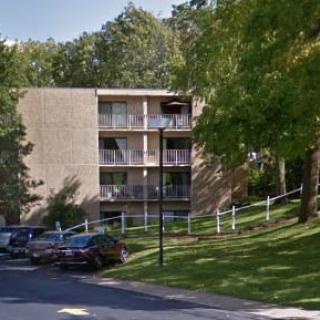
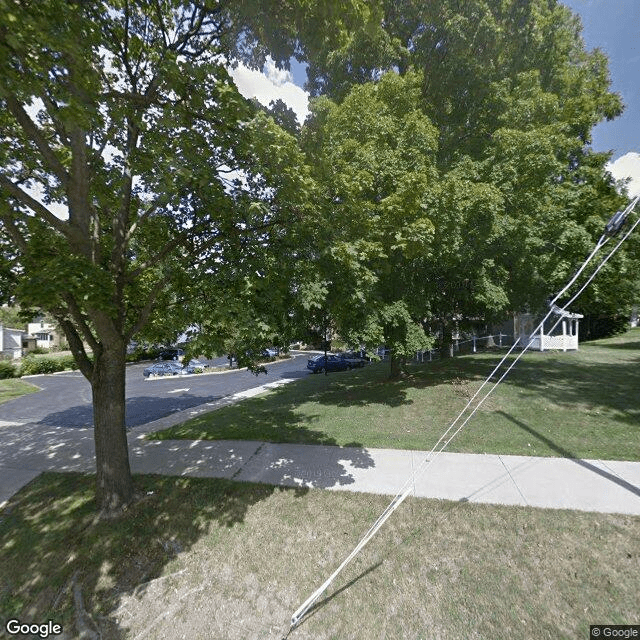
625 Center Street, Ashland, OH 44805
For more information about senior living options: (866) 208-4318
St Martin Management Costs & Pricing
St. Martin Management offers competitive pricing for its one-bedroom units, with a monthly cost of $2,655. This figure stands in stark contrast to the average market rates in Richland County, which are significantly higher at $4,674, and also below the broader state average of $3,712 for similar accommodations in Ohio. Such pricing positions St. Martin Management as an appealing option for prospective tenants seeking quality living spaces that provide value without compromising on comfort or amenities.
| Floor plans | St Martin Management | Richland County | Ohio |
|---|---|---|---|
| 1 Bedroom | $2,655 | $4,674 | $3,712 |
Assisted Living communities with a similar price nearby
-
from -$101 / mo

Mansfield Place
$2,554 to $4,134 / month15.8 miles away -
About the same

Wedgewood Estates
$2,700 to $5,400 / month13.9 miles away -
from -$352 / mo

Brethren Care Village
$2,303 to $5,910 / month1.2 miles away -
from -$130 / mo
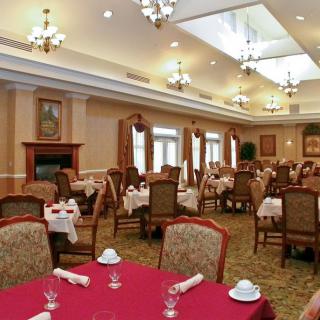
The Waterford At Mansfield
$2,525 to $4,295 / month15.7 miles away -
from +$285 / mo

The Willows at Willard
$2,940 to $3,840 / month24.1 miles away
Overall Review of St Martin Management
Pros
 The Director and D.O.N. are nice.
- The facility offers great activities.
Cons
 The nurses are rude, confrontational and incompetent.
- The director and the director of nursing are nice but apparently don’t know how to deal with the problems with their nurses.
- Complaints are not addressed, and residents face pushback.
- If a loved one needs assistance with medication, has sight impairment, or memory issues, this is not the place for them.
- If someone is seeking a place with great activities and decent food, and doesn’t mind missed medicines and rude nurses, this is the place to be.
- Management and directors communicate very poorly with families.
- The director is very difficult to deal with and is uncompassionate, dealing with tenants very poorly.
- The reviewer would recommend others to check out additional reviews and to check with the state health department for violations.
Review
St Martin Management in Ashland is best suited for seniors who are largely independent and do not rely on regular medication administration or memory-support services. The community may appeal to families that prize active programming and a social atmosphere, but only if there is a willingness to stay closely engaged and advocate on the resident’s behalf. In practice, this setting works for those who can navigate imperfect care through oversight and are prepared to demand accountability from staff and leadership.
For families evaluating options, this facility should be ruled out if a loved one requires consistent medication help, has sight impairments, or cognitive challenges such as memory issues. Prospective residents who rely on reliable staff responsiveness, compassionate care, and transparent problem-resolution should look at other communities. If the plan is a hands-off placement with minimal family involvement, alternatives with stronger clinical oversight and proactive communication will nearly always outperform St Martin Management.
On balance, the few positives are not enough to offset the core risks. The presence of seemingly approachable leadership, at least the Director and Director of Nursing, offers some reassurance, but that thin veneer fails to translate into reliable daily care. The promise of engaging activities and acceptable food can make the environment feel pleasant on the surface; however, these perks evaporate when medicines are missed and when basic resident needs go unaddressed. In other words, programming and dining quality cannot compensate for systemic care gaps and a culture that tolerates problematic nursing performance.
The most troubling findings are concrete and recurring. Reports describe rude, confrontational, and incompetent nursing staff, with complaints either ignored or met with resistance. Medication administration appears unreliable, and issues related to vision or memory support are flagged as insufficient to meet resident needs. Management communication patterns compound the problem: families encounter difficult, uncompassionate directors and inconsistent follow-through on concerns. The combination of poor staff conduct and weak escalation processes fuels a climate where safety and trust erode quickly.
From a decision perspective, goal-oriented families should press for documentation of all complaints, full medication administration records, and clear evidence that issues are being tracked and resolved. Before moving a loved one here, demand a candid discussion about how staffing shortages are managed, what the escalation protocol looks like, and how frequently leadership will review resident concerns. Visiting with current residents and their families, speaking with the state health department or licensing officials, and obtaining recent inspection reports should be non-negotiable steps. In short, the risk profile is high enough that due diligence cannot be skipped.
The conclusion is practical and firm: this is a choice for families who can tolerate, or even demand, aggressive oversight and accountability, and who place a premium on social programming over clinical reliability. For those without the bandwidth to supervise care closely, or for residents who require steady medication support or memory care, better-aligned options exist. St Martin Management is not a turnkey solution; it is a freighted start-to-finish decision that hinges on vigilant family involvement, explicit safeguards, and a willingness to switch course if care standards do not improve.
 85 resident community capacity
 Assisted Living
 Cats allowed
 Dogs allowed
 Activities on-site
 Air-conditioning
 Bath tubs
 Beautician on-site
 Cable or satellite TV
 Computer center
 Devotional services off-site
 Dining room
 Fitness room
 Fully furnished
 Gaming room
 Garden
 Ground floor units
 Handicap accessible
 Housekeeping services
 Indoor common areas
 Kitchenette
 Move-in coordination
 Outdoor common areas
 Private bathrooms
 Restaurant-style dining
 Small library
 Telephone
 Wellness center
 Wi-Fi/high-speed internet available
 Community operated transportation
 12-16 hour nursing
 24-hour call system
 Ambulatory care
 Assistance with bathing
 Assistance with dressing
 Assistance with transfers
 Diabetes diet
 Diabetic care
 Medication management
 Mental wellness program
 Special dietary restrictions
 Birthday parties
 Concierge services
 Planned day trips



 Comprehensive Insights into Activities of Daily Living (ADLs) and Their Assessment
 Medicare Coverage for Assisted Living: An In-Depth Exploration
 Your Comprehensive Guide to Luxury Assisted Living: Elevated Facilities, Amenities, and Costs