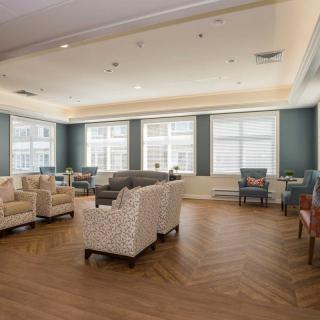
Amherst Manor Assisted Living Costs & Pricing
Amherst Manor Assisted Living offers competitive pricing for its studio accommodations, charging $3,240 per month. This rate is notably lower than the average costs within Lorain County, which stand at approximately $3,500, and significantly below the overall state average in Ohio of $3,727. By providing a more affordable option without compromising on quality of care and services, Amherst Manor positions itself as an attractive choice for those seeking assisted living solutions in the region. This combination of value and care makes it an appealing consideration for families looking to secure comfortable and supportive living arrangements for their loved ones.
| Floor plans | Amherst Manor Assisted Living | Lorain County | Ohio |
|---|
| Studio | $3,240 | $3,500 | $3,727 |
Skilled Nursing Facilities with a similar price nearby
-
from +$150 / mo
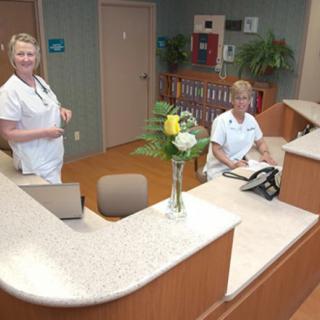
The Laurels Of New London
$3,390 to $5,200 / month
23.5 miles away
-
from -$540 / mo
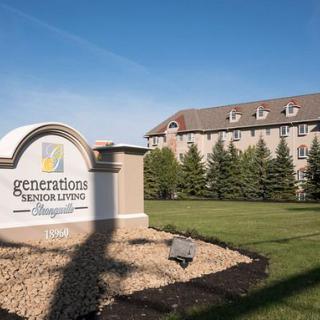
Generations Senior Living of Strongsville
$2,700 / month
21.5 miles away
-
from -$260 / mo
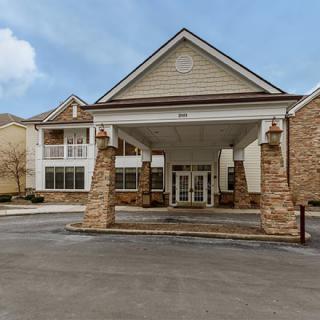
Brookdale Westlake Village
$2,980 to $4,695 / month
15.6 miles away
-
from -$198 / mo
Bickford of Rocky River
$3,042 to $3,954 / month
20.1 miles away
-
from -$150 / mo
Elms Retirement Village
$3,090 / month
16.1 miles away
Overall Review of Amherst Manor Assisted Living
common
29 reviews mention this
Staff attentiveness is both praised
Many residents and families describe staff as attentive, kind, and communicative.
A large share of reviewers say staff members are helpful and professional, and that they keep families informed. Multiple reviews mention updates during the day and responsiveness to concerns. Several also highlight specific roles across nursing, aides, therapy, and housekeepers, describing an overall caring approach.
caveat
10 reviews mention this
Care quality concerns and staffing
Some reviewers report delayed help, missed or inconsistent care, and unsafe-feeling conditions.
A recurring complaint is not getting timely assistance when residents need help, including call light response taking much longer than expected. Several negative reviews also describe medication and basic care problems, including oxygen not being provided on schedule and concerns about not following care plans as prescribed. A few reviewers go further to describe unsafe conditions and oversight concerns that made them warn others away from the facility.
common
13 reviews mention this
Cleanliness and facility condition
Cleanliness is a frequent point in reviews, with both positive and negative mentions.
Many reviewers describe the building as clean and well maintained, and some mention clean rooms and bright common areas. In contrast, several critical reviews describe troubling cleanliness or odor concerns, as well as reports of gross or stained items. One mixed review also notes that renovations left parts of the unit rough, while still describing the overall atmosphere as welcoming.
common
12 reviews mention this
Rehabilitation and therapy stand out
Therapy experiences are consistently discussed, including progress during rehabilitation stays.
Many reviews focus on rehabilitation and therapy, describing physical therapists and therapy staff as knowledgeable and helpful. Several reviewers say their family members made meaningful progress while receiving therapy, including after injuries or surgery. Others specifically praise the therapy team’s attentiveness and ability to tailor exercises, even when the facility was in the middle of remodeling.
common
4 reviews mention this
Dining is offered, and costs vary
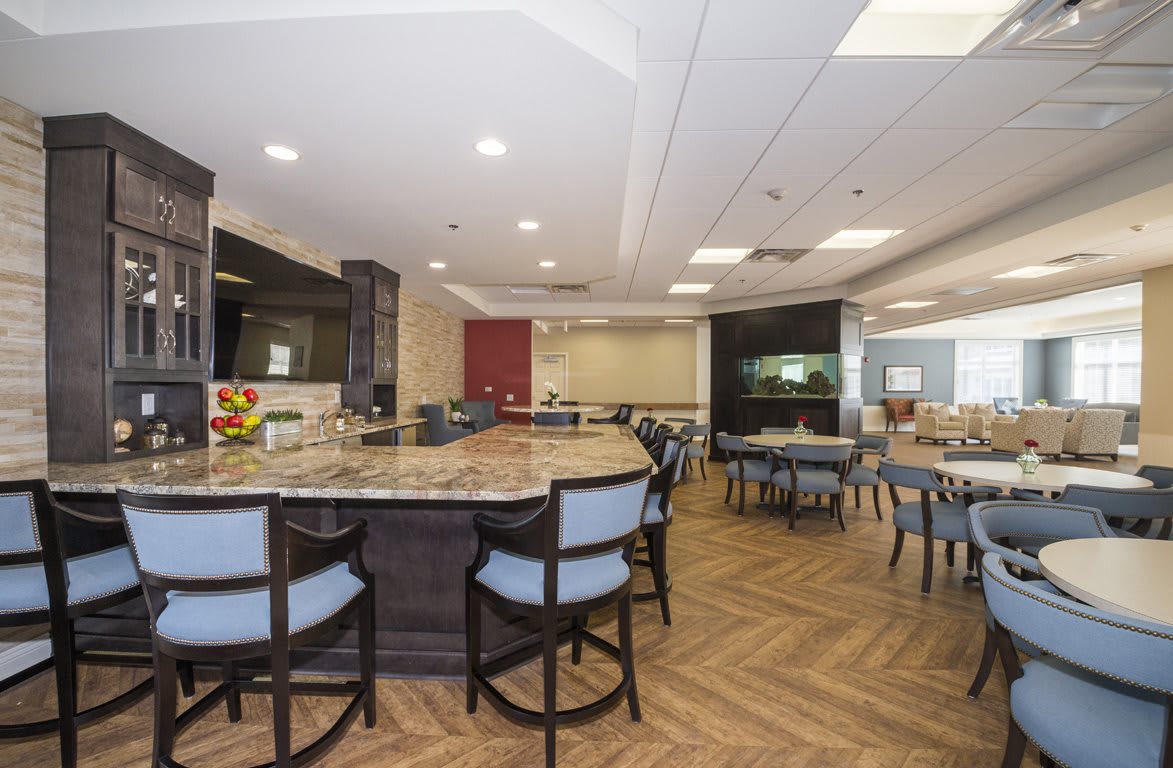
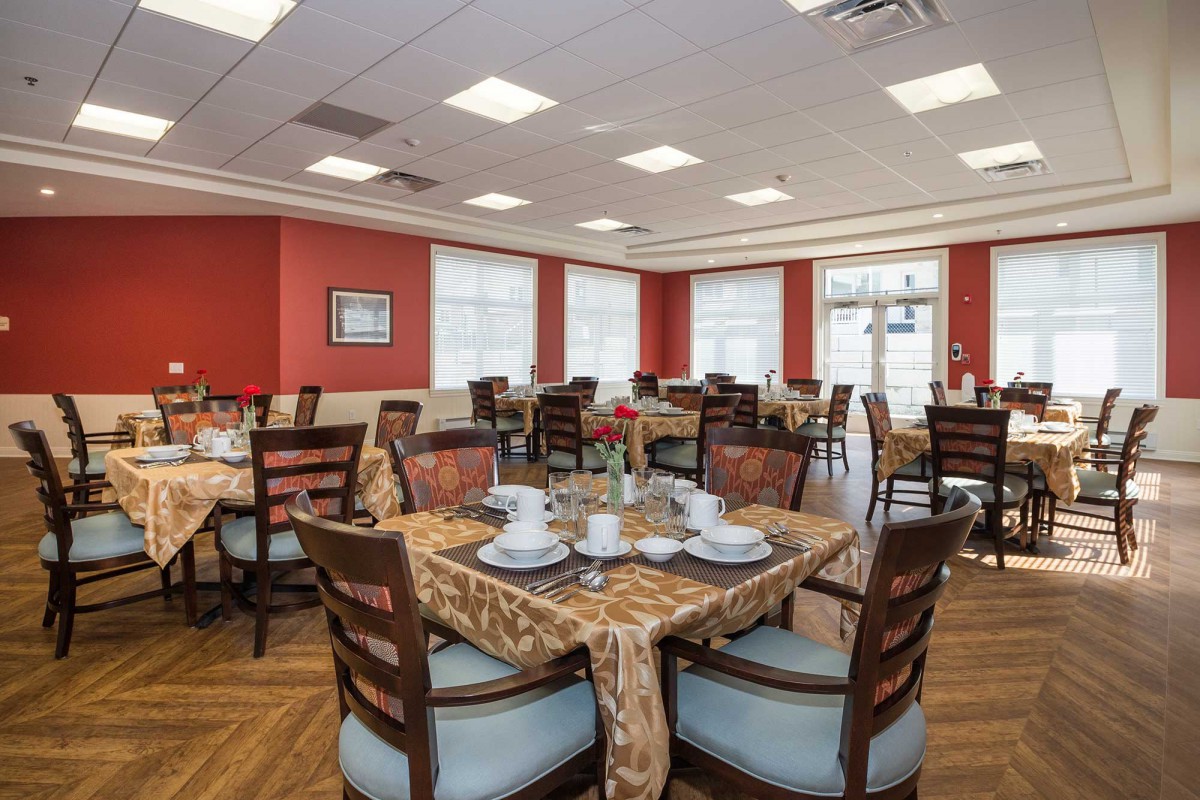
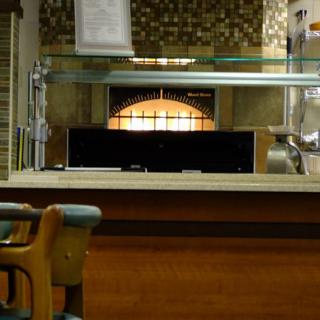
The community offers restaurant-style dining, and reviews mention both food and meal arrangements.
Reviews reference meal service and eating arrangements, and some mention the food as decent. One reviewer says the facility charges families for the option to eat with residents, while another notes they could bring their own food. Overall, dining comes up as part of daily life rather than a sole highlight.
common
2 reviews mention this
Studio pricing is below benchmarks
Studio pricing is priced below both the county and state benchmarks.
For studios, the listed price runs below the county and state reference points. One reviewer also mentions Medicaid acceptance as a deciding factor, though that comment is about eligibility rather than day-to-day billing. If you’re comparing overall affordability, it’s best to verify which services are included in the rate you’re quoted.
How we summarize
Counts show how many written reviews mention each theme; a review can touch several themes, and only frequently mentioned themes are displayed.

 1-bedroom apartments
 Assisted Living
 Skilled Nursing Facility
 Activities on-site
 Beautician on-site
 Devotional services on-site
 Dining room
 Full kitchen
 Garden
 Housekeeping services
 Indoor common areas
 Laundry
 Resident parking
 Respite or short term stays offered
 Wheelchair accessible showers
 Wi-Fi/high-speed internet available
 Cleveland-Hopkins International (20 miles away)
 Transportation & parking
 Ambulatory care
 Diabetic care
 Hospice care
 Incontinence care
 Medication management
 Physical therapy
 Guest meals
 Art classes
 Catholic services
 Cooking classes
 Day trips and outings
 Educational speakers / life long learning
 Fitness programs
 Happy hour
 Live musical performances
 Live well programs
 Wine tasting
 English
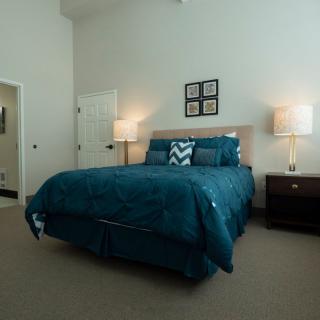
 Friendly staff, well-kept facility, engaging activities, good dining, strong rehab services, and secure memory care unit.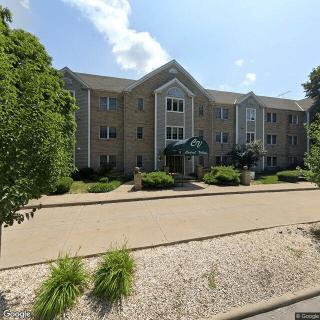


 Comprehensive Insights into Activities of Daily Living (ADLs) and Their Assessment
 Medicare Coverage for Assisted Living: An In-Depth Exploration
 Choosing the Right Senior Care: A Detailed Exploration of Assisted Living and Nursing Homes