
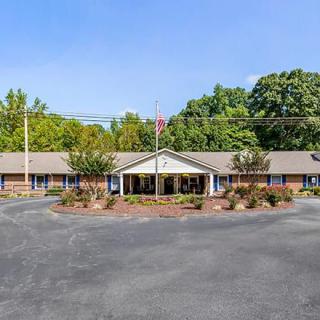
1902 Ora Drive, Statesville, NC 28625
For more information about senior living options: (866) 208-4318
Overall Review of Aurora Of Statesville
Pros
 The staff are very personable and take great care of residents.
- The director’s philosophy of care impressed the reviewer.
- Administrative staff are responsive to questions and concerns.
- The facility is in transition, and the reviewer sees it as moving in a positive direction.
- Aurora’s team helps in any way possible to support residents.
- The overall impression is that the facility and its care approach show dedication to resident well-being.
Cons
 The facility is described as a transition site with a challenging resident population.
- No one answers the phone, which is a frequent grievance for residents.
- The owners are accused of withholding residents’ funds, described as dishonest and possibly illegal.
- The care is said to be well below standards, with the majority of staff unproductive and unprofessional and residents not clean.
- The premises smell of urine and residents are not properly cared for.
- Residents’ clothes and bedding are frequently lost, and staff deny responsibility.
- Bed bugs are present and the facility is described as disgusting, with reports of staff stealing from residents.
- The transport van is dangerous and wheelchair straps do not hold, risking residents’ safety.
- Neglect is alleged to have led to bedsores, infections, and the death of a loved one.
Review
Aurora of Statesville is best suited for families seeking an affordable assisted-living option with hands-on, personable staff and a leadership team that is actively trying to reposition the facility. It works for residents who need daily help with activities of daily living and value everyday engagement, rather than a pristine institutional environment. When leadership is engaged, residents report warmth from caregivers and a director who articulates a care philosophy and appears willing to tailor plans with families. In short, this community rewards families who are willing to stay involved, monitor care closely, and ride through a transition period with the expectation that improvements will unfold over time.
Those weighing alternatives should recognize that this is not the only choice for families prioritizing safety, reliability, and predictable care. If a loved one requires steady, 24/7 monitoring, rock-solid medication management, consistently clean surroundings, reliable transportation, and rigorous infection-control practices, other communities are likely to deliver more consistently. Several concerns raised by residents’ families point to a risk profile that includes financial misgivings, questions about ownership, and a culture still finding footing. For any family uncomfortable with ongoing oversight or the possibility that leadership changes could interrupt routines, pursuing other options is prudent.
On the upside, the facility has been described as having great, personable staff who genuinely care for residents, and administrators who respond to questions. The current leadership’s philosophy of care provides a hopeful blueprint for improvement, and the sense that the facility is “in transition” can be a lever for accountability if families maintain pressure and remain actively involved. When families are prepared to engage, attend care conferences, document care plans, and press for timely follow-ups, these elements can help the day-to-day experience feel more responsive and personalized, tempering some of the frustration that comes with growing pains.
Still, the weight of concerns is substantial and cannot be dismissed. Recurring complaints include cleanliness lapses, unpleasant odors, and missing or mishandled personal belongings. Reports of residents being unattended or under-supervised, unsafe transportation, and substandard housekeeping create clear safety red flags. Financial concerns, claims of funds mismanagement or misappropriation, add a serious dimension to the risk calculus. Communication gaps, such as unanswered calls and inconsistent updates, compound the sense of drift. The most troubling narratives describe bedsores, infections, and distress upheld by perceived neglect, with some families alleging deterioration that outpaced intervention.
For families making a decision, demand transparency around staffing, oversight, and daily operations. Seek a current nurse-aide-to-resident ratio, clear medication-handling protocols, and written policies on laundry, clothing replacement, and accountability for lost items. Request recent state survey results and a concrete, time-bound plan for improving cleanliness, safety, and resident monitoring. Schedule multiple daytime and evening visits to observe how staff respond under pressure, and consult an elder-care advisor to triangulate impressions with external benchmarks. If budget allows, consider short-term placements or respite care elsewhere while conducting a thorough evaluation.
In sum, Aurora of Statesville represents a high-stakes choice: a viable option for families willing to actively supervise care and press for accountability through a transition, but a risky pick for those seeking consistent, high-reliability care. It will suit those who can tolerate a choppy, improvement-focused environment and are prepared to intervene quickly when gaps appear. For families wary of safety lapses, unreliable communication, or institutional volatility, exploring other communities with established, track-records of safety and steady staffing is strongly advised. The core decision rests on readiness to stay engaged, demand clear standards, and weigh ongoing change against the resident’s nonnegotiable care needs.
 80 resident community capacity
 Assisted Living
 Air-conditioning
 Beauty salon
 Cable or satellite TV
 Computer center
 Dining room
 Fitness room
 Fully furnished
 Gaming room
 Garden
 Housekeeping services
 Kitchenette
 Move-in coordination
 Outdoor space
 Private bathrooms
 Restaurant-style dining
 Small library
 Telephone
 Wellness center
 Wi-Fi/high-speed internet available
 Community operated transportation
 12-16 hour nursing
 24-hour call system
 Activities of daily living assistance
 Assistance with bathing
 Assistance with dressing
 Assistance with transfers
 Diabetes diet
 Medication management
 Mental wellness program
 Special dietary restrictions
 Concierge services
 Planned day trips




 Comprehensive Insights into Activities of Daily Living (ADLs) and Their Assessment
 Medicare Coverage for Assisted Living: An In-Depth Exploration
 Choosing the Right Senior Care: A Detailed Exploration of Assisted Living and Nursing Homes