Residents and families consistently describe the staff as caring, attentive, and responsive to needs.
Multiple reviews emphasize that staff treat residents with kindness and keep families informed, including during transitions and more difficult health moments. Several people describe the team as professional, engaged, and proactive about questions and care adjustments. A few reviewers also mention strong safety practices and enough staffing when they visited.
common5 reviews mention this
Engaging activities beyond TV
Residents are described as staying engaged through planned daily activities and special events.
Reviews repeatedly say the community does more than keep residents in front of a television. Families mention activities such as walks, art projects, and themed celebrations with costumes. One reviewer also highlights frequent group-style experiences like outings and family feasts, tied to keeping residents busy and content.
common8 reviews mention this
Clean, comfortable home environment
The home-like setting is described as clean, warm, and inviting.
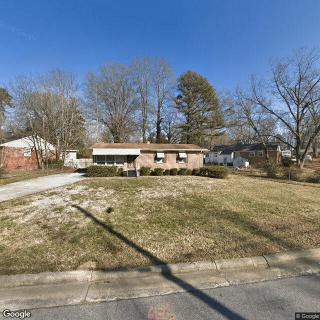
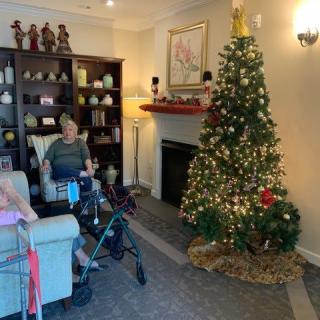
A number of reviews focus on the physical feel of the home, including a bright, welcoming environment and comfortable, attractive furnishings. Several people also highlight cleanliness and day-to-day upkeep. Reviewers frequently use home-style language to describe the atmosphere, and at least one mentions health and safety as a positive during a visit.
common3 reviews mention this
Healthy meals and thoughtful preparation
Families describe meals as healthy and thoughtfully prepared, with meals and gatherings as a highlight.
Some reviews point to meal quality, including healthy preparation and meals presented in an appealing way. One reviewer specifically recalls a Thanksgiving meal that included residents and family. Another describes cooking and food-centered experiences as part of how residents stay engaged.
How we summarize
Counts show how many written reviews mention each theme; a review can touch several themes, and only frequently mentioned themes are displayed.
Features
Housing
5 resident community capacity
Types of Care
Assisted Living
Board and Care Home
Amenities
Cable or satellite TV
Dining room
Fully furnished
Garden
Housekeeping services
Move-in coordination
Outdoor space
Telephone
Wi-Fi/high-speed internet available
Transportation
Raleigh-Durham International (15 miles away)
Care Services
24-hour supervision
Activities of daily living assistance
Assistance with bathing
Assistance with dressing
Assistance with transfers
Coordination with health care providers
Diabetes diet
Meal preparation and service
Medication management
Special dietary restrictions
Transportation arrangement (medical)
Transportation to doctors appointments
Dining
Diabetes diet
Special dietary restrictions
Activities
Community-sponsored activities
Scheduled daily activities
Nearby Places of Interest
Restaurants
Burger King (1 miles)
Chick-Fil-A (3.3 miles)
Wendy's (3.5 miles)
Cook Out (3.8 miles)
Woody's At City Market (4.2 miles)
Bojangles' Famous Chicken 'n Biscuits (4.3 miles)
Brewery Bhavana (4.3 miles)
Pharmacies
CVS Pharmacy (1.9 miles)
Walgreens (3.5 miles)
Walgreens (3.5 miles)
CVS Pharmacy (4.3 miles)
Walgreens (4.4 miles)
Walmart Pharmacy (4.8 miles)
Knightdale Pharmacy (5.5 miles)
Cafes
Starbucks (2.9 miles)
Starbucks (4.2 miles)
Starbucks (5.9 miles)
Panera Bread (9 miles)
Parks
Biltmore Hills Park (2.9 miles)
Chavis Park (3.6 miles)
Carolina Pines Dog Park (5.1 miles)
Dorothea Dix Park (5.1 miles)
Marsh Creek Park (5.8 miles)
Buffaloe Road Athletic Park (7.1 miles)
Eastgate Park (7.4 miles)
Hospitals
Wakemed Garner Healthplex (3 miles)
WakeMed Health & Hospitals (3.2 miles)
WakeMed Heart Center (3.2 miles)
Duke Raleigh Hospital (6.6 miles)
JMH Clayton (8.6 miles)
UNC Specialty Women's Center at Rex (8.9 miles)
Physicians
Alliance Medical Ministry (3.1 miles)
Raleigh Orthopaedic (3.6 miles)
Raleigh Pediatric Associates (3.7 miles)
Strategic Behavioral Center - Scott D Segal MD (4.3 miles)
Vibrant Senior Living emphasizes active senior living communities that promote independence and engagement through diverse amenities and activities, fostering wellness and social interaction among older adults. These communities range from independent to assisted living, with a focus on personal growth, family involvement, financial planning, and leveraging technology to enhance residents' experiences.
Transitioning from assisted living to memory care is driven by an individual's cognitive decline and specific needs, requiring careful evaluation of indicators like increased confusion and wandering. The process involves consulting medical professionals, researching suitable communities, considering financial and legal aspects, and ensuring effective communication for personalized care plans.
Assisted living provides moderate support for seniors seeking independence, while memory care offers specialized support for individuals with dementia or cognitive impairments through structured routines and trained staff. Key differences include care approaches, environment security measures, staff training levels, activity types, and cost considerations.
Get PricingAsk A QuestionSchedule A TourContact Senior Advisor
By clicking submit, you agree to our Partner's Terms of Use. You
also consent to receive calls and texts, which may be autodialed, from our Partner. Your consent is not a condition to
using our Partner's service. Please visit our Partner's Privacy Policy for information about their privacy practices.

 5 resident community capacity
 Assisted Living
 Board and Care Home
 Cable or satellite TV
 Dining room
 Fully furnished
 Garden
 Housekeeping services
 Move-in coordination
 Outdoor space
 Telephone
 Wi-Fi/high-speed internet available
 Raleigh-Durham International (15 miles away)
 24-hour supervision
 Activities of daily living assistance
 Assistance with bathing
 Assistance with dressing
 Assistance with transfers
 Diabetes diet
 Meal preparation and service
 Medication management
 Special dietary restrictions
 Transportation arrangement (medical)
 Transportation to doctors appointments
 Excellent access to healthcare and nearby amenities.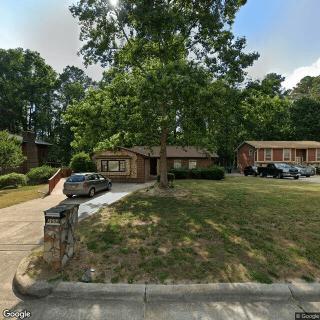
 Vibrant Senior Living: A Comprehensive Guide for Active Older Adults
 When to Transition from Assisted Living to Memory Care: Key Indicators, Steps, and Finding the Right Community
 Assisted Living and Memory Care: Understanding Their Core Differences