
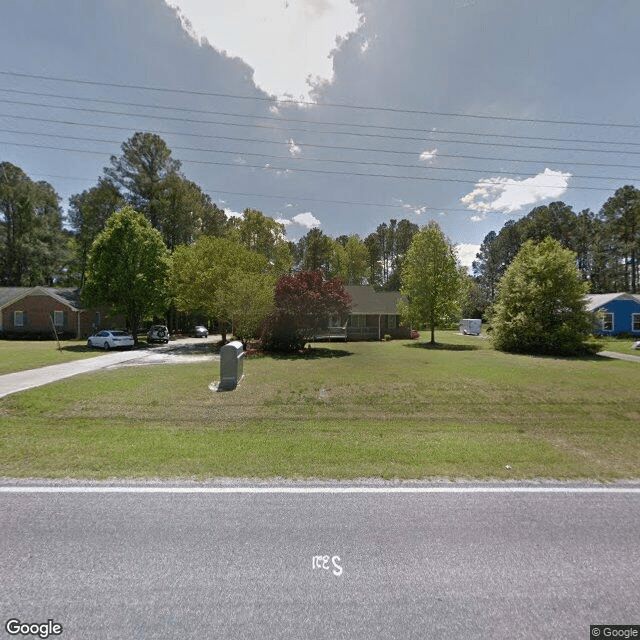
321 Buck Swamp Road, Goldsboro, NC 27530
To contact a resident: (919) 330-4277
For more information about senior living options: (866) 208-4318
Overall Review of Helping Hands Family Care Home
Pros
 The staff are amazing at what they do and love their jobs.
- Residents are loved and well cared for by the staff.
- Melissa and Mike Weaver are described as caring Christians who go the extra mile for residents and staff.
- People would recommend this home to anyone seeking a place for their loved ones.
- The staff take great care of residents and are very friendly.
- Families can leave with the assurance that their loved ones are in good hands and well cared for.
Review
Helping Hands Family Care Home in Goldsboro, NC is best suited for families seeking an intimate, homelike senior living option where daily care feels personal and consistent. The setting prioritizes close caregiver–resident relationships and a sense of community that comes from a small staff and a home environment rather than a large campus. It works well for an older adult who wants reliable daily support with activities of daily living, regular supervision, and companionship without the bustle of a big facility. Residents who value a warm, faith‑oriented vibe and straightforward, predictable routines tend to thrive here.
Alternatives to consider include larger assisted living communities with formal programming, on-site nursing, and memory-care wings that can accommodate residents requiring more medical oversight or specialized cognitive care. If a loved one has complex medical needs, frequent hospital-level care, or significant mobility or behavioral challenges, a bigger operation with broader staff training may be more appropriate. For families prioritizing social activity options and amenities such as salon services, fitness programs, and structured outings, the smaller home may feel limited in comparison.
The most compelling advantages stem from the staff’s evident commitment and the owners’ approach. Residents are described as loved and well cared for, with caregivers who genuinely enjoy their duties and are willing to go the extra mile. The leadership, Melissa and Mike Weaver, is noted for principled, approachable, and dependable conduct, shaping a culture where attentiveness and respect are standard. Families report peace of mind, knowing a loved one is in good hands and not at risk of neglect. The home feel, combined with individualized attention and frequent interaction, translates into fewer worries during transitions. In short, the daily experience emphasizes warmth, safety, and personal connection over formal programming.
The small format inevitably presents trade-offs. Fewer on-site clinicians, limited medical services beyond routine assistance, and a lean calendar of activities can leave certain needs unmet compared with larger communities. Memory‑care options are likely less specialized, and handling acute health changes may require transfers to external facilities. These constraints are not hidden, but they are offset by a hands-on staff approach, rapid family communication, and the enduring familiarity that comes with a stable caregiving team. For many families, that combination is more valuable than a broader menu of services.
To decide, assess whether a loved one will thrive on daily routines built around caregiver availability and predictable, home-like rhythms rather than constant, high-energy programming. Inquiries about medication management, emergency response protocols, and transportation for appointments are essential, as is confirmation of caregiver qualifications and turnover. Alignment with the home’s faith-based atmosphere can matter deeply for some families; for others, it may be neutral or less important. If independence is minimal and medical complexity is high, this setting may still work with careful planning, but it may require supplementary external support for medical needs.
Bottom line: Helping Hands Family Care Home delivers an excellent combination of warmth, reliability, and personalized attention that suits seniors who prize intimate care and a family-like environment. It’s especially compelling for families seeking steady, compassionate supervision and a homey atmosphere over expansive facilities or high-end amenities. Those needing extensive clinical oversight, dementia-specific programming, or a wide range of on-site services should compare larger communities where comprehensive medical staffing and specialized memory care are routine. With thoughtful due diligence, visiting, observing interactions, and asking precise questions about care plans, families can determine whether this home aligns with the loved one’s needs and preferences or if a different path offers a better balance of safety, stimulation, and independence.
 Assisted Living
 Activities on-site
 Devotional services off-site
 Indoor common areas
 Ambulatory care
 Diabetic care
 Meals provided




 Assisted Living and Memory Care: Understanding Their Core Differences
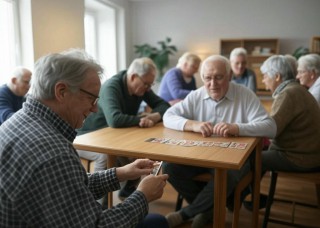 Beyond the Bingo Hall: 50+ Enriching Activities for Seniors in Assisted Living
 Understanding the Distinctions: Assisted Living and Memory Care Explained