For more information about senior living options: (866) 208-4318
3.5 from 37 reviews
5 stars
13
4 stars
7
3 stars
7
2 stars
4
1 stars
6
Senior Villages Costs & Pricing
In examining the costs associated with Senior Villages, we find that they offer a competitively priced option for seniors compared to the broader market in Mecklenburg County and the entirety of North Carolina. For instance, a one-bedroom unit at Senior Villages is available for $900 per month, significantly lower than the average monthly cost of $3,434 in Mecklenburg County and $4,055 state-wide. This stark contrast highlights the affordability of Senior Villages, making it an appealing choice for seniors seeking quality accommodations without straining their budgets. Such pricing not only reflects a commitment to accessible living options but also underscores the importance of financial feasibility in senior housing solutions.
Floor plans
Senior Villages
Mecklenburg County
North Carolina
1 Bedroom
$900
$3,434
$4,055
Senior living communities with a similar price nearby
from -$128 / mo
The Dorchester North
4.5 from 153 reviews
$772 / month
12.2 miles away
from +$140 / mo
Carolina Village
4.3 from 41 reviews
$1,040 to $4,800 / month
23.0 miles away
from +$95 / mo
The Glens at Birkdale Commons
4.4 from 13 reviews
$995 to $1,250 / month
13.1 miles away
from +$150 / mo
Panacea Senior Independent Living
5 from 2 reviews
$1,050 to $1,151 / month
6.9 miles away
Overall Review of Senior Villages
common3 reviews mention this
Gated security brings peace
The gated setup is a key part of how residents describe feeling safe.
Many residents and visitors point to the gated entry as a reason the community feels safe and protected. One resident also describes a controlled-access gate that blocked delivery of medication when the entry name didn’t match the paperwork.
caveat3 reviews mention this
Maintenance concerns show up
Some residents describe serious maintenance and water-related problems.
A few reviews mention water damage, including an apartment flooding from a ceiling pipe and continuing leaks affecting floors and ceilings. Another review describes toxic mold exposure and says management did not relocate or remediate after the unit was declared uninhabitable.
caveat3 reviews mention this
Noise is a recurring complaint
Noise from nearby traffic and neighbors affects some residents’ comfort.
Several reviews describe hearing the interstate from the balcony or within the home. Others mention disruptive upstairs noise, including pacing and stumping all night, and say their reported issue was not handled to their satisfaction.
caveat2 reviews mention this
Limited on-site activities
Residents mention very limited community activities on-site.
One reviewer says there’s no community room activities and describes little resident involvement beyond certain seasonal events. Another review mentions a recurring Thursday Bible study as essentially the main on-site option, with scheduling that can conflict with other plans.
caveat2 reviews mention this
Management tone is mixed
Some residents report negative experiences with management or staff responsiveness.
A couple of reviews criticize the property manager’s attitude, including claims of being rude or walking into tenants’ apartments. In contrast, at least one other reviewer praises staff and says maintenance is efficient and friendly, suggesting the experience may vary by situation.
caveat2 reviews mention this
Rent feels high to some
Some residents feel the rent isn’t worth the day-to-day upkeep.
One review says the rent is too high for the level of maintenance problems described, including issues with pool use and indoor repairs. Another reviewer notes positives but also points to limited storage, while emphasizing that everything is included in rent.
How we summarize
Counts show how many written reviews mention each theme; a review can touch several themes, and only frequently mentioned themes are displayed.
Features
Types of Care
Active Adult Communities (55+)
Pets
Cats allowed
Dogs allowed
Amenities
Air-conditioning
Bath tubs
Cable or satellite TV
Devotional services off-site
Full kitchen
Ground floor units
Handicap accessible
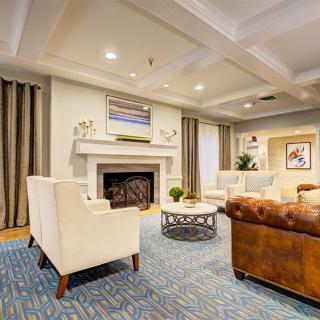
Indoor common areas
Outdoor common areas
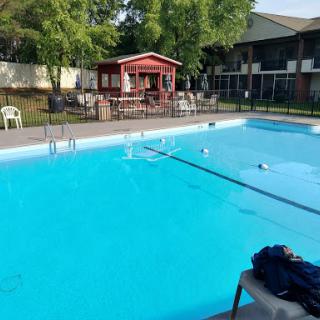
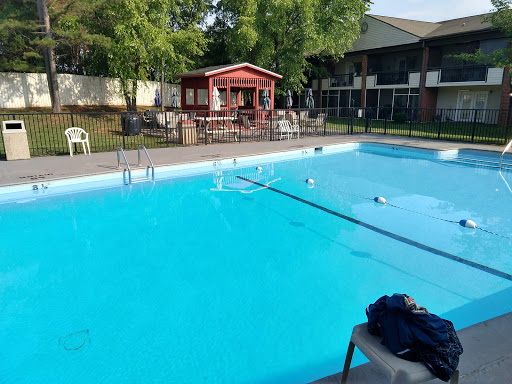
Swimming pool / hot tub
Transportation
Charlotte Douglas International (3 miles away)
Activities
Devotional activities offsite
Nearby Places of Interest
Pharmacies
Walgreens (0.4 miles)
CVS Pharmacy (1.4 miles)
CVS Pharmacy (4 miles)
CVS Pharmacy (5.6 miles)
CVS Pharmacy (6.1 miles)
Walgreens (7 miles)
CVS Pharmacy (7 miles)
Restaurants
Clutch Kitchen & Pour House (2.7 miles)
South 21 Family Restaurant (2.9 miles)
Graham St Pub & Patio (3 miles)
Bad Daddy's Burger Bar (3 miles)
Wooden Robot Brewery (3 miles)
Tequileria (3.1 miles)
VBGB Beer Hall & Garden (3.1 miles)
Transportation
Concourse E (2.8 miles)
Concourse D (2.8 miles)
American Express Centurion Lounge (2.9 miles)
Security Checkpoint E (2.9 miles)
Security Checkpoint D (3 miles)
Charlotte Douglas International Airport (CLT) (3 miles)
Admirals Club (3 miles)
Physicians
Northwest Family Physicians (3 miles)
Mecklenburg County Health Department (3.2 miles)
Dermatologic Laser Center (5.2 miles)
Carolina Asthma & Allergy Center (5.7 miles)
Paviol Dermatology (5.7 miles)
Perry Orthopedics & Sports Medicine (5.9 miles)
OrthoCarolina South Park (7 miles)
Cafes
Panera Bread (3.1 miles)
Jeni's Splendid Ice Creams (3.2 miles)
Hex Coffee (3.7 miles)
Villanis Bakery (5.1 miles)
Smelly Cat Cof (5.3 miles)
Starbucks (7.4 miles)
Panera Bread (7.7 miles)
Parks
Romare Bearden Park (3.2 miles)
Fourth Ward Park (3.3 miles)
Little Sugar Creek Greenway (3.5 miles)
First Ward Park (3.7 miles)
Sedgefield Neighborhood Park (3.9 miles)
Overlook Neighborhood (7.4 miles)
Places of Worship
First Baptist Of Charlotte: Family Life Center (3.7 miles)
In examining the costs associated with Senior Villages, we find that they offer a competitively priced option for seniors compared to the broader market in Mecklenburg County and the entirety of North Carolina. For instance, a one-bedroom unit at Senior Villages is available for $900 per month, significantly lower than the average monthly cost of $3,434 in Mecklenburg County and $4,055 state-wide. This stark contrast highlights the affordability of Senior Villages, making it an appealing choice for seniors seeking quality accommodations without straining their budgets. Such pricing not only reflects a commitment to accessible living options but also underscores the importance of financial feasibility in senior housing solutions.
Nonmedical home care provides assistance with daily activities and companionship for individuals wishing to maintain independence and quality of life at home, without medical intervention. Its growing popularity is driven by an aging population, the need for supportive environments for recovery, and the emotional benefits of caregiver companionship, while costs vary based on service frequency and location.
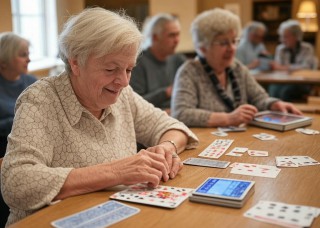
Maintaining cognitive fitness through engaging in various brain games, both traditional and digital, is crucial for seniors as it enhances memory retention, problem-solving abilities, and emotional well-being while helping to protect against age-related decline. A holistic approach that includes diverse activities, physical exercise, a balanced diet, and social interaction further supports mental health and cognitive function.
The article outlines strategies for keeping seniors' minds active through brain games and apps, highlighting the importance of cognitive exercises, social engagement, and a healthy lifestyle in combating cognitive decline. It emphasizes the benefits of various types of games and offers practical tips for maintaining mental wellness through enjoyable activities while acknowledging their limitations.
Get PricingAsk A QuestionSchedule A TourContact Senior Advisor
By clicking submit, you agree to our Partner's Terms of Use. You
also consent to receive calls and texts, which may be autodialed, from our Partner. Your consent is not a condition to
using our Partner's service. Please visit our Partner's Privacy Policy for information about their privacy practices.


 Active Adult Communities (55+)
 Cats allowed
 Dogs allowed
 Air-conditioning
 Bath tubs
 Cable or satellite TV
 Devotional services off-site
 Full kitchen
 Ground floor units
 Handicap accessible
 Indoor common areas
 Outdoor common areas
 Swimming pool / hot tub
 Charlotte Douglas International (3 miles away)
 Robust 24/7 care with engaging activities and comprehensive amenities.
 Exploring Nonmedical Home Care: Understanding Services, Costs, and Financial Approaches
 Engaging Brain Games and Innovative Apps to Keep Senior Minds Active
 Effective Strategies for Keeping Seniors' Minds Active: A Deep Dive into Brain Games and Apps