
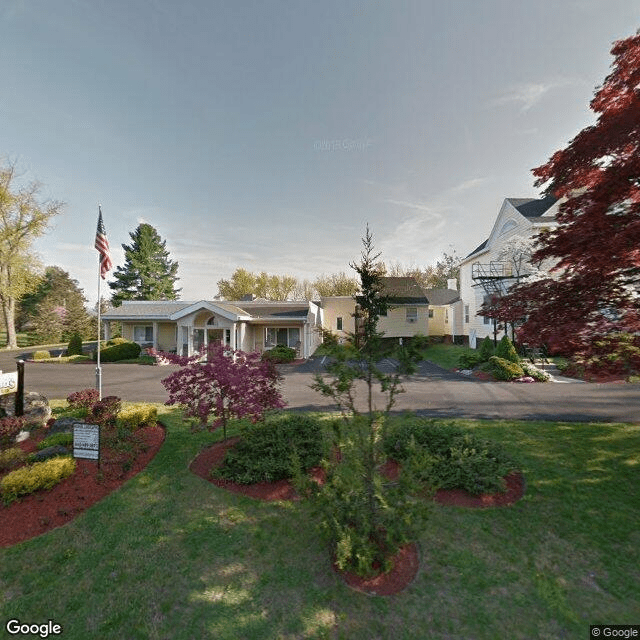
126 Old Castle Point Rd, Wappinger Falls, NY 12590
To contact a resident: (845) 831-1909
For more information about senior living options: (866) 208-4318
Overall Review of The McClelland Home for Adults
Pros
 The staff are amazing and the grounds are beautiful.
- The facility has upgraded the flooring and overall look, making it a wonderful place to live.
- The staff are incredible and provide outstanding care.
- The staff are caring and treat residents as their own.
- The staff are friendly and always able to answer questions.
- The people who run this place are top notch and have amazing attention to detail.
- The staff here are amazing, always helpful, and the facility is a beautiful place to live.
Cons
 The reviewer describes the staff as negligent for leaving him without medical attention for hours after the fall.
- The director allegedly claimed the overnight staff did not want to wake him, implying a cover-up.
- The facility failed to contact the next of kin in a timely manner after the fall.
- The owner claimed the cameras did not face the grandfather's room, undermining accountability.
- There were inconsistencies between staff reports and the grandfather's actual condition.
- The health department found violations during the investigation.
- The reviewer would never recommend the facility.
Review
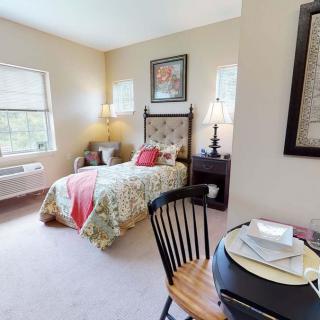
The McClelland Home for Adults in Wappinger Falls is best suited for families seeking a warm, home-like atmosphere with genuinely attentive staff and easy access to medical resources. The community shines for residents who value personal warmth, daily kindness from caregivers, and a setting that feels like a real home rather than a sterile institution. It is also a practical match for families who need Medicaid options and want a location convenient to Route 9 and nearby hospitals. Those who expect every process to be perfectly transparent and incident-free should proceed with careful scrutiny, because a few reviews flag serious concerns about communication and accountability that cannot be ignored.
On the positive side, the most frequently cited strength is the staff’s dedication and the gentle, responsive care residents receive. Families repeatedly describe the team as friendly, compassionate, and hands-on, with several notes about strong personal connections and ongoing attention to residents’ needs. The facility’s improvements in appearance, updated flooring and a generally cared-for environment, contribute to a sense of stability and dignity for residents. Proximity to medical facilities, a convenient location, and Medicaid acceptance further elevate the practical value for families who must coordinate ongoing care, hospital visits, and transitions.
Yet the strongest caution centers on safety and accountability. A dramatic, highly troubling account from a family member portrays a fall that went unaddressed for a protracted period, with subsequent medical decline and a relative’s death. That narrative, along with multiple mentions of miscommunication between staff, the director, and families, raises a red flag about incident handling and real-time responsiveness. Complaints about camera footage disputes and inconsistent statements from ownership further undermine trust in the facility’s governance. Health department violations cited in an investigation compound those concerns, signaling a need for rigorous oversight and verifyable corrective actions before placing a loved one in residence.
Care quality and safety are inseparable in this decision. The community often earns praise for its caring personnel, but the potential for delayed medical attention in a critical moment cannot be dismissed. Prospective families should demand clear, written protocols for fall risk management, rapid medical response, and transparent incident reporting. Inquire about staff-to-resident ratios, nursing hours, emergency transport arrangements, and how quickly a physician is notified after a serious event. Request recent inspection summaries and evidence of sustained improvement plans. Only with demonstrable, sustained progress in these areas can the favorable caregiving narrative outweigh the gravity of the safety concerns.
Financially, the program presents a middle-range value: around three thousand dollars per month with Medicaid acceptance, and the benefit of a strategically located setting near hospitals and community services. Families should still drill into the full cost picture: what is included in the base rate, what ancillary fees may arise, and how cost changes if care needs escalate. Confirm what supports are covered for dementia-related needs, medication management, and transportation. Given the mixed record on safety and communication, it is essential to tie price to verified outcomes, demand evidence of improved incident handling, consistent family communication, and a credible plan to prevent repeat lapses.
In the end, this community is a viable option for those willing to engage actively in ongoing oversight and to weigh the warmth of a devoted caregiving staff against the weight of potential governance gaps. The McClelland Home for Adults can deliver meaningful quality of life and stability for residents who fit that profile, provided the new entrant insists on concrete assurances: transparent incident documentation, reliable emergency response, and a proven corrective-action track record. For families unable to tolerate ambiguity around safety and communication, or those needing highly standardized medical governance, exploring alternatives with more stringent accountability may be the prudent path. Visitors should schedule conversations with multiple staffers, review recent inspection reports, and insist on seeing exact procedures before committing.
 Board and Care Home
 Activities off-site
 Beautician on-site
 Devotional services on-site
 Indoor common areas
 Outdoor common areas
 Private bathrooms
 Respite or short term stays offered
 Wheelchair accessible showers
 Stewart (8 miles away)
 Ambulatory care
 High acuity care
 Meals provided
 Christian services



 A Detailed Exploration of Living Wills and Advance Directives
 Comprehensive Guide to Medicare Coverage for Hospice Care
 Caring for Those Who Care: Recognizing, Understanding, and Overcoming Caregiver Burnout