
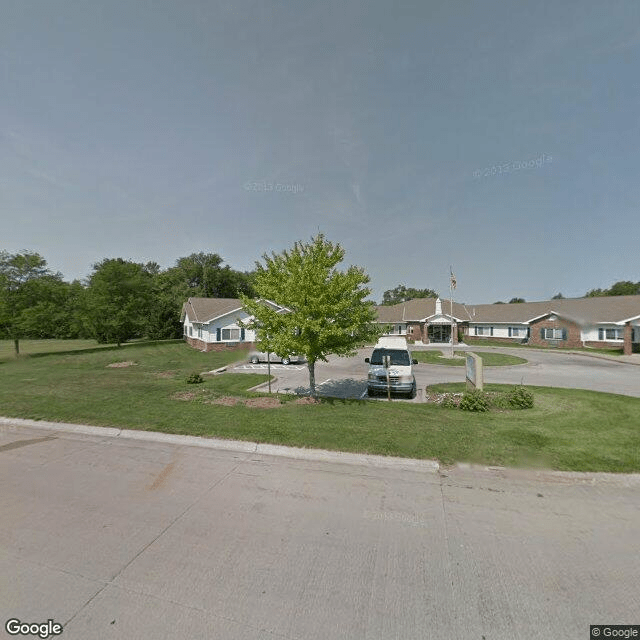
1405 Hickory Ave, Crete, NE 68333
To contact a resident: (402) 826-2241
For more information about senior living options: (866) 208-4318
Garden Square of Crete Costs & Pricing
Garden Square of Crete offers competitive pricing for its residents, with monthly costs aligned with those of Saline County. For a studio apartment, the rate is set at $2,195, which matches the county's average and significantly undercuts the Nebraska state average of $3,728. Similarly, the one-bedroom unit is priced at $2,995 - a figure that remains consistent with Saline County but again presents a cost advantage compared to the broader state average of $3,167. This pricing structure makes Garden Square of Crete an appealing option for those seeking quality living in a supportive community without straining their budgets.
| Floor plans | Garden Square of Crete | Saline County | Nebraska |
|---|---|---|---|
| Studio | $2,195 | $2,195 | $3,728 |
| 1 Bedroom | $2,995 | $2,995 | $3,167 |
Assisted Living communities with a similar price nearby
-
from +$170 / mo
Legacy Estates
$2,365 to $3,230 / month20.2 miles away -
from -$235 / mo
Legacy Terrace
$1,960 to $2,745 / month22.1 miles away -
from -$70 / mo
The Legacy
$2,125 to $3,870 / month18.7 miles away -
from +$105 / mo
The Residence at Gramercy
$2,300 to $3,500 / month20.4 miles away
Overall Review of Garden Square of Crete
Pros
 Garden Square appears very clean and well organized.
- The residents seem happy with their rooms or apartments.
- The staff have consistently been kind to visitors.
- Garden Square provides activities for residents to participate in.
- Providing meals helps the residents, who are described as wonderful people.
- The senior staff exemplify a positive environment.
- The facility is very pleasant.
- The reviewer has even considered living there someday if necessary.
Cons
 There seemed to be an issue between some of the staff members.
- The environment did not portray the standard exemplified by the senior staff.
- The reviewer noted that there were occasions where something was out of sorts.
- The cost is on the high side for the size of the community.
Review
Garden Square of Crete in Crete, Nebraska is best suited for seniors who want a clean, well-organized assisted living setting with meaningful daily programming and meals included. It serves residents who value a warm, approachable staff and a social, neighborly atmosphere in a compact, easily navigable community. For families, the strongest fit is a person who prioritizes reliability, predictable routines, and a pleasant living environment over aggressive price competition. In short, this community works best for someone who wants a cheerful, active environment with straightforward services and a strong emphasis on daily life as a shared experience.
Those whose needs trend toward higher medical care, memory support, or intensive supervision may want to compare with larger facilities that explicitly advertise these capabilities. If budgeting is a central constraint or if pricing transparency is non-negotiable, alternatives with clearer fee structures should be pursued. Additionally, families who require consistently smooth inter-staff collaboration or who place a premium on uniformity of service across shifts may want to interview multiple staff and observe care during a typical day to ensure expectations align.
Key strengths are evident: the environment is clean and organized, with residents appearing satisfied in their rooms; staff come across as kind and engaged; there is a robust activity calendar that provides meaningful engagement; meals are provided, easing daily planning and strengthening nutrition. These elements matter: cleanliness reduces daily stress and safety concerns; friendly staff promote trust and continuity; structured activities create routine and social connection; meals-included can lower overall living costs or at least reduce daily friction around food planning.
Two caveats emerge from the observing lens: a single noted incident of staff members having a disagreement. While described as an isolated moment, it should be a red flag worth examining during a tour, watch for how staff interact with each other and with residents over a full day. Pricing remains opaque in the feedback, with no explicit cost shared, and the reviewer suspects the overall cost may be high for the community’s size. This lack of transparent pricing is a meaningful drawback for families weighing value against amenities.
Yet the positives mitigate these concerns for many families. The clean, organized setting, the kindness of staff, and the lively activity schedule create a reliable daily rhythm that can justify a higher price point for the right resident. The meals included add tangible value, offsetting some monthly expense. The momentary staff tension appears to be a rare event in an otherwise positive environment and may not reflect typical day-to-day operations. Overall, the quality of life and sense of community appear strong, which is often the deciding factor when evaluating proximity to home, safety, and social fulfillment.
For families considering this community, approach with a plan: arrange a visit to observe actual interactions across shifts; request a clear, written pricing package and what is included, and ask about care levels offered and what happens if needs change. Confirm transition support, roommate options, and the availability of preferred activities. If these align with the loved one’s priorities, social engagement, routine, nutrition, and a respectful staff culture, Garden Square of Crete emerges as a prudent choice. If not, alternatives with clearer pricing and more comprehensive medical support on site may be more suitable.
 Assisted Living
 Cats allowed
 Dogs allowed
 Activities off-site
 Devotional services off-site
 Indoor common areas
 Outdoor common areas
 Respite or short term stays offered
 Wheelchair accessible showers
 Lincoln Municipal (18 miles away)
 Ambulatory care
 Diabetic care
 Meals provided




 Social Security Benefits and Assisted Living: Navigating Options Across the U.S.
 An Extensive Exploration of the VA Aid and Attendance Benefit
 Senior Transition Services: Understanding Their Role, Cost, and Importance