
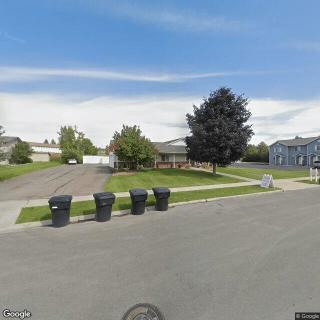
121 Financial Drive B, Kalispell, MT 59901
For more information about senior living options: (866) 208-4318
Overall Review of DPHHS/SLTC - Home & Community Based Services (HCBS) Kalispell RPO
Pros
 The ladies working at DHHS are very knowledgeable, courteous, and efficient.
- The waiting area is clean and provides the general public with much-needed informational phone numbers and locations.
- They were very informative and answered questions.
- There is a short wait time, and arriving early is advised due to the take-a-number system.
- The staff are very helpful and provide a much more pleasant experience than expected.
Cons
 There is a long wait.
- A trip to this place is like a DMV experience, one would trade for a wrestling match with a porcupine.
Review
This Kalispell facility, the DPHHS/SLTC - Home & Community Based Services Kalispell RPO, is best suited for families and individuals who need reliable guidance on home-and-community-based supports in northwest Montana. The strong point here is the staff: the ladies working at DHHS are knowledgeable, courteous, and efficient, turning what can be a confusing process into manageable steps. The waiting area is clean and well-organized, a small but important signal that the operation values accessibility. For planning purposes, this office excels at providing critical phone numbers, locations, and the kinds of services available, making it a sensible first stop for questions about eligibility, benefits, and local resources. It is particularly advantageous for those who want a clear map of options before committing to a care plan, rather than diving straight into private arrangements.
Those who require a fast, turnkey intake or a highly personalized, single-point-of-contact care manager may want to consider alternatives. The reviews reveal a mixed experience with wait times that can border on lengthy, and some encounters feel as fraught as a DMV visit. For urgent placement decisions or immediate, hands-on support, private geriatric care managers, elder-law attorneys with care planning services, or private in-home care agencies may move more nimbly and offer more continuous case management beyond information dissemination. This is not a one-stop shop for fast decisions; it is a knowledgeable information hub. Families should plan around potential delays and decide whether an informational starting point suffices or if the search needs a more proactive partner.
On balance, the pros emphasize a solid foundation for decision-making. Knowledgeable staff and courteous interactions reduce uncertainty, while efficient service in some cases speeds up the process. The clean reception area and the array of informational materials contribute to a sense that legitimate, practical help is available. The system’s transparency, questions answered, resources provided, helps families begin to chart options without fear of being left in the dark. Yet, the very strength can highlight the main drawback: inconsistent throughput. The voice of reviewers who experienced long waits and a DMV-like cadence signals that the benefit of expertise can be undercut by operational bottlenecks. When time is of the essence, that friction matters and may drive families to seek alternatives.
Instances of short waits exist, but they are the exception rather than the rule. One reviewer notes a short wait when arriving early, while several others describe protracted stays dating from a simple inquiry to a lengthy queue. The take-a-number system, intended to create order, sometimes underscores the reality that demand outstrips capacity. Still, the overall environment remains practical: staff provide precise answers, offer next steps, and point to relevant offices and phone numbers. For a family weighing assisted living options, that clarity matters because it translates into concrete next steps rather than vague guidance. The risk is misaligning expectations with actual service pace, which can disrupt timelines for moving forward with care arrangements.
Decision-making should center on whether information availability aligns with the family’s planning timeline. If the goal is a grounded understanding of what HCBS options exist, eligibility requirements, and local resources, this Kalispell RPO delivers a reliable foundation. If, however, the priority is a rapid intake or ongoing, hands-on coordination across multiple providers, the cons, long wait times and episodic throughput, become material. In such cases, engage a private care coordinator or elder-law professional who can shepherd a plan, schedule, and authorization with fewer pauses. When using this service, come prepared: list questions by category (eligibility, services offered, transportation, timelines), bring any documentation, and request direct contact with staff who specialize in HCBS referrals. A strategic use of the office can save weeks elsewhere.
Bottom line: this community serves as a practical, credible starting point for families navigating home-based supports in Kalispell, particularly for those who value informed guidance and local resource connections. The staff’s knowledge is its strongest asset, turning unclear circumstances into structured options. However, the pace can frustrate those with urgent needs or tight relocation schedules. For many families, the right call is to use this hub as a first step, collect essential details, map out prospective services, and then move to private coordination if speed and continuous, proactive management are required. Plan visits to minimize wait times, call ahead to verify hours or to request information on specific programs, and enter the process with a clear set of questions. In the end, the choice becomes straightforward: leverage the expertise here, then decide whether to pursue private support to complete the care strategy.
 21 resident community capacity
 Assisted Living
 Beauty salon
 Cable or satellite TV
 Dining room
 Fully furnished
 Garden
 Housekeeping services
 Kitchenette
 Move-in coordination
 Outdoor space
 Restaurant-style dining
 Small library
 Telephone
 Wi-Fi/high-speed internet available
 Glacier Park International (8 miles away)
 24-hour call system
 Activities of daily living assistance
 Assistance with bathing
 Assistance with dressing
 Assistance with transfers
 Diabetes diet
 Medication management
 Mental wellness program
 Special dietary restrictions





 Exploring the Contrasts Between Assisted Living and Skilled Nursing
 8 Key Indicators That Suggest It May Be Time to Transition from Assisted Living to Skilled Nursing Care
 Vibrant Senior Living: A Comprehensive Guide for Active Older Adults