
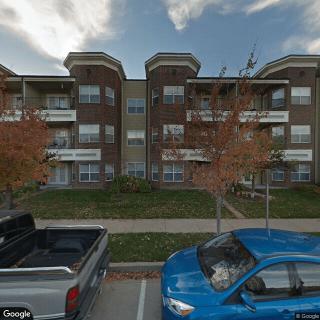
5500 North West Houston Lake Drive, Kansas City, MO 64151
For more information about senior living options: (866) 208-4318
Overall Review of Autumn Woods
Pros
 The facility offers an adult day program, giving residents somewhere to go and a sense of having a life each day.
- Residents who can handle it are given responsibilities such as dish duty one day a week.
- Autumn Woods encourages residents to actively participate in life rather than simply sit back.
- Sweetie Marie, the cat at Autumn Woods, is a favorite feature and means a great deal to the resident’s friend.
Cons
 The reviewer is not happy with their friend's situation as a resident.
- The reviewer notes that the roommate probably needs memory care, a concern far beyond her pay grade.
- The reviewer has definitely seen worse, implying dissatisfaction.
- The reviewer rejects the notion that such facilities are merely places to look at scenery and wait to die.
Review
Autumn Woods is best suited for seniors who want daily life to feel purposeful and active, not merely scenic or tranquil. The environment prizes participation over passivity, with programming that gives residents places to go and tasks to handle, rather than a passive wait-for-family model. The presence of an adult day program offers a structured outlet for daytime engagement, and small responsibilities, such as dish duty, provide a tangible sense of contribution. A comforting, human touch in the form of a resident cat adds an everyday warmth that can be meaningful for those who value companionship beyond staff interactions. For families seeking an atmosphere where life continues in a practical, participatory way, Autumn Woods delivers.
Those considering alternatives should keep memory-care needs and roommate compatibility at the forefront. The most significant caveat is the potential mismatch between a resident’s cognitive and care requirements and the available on-site support. In the described situation, a resident ended up sharing a room with someone whose needs might be better met in memory-care settings or with closer supervision. If stability, predictable care alignment, and safer roommate pairing are non-negotiables, it would be prudent to compare other communities that specialize more heavily in memory-care or have more deliberate roommate-matching processes. Autumn Woods may not be the right fit for residents with substantial cognitive challenges or for families prioritizing rigorous, specialized oversight.
The strongest positives center on engagement. The adult day programming and the opportunity to participate in daily routines help prevent a sense of stagnation, which can be a common risk in senior living. Light, meaningful responsibilities, like dish duty, offer residents a framework for purpose and routine. This pragmatic approach to daily life distinguishes Autumn Woods from places that emphasize observation over participation. The cat, Sweetie Marie, adds an informal source of comfort that can ease transitions for some residents and offer a touchstone of home. Taken together, these elements create a living situation where residents can still feel relevant and connected.
The most notable drawbacks are practical and organization-related rather than cosmetic. The roommate situation described points to a broader concern: care alignment. When a resident seems to be paired with someone whose care needs are outside their own, it creates daily friction and worry about safety, comfort, and appropriate supervision. Coupled with a low overall rating drawn from a small sample, these concerns suggest that the community may struggle to consistently deliver the level of individualized attention that families expect in higher-acuity settings. Without transparent staffing ratios, memory-care availability, and a robust roommate-matching process, the cons carry substantial weight.
Yet the positive aspects do not vanish in the face of these risks. For families prioritizing activity, companionship, and a sense of purpose, the pros can Meaningfully offset some downsides, especially for residents who are largely independent and simply need structured social routines and light chores. The practical engagement and the emotional benefit of a friendly, homey environment can compensate for gaps in formal care in certain cases. The key is alignment: if a resident can participate safely and meaningfully without requiring intensive memory-care interventions, Autumn Woods can fulfill a crucial niche where life remains engaged and tangible.
For decision-makers, the path is concrete. Focus first on care needs: is memory support, safety oversight, and consistent roommate compatibility nonnegotiable? If yes, broaden the search to communities with stronger memory-care programs and more formalized placement processes. If engagement and daily purpose are the priority and the resident can function with light supervision, a careful visit is warranted, with questions about how roommates are paired, how staff monitor cognitive changes, and what benchmarks exist for escalating care. Autumn Woods offers genuine opportunities for living with purpose, but the decision should rest on clear, aligned expectations: activity-driven engagement for the right resident, and a different fit when robust memory-support and safer, more stable roommate scenarios are required.
 28 resident community capacity
 Assisted Living
 Activities on-site
 Beauty salon
 Cable or satellite TV
 Devotional services off-site
 Dining room
 Fully furnished
 Garden
 Housekeeping services
 Indoor common areas
 Kitchenette
 Move-in coordination
 Outdoor space
 Restaurant-style dining
 Small library
 Telephone
 Wi-Fi/high-speed internet available
 Kansas City International (9 miles away)
 24-hour call system
 Ambulatory care
 Assistance with bathing
 Assistance with dressing
 Assistance with transfers
 Diabetes diet
 Diabetic care
 Medication management
 Mental wellness program
 Special dietary restrictions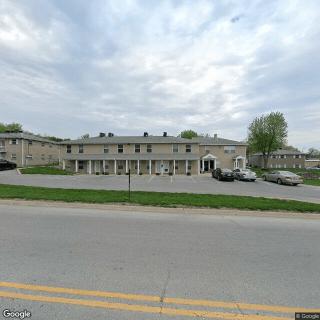




 Comprehensive Insights into Activities of Daily Living (ADLs) and Their Assessment
 Medicare Coverage for Assisted Living: An In-Depth Exploration
 Choosing the Right Senior Care: A Detailed Exploration of Assisted Living and Nursing Homes