
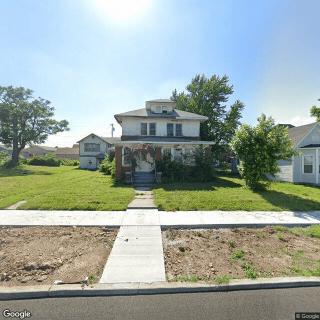
32nd Texas, Joplin, MO 64804
To contact a resident: (417) 659-8086
For more information about senior living options: (866) 208-4318
Overall Review of Independent Living Center
Pros
 The organization is wonderful; its in-home services are fantastic and it offers lots of fun community activities to join.
- The staff are nice, friendly, and helpful.
- They help others by keeping them in their own homes instead of assisted living places.
- They take care of clients' needs and are truly concerned about them; the aide is a friend who is sweet and kind.
- The staff are very kind and courteous when spoken to on the phone.
Cons
 The reviewer alleges that an employee entered private areas of the home without permission, violating privacy.
- The reviewer claims management is incompetent and should be replaced immediately, noting that staff rarely answer questions or follow up and that there are no callbacks.
- The reviewer accuses the director of treating clients as paychecks and describes the staff as disorganized, implying neglect and abuse of clients.
- The reviewer describes a chaotic orientation with inconsistent information and poor training, reflecting overall disorganization.
Review
This independent living center in Joplin, MO is best suited for seniors who want to remain in their own homes while accessing in‑home services and a rich calendar of community activities. The standout strength is the in‑home support and the sense that staff genuinely connects with clients, an arrangement that lets people stay independent without surrendering companionship or help when needed. For families seeking a lively, people‑oriented atmosphere in a setting that emphasizes staying socially engaged, this community presents a compelling option. It is especially appealing to those who prize flexible assistance and a friendly, reachable team that can coordinate care around personal routines.
However, some families should explicitly consider alternatives. The most weighty reason is governance and reliability. Several reviews flag inconsistent follow‑through, communication gaps, and a perception that management does not adequately train or oversee staff. These concerns matter because they translate into real frustrations: unanswered questions, misaligned expectations, and a lack of confidence that problems will be addressed promptly. For residents with a higher need for predictable, tightly supervised care, or for those who value privacy to the highest standard, the risk of privacy intrusions and uneven staff expertise makes rethinking the choice prudent.
The positives do offer real value that can offset certain drawbacks, when the stars align. The in‑home services are repeatedly praised as thorough and responsive, and the organization supports engaging activities that promote social connectedness and daily purpose. When aides are dependable and personable, as some reviews suggest, the arrangement can feel like a trusted personal team rather than a distant agency. Phone interactions are described as courteous, which helps when coordination and scheduling are critical. For residents who prefer aging in place with a flexible support network and a robust social calendar, these advantages can substantively offset occasional lapses in management.
Yet the weight of the negatives cannot be ignored. Privacy is a live concern in several accounts: an incident where a staff member accessed private spaces without clear authorization, and complaints about inconsistent boundaries between personal and shared areas. Coupled with reports of information gaps, shifting schedules, and a culture that some perceive as treating clients as paychecks rather than people, the overall value proposition narrows. Potential residents must weigh the strong social and service elements against the possibility of inconsistent supervision, variable staff training, and the emotional toll of relying on a team that may be hard to reach or difficult to hold accountable.
In practical terms, this center is a strong fit for families who want aging‑in‑place flexibility, a warm frontline staff, and a calendar that keeps residents energized and connected. Before committing, prospective buyers should demand concrete assurances: explicit privacy safeguards and clear policies about when aides may enter private spaces; transparent, documented staff training and ongoing supervision; a solid plan for incident resolution and follow‑up; and a tour that includes conversations with both frontline staff and management. It is also wise to review the activities calendar, ask about the cadence of communication, and request recent references from families with similar needs to assess whether improvements have been made since the more troubling reviews.
The bottom line is pragmatic: the community delivers meaningful in‑home support and meaningful social engagement, but guardrails around privacy, staffing reliability, and management responsiveness are not uniformly solid. For seniors who can tolerate occasional management friction in exchange for personalized care and a vibrant activity schedule, this option can be a good match. For those whose priority is unwavering privacy, consistently reliable governance, and transparent, proactive problem solving, it is prudent to compare alternatives with stronger track records in supervision and client advocacy. A deliberate visit, direct questions about privacy protocols, staffing supervision, and written grievance processes will reveal whether the balance tilts toward opportunity or risk.
 Joplin Regional (7 miles away)







 Effective Strategies for Keeping Seniors' Minds Active: A Deep Dive into Brain Games and Apps
 In-Depth Look at the VA Aid and Attendance Program
 Nurturing Our Loved Ones: A Daughter's Journey in Caring for Her Mother