

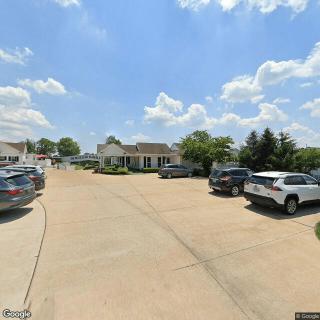
415 Glenmeadow Drive, Ballwin, MO 63011
To contact a resident: (314) 324-3401
For more information about senior living options: (866) 208-4318
Next Step Living STL Costs & Pricing
Next Step Living STL offers a competitive pricing structure for its private room accommodations, with a monthly cost of $2,000. This price is significantly lower than the averages for both St. Louis County and the wider state of Missouri, which stand at approximately $4,622 and $4,483 respectively. By positioning itself well below these benchmarks, Next Step Living STL not only provides an attractive option for potential residents but also emphasizes its commitment to affordability without compromising quality. This strategic pricing allows individuals to access comfortable living arrangements while benefiting from substantial savings compared to other local options.
| Floor plans | Next Step Living STL | St. Louis County | Missouri |
|---|---|---|---|
| Private | $2,000 | $4,622 | $4,483 |
Senior living communities with a similar price nearby
-
from +$160 / mo

Mary Ryder Home for Women
$2,160 to $2,420 / month15.0 miles away -
from +$390 / mo

Avalon Park Independent Living
$2,390 to $3,550 / month9.9 miles away -
from +$200 / mo

Victorian Gardens
$2,200 to $4,100 / month9.5 miles away -
from -$175 / mo

St Catherine Retirement Community
$1,825 to $2,090 / month17.4 miles away -
from +$230 / mo

The Villa at Riverwood
$2,230 to $3,186 / month15.8 miles away
Overall Review of Next Step Living STL
Pros
 The Next Step/Elder Assist is a compassionate and skilled group of elder care professionals who cared for a family member for eight years.
- They go the extra mile, including after-hours check-ins and advocacy during hospital stays.
- The care managers understand dementia and the aging process and provide practical ideas, suggestions, and solutions.
- They know St. Louis resources for older people, helping families access needed support.
- The family member looked forward to their visits and considered them friends.
- Diane, Terri, Mar, Maggie, and the rest of the team are an amazing resource in St. Louis and St. Charles for aging-related care.
Cons
 Maggie couldn’t explain things in a way that the grandmother or mother could understand, even after lengthy meetings.
- Maggie agreed to bill the person who asked but ended up billing the grandmother, causing stress over big expenses and fear of additional charges.
- Maggie spoke with an unauthorized sibling about the grandmother’s matters without consent, which distressed the grandmother.
- The grandmother received a significant bill for a call that Maggie had unauthorously entertained, adding to financial and emotional strain.
- The grandmother was charged $40 for a voicemail, despite assurances that calls under five minutes would not be charged.
- The overall tone suggests that several things went wrong and caused worry and frustration for the family.
Review
This Ballwin-based service is best suited for families that need hands-on elder-care management with a dementia-aware, long-term caregiving team operating at or near home. It excels for long-distance families that require steady advocacy, hospital coordination, and a reliable cadre of 24/7 caregivers who understand the aging process. The care managers function as an extension of the family, translating medical needs into practical care plans, arranging resources in the St. Louis area, and maintaining a reassuring presence during medical crises. When the loved one benefits from consistent visits that feel like friendship as well as professional oversight, this model delivers the most value. It is not a one-size-fits-all facility, but a practical solution for ongoing, relationship-driven care.
Those seeking strict, fully transparent billing and a flawless, conflict-free financial process should consider alternatives. The negative experience described around Maggie’s financial planning interactions highlights how miscommunication and unauthorized contact can create financial stress and erode trust. If the primary decision driver is predictable costs, upfront disclosures, and a clear separation between care management and financial advice, look for providers with clearer governance and vetted billing practices. Families who want a traditional, in-facility environment with standardized pricing may prefer a different model altogether.
On the upside, the team’s strengths are substantial: deep dementia understanding, hands-on oversight of a 24/7 care team, after-hours checks, proactive hospital advocacy, and a knack for navigating local resources. These capabilities translate into tangible safety, continuity, and emotional support, particularly for families far away. When a loved one requires consistent daily contact, timely escalation during medical events, and a credible partner who can coordinate multiple specialists, the advantages can far outweigh the stresses that come with occasional administrative missteps outside the caregiving domain.
Nevertheless, those advantages do not erase the red flags raised by the billing dispute. The lengthy, hard-to-parse meetings, questions about patient consent for third-party conversations, and surprising charges to the wrong person illuminate a governance gap. Prospective clients should insist on a written service agreement that clearly defines what is billed, by whom, and to whom, plus explicit consent parameters for communications. A proven track record of transparent invoicing, limit-setting on hourly charges, and a straightforward process for dispute resolution are non-negotiable prerequisites.
Decision-makers should weigh the practical goals: if the priority is a high-touch, dementia-capable care partner who can keep a loved one safe at home while maintaining family involvement, Next Step Living STL is a strong candidate. If, instead, the plan centers on a predictable budget, a formal facility environment, or inflow of services without the risk of cross-charged communications, alternatives deserve serious consideration. For those who value hospital advocacy and resource navigation as part of daily care, the positives make this option compelling, provided that governance and billing issues are addressed upfront.
Bottom line: this team offers compelling care continuity and dementia expertise that can relieve the strain on scattered families, but it requires vigilant due diligence on billing, consent, and service scope. Engage early with care managers, request written cost structures, and scrutinize any third-party billing arrangements before committing. With clear boundaries and solid communication practices, the benefits of reliable, personalized care can be realized; without them, the financial stress can eclipse the caregiving strengths. In the right circumstances, Next Step Living STL stands as a practical, capable choice for those prioritizing long-term, relationship-based care.
 Board and Care Home
 Private
 Lambert-St Louis International (13 miles away)
 Diabetic care







 Encouraging Participation in Adult Day Care: A Guide to Supporting a Hesitant Parent
 Comprehensive Exploration of Living Wills and Other Advance Directives
 A Detailed Exploration of Living Wills and Advance Directives