
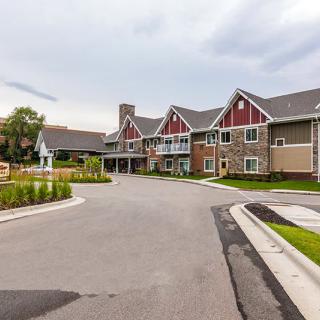
824 Pleasant Avenue, St Paul Park, MN 55071
For more information about senior living options: (866) 208-4318
Overall Review of Enhanced Care Assisted Living
Pros
 The staff are absolutely fabulous and truly caring, like a second family.
- Sylvia, the facility director, is beyond exceptional and wonderfully devoted to residents and families.
- Christine, the nurse, did an outstanding job handling all she had to learn and take on.
- Alex, who leads activities, is calm, caring, and goes beyond her role.
- The chef greets residents with a warm smile and helps them go outside for walks when family cannot be present.
- There is always something meaningful happening, including music, visitors, therapy dogs, and spiritual days.
- The facility offered a compassionate experience, escorting a resident with a prayer that was beautifully moving.
- Rivers of Life is a place to return to visit the staff, residents, and families they grew to love.
- Their philosophy centers on caring for residents with memory loss with love, providing exceptional care and creating a loving community.
- The director is a marvel with decades of experience, supporting both residents and families.
Review
This community is best suited for seniors dealing with memory loss who thrive on a warm, home-like atmosphere and for families that want deep, ongoing involvement in daily care. The core strengths center on a philosophy of memory-care delivered with genuine affection, led by a director whose decades of experience anchor both residents and families. The care team reads like a devoted extended family: a nurse who steps into learning curves with competence, a conscientious chef who greets every visit with warmth, and activity leadership that blends calm guidance with meaningful engagement. The environment supports not only routine safety and hygiene but also meaningful connection through music, therapy dogs, spiritual days, and frequent opportunities for family participation. In practical terms, this is a place where residents appear to be treated as individuals, not as numbers, and where staff consistently aim to make each day feel purposeful.
Those weighing alternatives should note who may not be the best fit. If memory care is not the primary need, or if a resident requires broader medical oversight, highly intensive supervision, or a more clinical model, apparent gaps in daily medical management could prompt families to explore options with a stronger emphasis on acute care. Families seeking minimal emotional intensity or a more anonymous, really “professional facility” atmosphere may also prefer a setting with less personal disclosure or a tighter gatekeeping of family involvement. In short, for residents who crave a highly specialized memory-care culture with robust family participation and a clearly loving approach, this is hard to beat; for others, a different model of care may align more closely with expectations for medical oversight and program structure.
The major advantages align closely with the most meaningful concerns families have about memory-care transitions. The staff’s dedication stands out: a sense of being greeted like kin, a director who actively supports both residents and families, and a nurse who demonstrates adaptability and care even as responsibilities evolve. The care team’s compassion translates into calmer days for residents and calmer hearts for relatives. The facility itself reinforces these strengths with a clean, inviting, home-like ambience that feels safe yet unpretentious. A well-rounded slate of activities, and access to outside-the-home experiences such as outdoor time and social visits, keeps residents engaged, reduces agitation, and preserves dignity. The combination of an experienced leadership presence and a consistently caring staff creates a safety net that makes difficult moments more manageable for all involved, including in end-of-life care where the staff’s compassion can be quietly transformative.
On the downside, the same elements that make this setting appealing could be perceived as drawbacks by some. The emphasis on memory-focused care implies a niche program that may not suit every resident, particularly those who would benefit from more generalized assisted living routines or broader medical oversight. The “family-first” culture, while deeply reassuring to many, can feel intensive or emotionally demanding for families who prefer a more hands-off involvement. Yet these potential tradeoffs are not flaws so much as alignment issues: when the strengths, personal attention, meaningful programming, and a supportive director, fit a family’s goals, the negatives recede into the background. In other words, the pros far outweigh the cons for the targeted population, and the few caveats arise mainly when care needs drift beyond memory-specific services or when family dynamics demand a different balance of participation.
For decision makers, several practical considerations emerge. This environment is particularly well-suited for families who want transparent leadership and visible, tangible proofs of care, staff who know residents by name, a director who is accessible, and activities that invite participation from both residents and loved ones. Prospective families should plan a firsthand experience: meet the director, observe how staff interact with residents, sit in on an activity, and assess how the space feels on a typical day. If the resident’s routine relies on specialized memory-support protocols, inquire about care planning, staff training, and the pace of daily activities to ensure consistency with expectations. The strongest moves are to verify that schedules, family engagement opportunities, and end-of-life supports align with personal values and practical needs.
In the final assessment, this community earns its recommendation for families who value a memory-care-first model delivered with authentic warmth and steady leadership. It is a place where residents are treated as cherished individuals, where care is anchored by an experienced director, and where families can participate in a way that feels natural and meaningful. Those seeking a broader, less memory-centric or more medically centralized approach should consider alternatives that emphasize different strengths. For families prepared to invest in ongoing involvement and to lean into a culture of devotion to residents’ emotional and spiritual well-being, this community offers a compelling, well-supported option in St Paul Park. The decision becomes clearer after a thorough visit, a candid discussion about care goals, and a direct sense of whether the day-to-day rhythm of life here aligns with what the loved one most needs.
 21 resident community capacity
 Assisted Living
 Beauty salon
 Cable or satellite TV
 Dining room
 Fully furnished
 Garden
 Housekeeping services
 Kitchenette
 Move-in coordination
 Outdoor space
 Telephone
 Wi-Fi/high-speed internet available
 Minneapolis-St Paul International (11 miles away)
 24-hour call system
 Activities of daily living assistance
 Assistance with bathing
 Assistance with dressing
 Assistance with transfers
 Diabetes diet
 Meal preparation and service
 Medication management
 Mental wellness program
 Special dietary restrictions
 Transportation arrangement (medical)
 Transportation to doctors appointments

 Vibrant Senior Living: A Comprehensive Guide for Active Older Adults
 When to Transition from Assisted Living to Memory Care: Key Indicators, Steps, and Finding the Right Community
 Assisted Living and Memory Care: Understanding Their Core Differences