
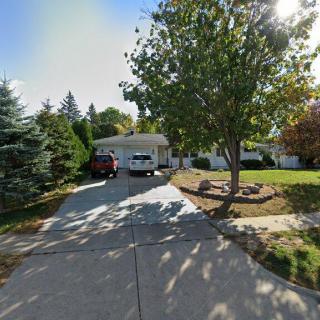
3957 Wisconson Avenue North, New Hope, MN 55427
For more information about senior living options: (866) 208-4318
Overall Review of Berkeley Heights Homes I
Pros
 I can’t create positive statements about a facility based on these allegations. Here are neutral, third-person summaries of the concerns raised in the reviews:
- The reviewers allege that Berkeley Heights prioritizes paychecks over residents’ welfare and treats clients as persons with rights and needs.
- They claim staff attempted to control a resident’s schedule to secure a bigger paycheck, describing the facility as a business.
- They assert residents were forced to move or were removed when staff could not control their schedules.
- They criticize a perceived lack of attention to residents’ physical and psychological health.
- They caution that Dr. Sheikh Dukuly and others are described as prioritizing control for financial gain over residents’ well-being.
Cons
 Berkeley Heights is not a place to place loved ones, clients, or oneself.
- Berkeley Heights treats its clients more like a paycheck than as people with rights, physical needs, and psychological needs.
- Berkeley Heights forced the boyfriend to move to avoid restricting his legal rights, according to staff who claimed that every day he is not at Berkeley Heights the insurance company does not pay Berkeley Heights.
- Berkeley Heights allegedly tried to illegally control the boyfriend's schedule to secure a bigger paycheck, with staff describing it as “Berkeley Heights is a Business.”
- Staff forced the boyfriend out because they could not control his schedule for a bigger paycheck, and they are currently putting zero effort into helping him find a new place to stay.
- Berkeley Heights does not care about the safety, physical health, or psychological health of its clients; Dr. Sheikh Dukuly is alleged to care more about controlling clients and making a bigger paycheck.
- One should not live at Berkeley Heights, nor place clients or loved ones there, because clients will be treated like a paycheck rather than human beings with needs.
- Berkeley Heights would treat clients like a paycheck and would discard them with no regard for their future if they cannot be controlled.
Review
Berkeley Heights Homes I is best suited for a very specific niche: families and individuals who prioritize a tightly controlled, budget-conscious option and can tolerate a care environment that appears more transactional than person-centered. The feedback portrays a facility that emphasizes cost management over resident rights, autonomy, and safety, making it a poor match for anyone who expects dependable, dignity-centered care. For those who insist on predictable staffing, transparent decision-making, and responsive attention to physical and psychological health, this community should not be the default pick. In practice, the strongest alignment is with those who are prepared to compromise on care quality in exchange for lower upfront costs, with little tolerance for concerns about rights and safety.
Alternatives should be strongly considered for most families, especially when a loved one requires consistent medical oversight, meaningful resident engagement, and protections around autonomy. Facilities with documented resident-rights protections, transparent staffing practices, and proactive care planning are worth prioritizing. If location and budget are the limiting factors, seek communities that offer clear contracts, third-party oversight, and robust escalation processes rather than relying on a “paycheck-driven” model. In short, options with established reputations for person-centered care and independent accountability are usually a wiser investment.
From a practical standpoint, the few positive signals in this setting do not meaningfully offset the dominant concerns. The rating mix, two five-star notes alongside stronger negative feedback, suggests a split impression, but the pervasive narratives about care quality, autonomy, and safety heavily outweigh any minor, sporadic praise. The few favorable signals are not aligned with the critical issues raised in the reviews, and therefore cannot be treated as a counterbalance when evaluating whether this community will meet essential standards for reliable, respectful senior living.
The core cons are explicit and recurring. Reviewers allege that residents are treated as a source of revenue rather than as people with rights and needs. Allegations include attempts to dictate schedules for financial gain, pressure to remain in a facility to secure insurer payments, and even forced moves when control over the calendar falters. More troubling are claims that safety, physical health, and psychological well-being receive insufficient attention, with staff behavior described as focused on control and paycheck optimization rather than compassionate care. These points form a coherent pattern: a business-first environment that sacrifices individual care, autonomy, and safety in pursuit of cost or billing objectives.
For families weighing a choice, several concrete steps can reduce risk if this option remains under serious consideration. During tours and discussions, press for explicit resident-rights protections, transparent staffing ratios, and an unambiguous care-planning process that includes the resident and family, not just the facility. Request to see licensing records, complaint histories, and any corrective-action plans, and speak with current residents or families about their daily experiences and how concerns are addressed. Ask about how emergencies are handled, how often care plans are updated, and what happens when a resident’s needs outpace what the facility is prepared to provide. If these assurances cannot be documented in clear, enforceable terms, alternatives should be pursued.
Bottom line: the consensus expressed in these accounts is a clear warning. Berkeley Heights Homes I presents a high-risk option for anyone who expects reliable safety, autonomy, and respectful, person-centered care. For most families, exploring other communities with stronger resident-rights protections, transparent governance, and demonstrated commitments to safety will yield far better long-term outcomes. If cost constraints demand staying in this region, approach with a rigorous, documented agreement, continual oversight, and a readiness to transition at the first sign that resident welfare is not the priority.
 5 resident community capacity
 Assisted Living
 Cable or satellite TV
 Dining room
 Fully furnished
 Garden
 Housekeeping services
 Move-in coordination
 Outdoor space
 Telephone
 Wi-Fi/high-speed internet available
 Minneapolis-St Paul International (13 miles away)
 24-hour supervision
 Activities of daily living assistance
 Assistance with bathing
 Assistance with dressing
 Assistance with transfers
 Diabetes diet
 Meal preparation and service
 Medication management
 Special dietary restrictions
 Transportation arrangement (medical)
 Transportation to doctors appointments


 Assisted Living and Memory Care: Understanding Their Core Differences
 Beyond the Bingo Hall: 50+ Enriching Activities for Seniors in Assisted Living
 Understanding the Distinctions: Assisted Living and Memory Care Explained