
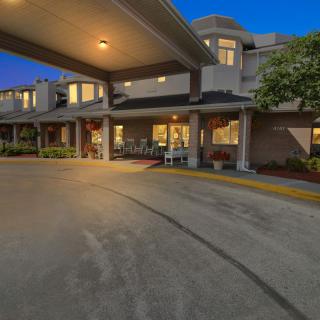
1002 Court Street, Saginaw, MI 48602
For more information about senior living options: (866) 208-4318
Overall Review of Krasinski Afc Home
Pros
 Tony is a good choice for many because he works on customer needs by encouraging them toward their goals and guiding them to correct their mistakes.
- Tony encourages people to pursue their true life purpose and helps them realize the potential they can become.
- Even when others misunderstand his approach, Tony remains supportive and motivates them to apply themselves more fully.
- Tony has spent about 20 years developing leadership skills and enables others to participate in growth opportunities, such as attending the 2015 peer conference.
Cons
 Some consumers think the only reason he is doing this is to be mean and nasty.
- He is perceived by some as mean and nasty.
- His corrections on others' mistakes are viewed by some as harsh.
Review
Krasinski AFC Home in Saginaw is best suited for adults who want a small, home-like setting where an owner-operator leads with a brisk, purpose-driven approach. This community leans into an AFC/SIP model that emphasizes personal accountability, goal orientation, and growth over generic routine. Residents who are comfortable with direct coaching, steady feedback, and a long-term plan for skill-building will likely find this environment compelling. The founder’s hands-on leadership shapes daily life, from activities to problem-solving, so the experience feels intimate rather than institutional. For families prioritizing meaningful development and a sense of direction for a loved one, Krasinski AFC Home offers a clear, practical path forward.
Those seeking a more standardized, facility-wide program with broad clinical staffing, specialized memory care, or a hands-off management style may want alternatives. The intimate, owner-centric model can feel intensely personal and may not suit residents who prefer a less directive hand, more predictable routines, or greater access to a wide network of clinicians. Smaller homes can limit the scope of what is available on the spot, especially if medical needs escalate or complex coordination is required. Families should weigh how much structure, staffing diversity, and clinical depth are essential versus the rewards of a highly personalized coaching culture.
On the upside, the principal strength is the mentorship-forward approach. The owner works with residents to clarify goals, correct missteps, and push toward authentic purpose, even when the process is demanding. This creates real momentum: residents often gain new capabilities, confidence, and leadership presence that endure beyond daily tasks. The arc described, progress unfolding over years, culminating in leadership demonstration and participation in external peer activities, demonstrates a kind of growth that is rare in more conventional settings. That depth can offset concerns about rigidity or friction with staff, since residents are driven by a personal mission rather than mere compliance.
Training is framed as life design rather than quiet acceptance of limitations. The environment rewards accountability, initiative, and perseverance, drawing residents into purposeful projects and social engagement that stretch their comfort zones in a constructive way. For families who value character development and meaningful milestones, Krasinski AFC Home can deliver outcomes that feel durable and real rather than superficial. The small scale often translates into quicker feedback loops, clearer expectations, and stronger trust between residents and the operator, which in turn supports safer, more intentional progress in daily living.
Still, the single negative review in the mix signals a potential caveat. A hands-on, corrective style can be interpreted as overly stern by those who crave gentler coaching or more predictable, routine care. For some residents, that intensity may wear thin or feel misaligned with personal temperament. Moreover, depending on the day-to-day staffing, there may be times when the experience hinges more on the owner's presence than on a broad team, which can raise questions about consistency and scalability if the need for care grows or if the owner is away. Families should assess whether a highly personal, growth-focused environment matches their loved one’s temperament and care requirements, or whether a larger, more staff-stable community would suit them better.
In sum, Krasinski AFC Home offers a compelling option for families prioritizing purposeful living, leadership development, and a deeply personalized approach to assistance. It works best for residents who respond to direct feedback, are motivated by personal goals, and are comfortable with an owner-led model that treats growth as an ongoing project. Those who require extensive clinical coordination, a softer coaching style, or larger-scale amenities may want to explore alternatives. A visit should include conversations with the owner about goal-setting mechanisms, progress tracking, and how care plans adapt as needs evolve, plus a clear sense of daily rhythm, scheduling, and available supports. With the right fit, this community can translate intention into lasting quality of life.
 12 resident community capacity
 Assisted Living
 Board and Care Home
 Cable or satellite TV
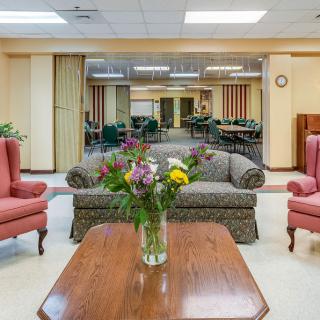
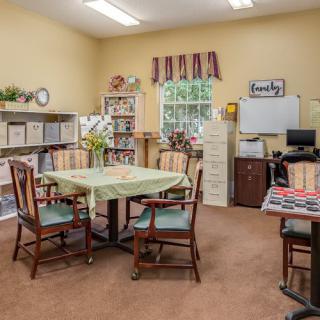
 Dining room
 Fully furnished
 Garden
 Housekeeping services
 Move-in coordination
 Outdoor space
 Telephone
 Wi-Fi/high-speed internet available
 Mbs International (10 miles away)
 24-hour supervision
 Activities of daily living assistance
 Assistance with bathing
 Assistance with dressing
 Assistance with transfers
 Diabetes diet
 Meal preparation and service
 Medication management
 Special dietary restrictions
 Transportation arrangement (medical)
 Transportation to doctors appointments

 Securing Financial Support for Assisted Living: A Comprehensive Overview
 Social Security Benefits and Assisted Living: Navigating Options Across the U.S.
 An Extensive Exploration of the VA Aid and Attendance Benefit