
2503 West 14 Mile Road, Royal Oak, MI 48073
For more information about senior living options: (866) 208-4318
Overall Review of Community Homes Adult Foster Care Home
Pros
 The company is really good and takes care of business.
- It is a five-star company.
- The company earns approval.
Cons
 Company is a fraud!
- They do not take actions the way that they suppose to!
- People get away with a lot of things at this company and nothing is being done.
Review
Community Homes Adult Foster Care Home in Royal Oak, MI is best suited for families that want a small, hands-on operator where day-to-day administration feels direct, practical, and predictable. The pattern suggested by the mix of reviews is a setting that prioritizes clear lines of responsibility, straightforward scheduling, and a businesslike approach to care. For families who value a compact, home‑like environment with a no-nonsense management style and the ability to get answers without wading through elaborate programming, this community can feel workable and efficient.
Those contemplating alternatives should consider options if governance and accountability are non-negotiable. A standout critique exists among the nine reviews: one negative voice explicitly labels the operation as fraud and accuses staff of inaction. While this is a single report, it signals a potential red flag for families that insist on aggressive issue resolution, transparent reporting, and observable consequences when problems arise. In situations where steady advocacy, rapid response to concerns, and verifiable corrective action are critical, exploring other providers would be prudent.
The main pros here hinge on a perceived capability to “take care of business.” A positive reviewer emphasizes reliability in operations, implying dependable administration, predictable billing, and consistent routines, factors that reduce daily friction for residents and families alike. When care decisions depend on efficient front-office systems, such strengths are meaningful. However, those advantages can be hollow if unresolved complaints quietly linger or if there is a perception that problems are not escalated or addressed with sufficient urgency. The gap between smooth administration and transparent accountability becomes the deciding line.
On balance, the pros barely offset the cons for families that can tolerate ambiguity around governance. The mixed sentiment, strong praise for operational reliability paired with serious allegations of inaction, casts enough doubt to demand rigorous due diligence. This is a situation where a clean, up-close assessment during a tour matters more than any online summary. Prospective residents should probe not just what the staff does day-to-day, but how concerns are tracked, who owns the facility, and what independent verification exists for complaint handling and corrective measures.
Practical next steps are clear. During a visit, request the ownership or management structure in writing, and ask for a tangible issue-resolution protocol: typical response times, escalation paths, and whether corrective actions are logged and reviewed. Request copies of the most recent licensing reports and any formal notices from state regulators, and seek direct references from current residents or families about responsiveness. Observe staff-resident interactions for warmth, attentiveness, and whether residents appear engaged or overly dependent on staff to prompt basic activities. If possible, review a sample of incident or complaint logs to gauge consistency in follow-through and transparency.
In comparison to larger, more regulated facilities, this community offers a more intimate, home-like setting and a leaner governance model. That can be an advantage for residents who thrive in a smaller, more personal environment, but it also increases the importance of robust oversight and clear accountability. If a family’s decision hinges on dependable problem-solving, long-term reliability, and a verifiable track record of addressing concerns, consideration of alternatives with stronger governance controls makes sense. The cautious path is to balance the comfort of a small, practical operation with a hard look at whether governance and responsiveness meet the family’s standards.
Ultimately, this community is a cautious choice, not a clear-cut fit for every family. It suits those who can tolerate a practical, businesslike operation and who can perform thorough due diligence to verify governance and responsiveness. For families prioritizing aggressive advocacy, transparent complaint handling, and demonstrably proactive problem resolution, exploring alternatives is advisable. A well-informed decision will hinge on direct evidence of how concerns are managed, not on positive impressions alone.
 6 resident community capacity
 Assisted Living
 Cable or satellite TV
 Dining room
 Fully furnished
 Garden
 Housekeeping services
 Move-in coordination
 Outdoor space
 Telephone
 Wi-Fi/high-speed internet available
 Detroit Metropolitan-Wayne County (24 miles away)
 24-hour supervision
 Activities of daily living assistance
 Assistance with bathing
 Assistance with dressing
 Assistance with transfers
 Diabetes diet
 Meal preparation and service
 Medication management
 Special dietary restrictions
 Transportation arrangement (medical)
 Transportation to doctors appointments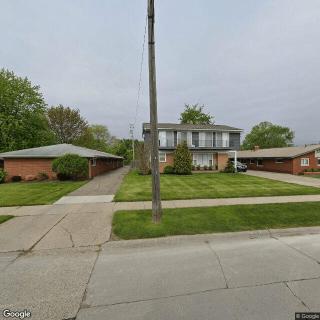






 When to Transition from Assisted Living to Memory Care: Key Indicators, Steps, and Finding the Right Community
 Assisted Living and Memory Care: Understanding Their Core Differences
 Beyond the Bingo Hall: 50+ Enriching Activities for Seniors in Assisted Living