Greenfield Home is an assisted living community in Lansing, MI.
Information last verified:
12450 Greenfield, Lansing, MI 48917
For more information about senior living options: (866) 208-4318
3.2 from 64 reviews
5 stars
30
4 stars
5
3 stars
3
2 stars
0
1 stars
26
Overall Review of Greenfield Home
caveat14 reviews mention this
Staffing and care feel inconsistent
Residents and families describe care that can be slow or uneven.
Some reviewers say they experienced neglect or delays, including not getting help for bathing, cleaning, or responding to call lights for long stretches. Several also describe a pattern of understaffing, including situations where residents needing two-person assistance reportedly received one aide. A few reviews go further, describing serious lapses during illness or medication timing, and others describe not being informed promptly after health concerns. On the other hand, other reviewers describe specific team members as attentive and helpful and say they felt reassured, so the experience appears to vary by caregiver and visit.
common6 reviews mention this
Food quality draws strong reactions
Food quality is a frequent point of feedback.
Reviews include complaints about meals being cold and generally unpleasant, with some people also saying they had limited options or never got asked what they wanted. There are also multiple positive mentions saying the food was excellent and that residents enjoyed it. Because both sides show up in the reviews, it seems like dining quality may depend on the specific meal or how expectations were set during someone’s stay.
caveat4 reviews mention this
Cleanliness and building condition vary
Some visitors report problems with cleanliness and upkeep.
A few reviewers describe the building and rooms as dirty or poorly maintained, mentioning unpleasant odors and visible disrepair details during tours. Others describe a clean facility, including being pleasantly surprised when they arrived and noting residents looked groomed and clean. The contrast suggests cleanliness and environment may not be consistent across rooms, timeframes, or individual experiences.
caveat3 reviews mention this
Activities can be limited
Activities are a point of disagreement in the reviews.
Some residents and family members say the community does not do enough—describing minimal activities, no library, and few outings. Other reviews describe activities happening throughout the day and special events like celebrations tied to residents. Together, the feedback reads like activity programming may depend on the time period and the individual unit’s schedule.
caveat4 reviews mention this
Rehab experience ranges by department
Therapy and rehab results are described in conflicting ways.
Some reviewers report poor or minimal therapy follow-through, including not seeing consistent PT and feeling that mobility improvement did not happen during the stay. Others describe a strong rehab department, with one person calling out physical therapy as the part that was right and treated them well. The reviews suggest therapy quality may vary depending on the therapist coverage and the specific care plan being followed.
common2 reviews mention this
Nearby familiar errands are close
Local dining and pharmacy stops are nearby.
Reviewers discuss day-to-day logistics indirectly through general convenience, and the location is close to common errands. The area includes nearby restaurant options and pharmacies within about half a mile to around a mile, plus additional medical offices farther out.
How we summarize
Counts show how many written reviews mention each theme; a review can touch several themes, and only frequently mentioned themes are displayed.
Features
Housing
6 resident community capacity
Types of Care
Assisted Living
Amenities
Cable or satellite TV
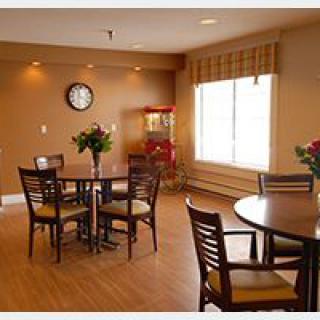
Dining room
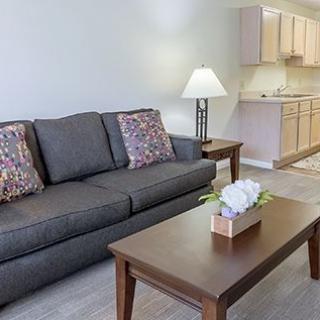
Fully furnished
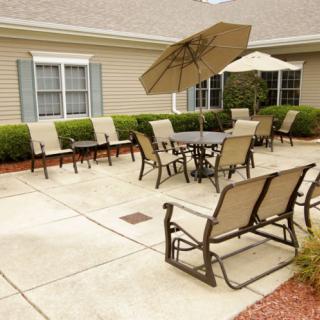
Garden
Housekeeping services
Move-in coordination
Outdoor space
Telephone
Wi-Fi/high-speed internet available
Transportation
Capital City (5 miles away)
Care Services
24-hour supervision
Activities of daily living assistance
Assistance with bathing
Assistance with dressing
Assistance with transfers
Coordination with health care providers
Diabetes diet
Meal preparation and service
Medication management
Special dietary restrictions
Transportation arrangement (medical)
Transportation to doctors appointments
Dining
Diabetes diet
Special dietary restrictions
Activities
Community-sponsored activities
Scheduled daily activities
Nearby Places of Interest
Restaurants
Culver's (0.5 miles)
McDonald's (0.6 miles)
Arby's (0.6 miles)
Bob Evans (0.7 miles)
Cracker Barrel (0.8 miles)
Horrocks Tavern (1.3 miles)
Burger King (1.3 miles)
Pharmacies
Walmart Pharmacy (0.8 miles)
Walgreens (2.2 miles)
Sparrow Pharmacy Plus (2.4 miles)
Grand Lodge Apothecary (2.7 miles)
Rite Aid (2.8 miles)
Walgreens (2.8 miles)
CVS Pharmacy (2.9 miles)
Cafes
Starbucks (1.2 miles)
Toads (3 miles)
Panera Bread (3.1 miles)
Biggby Coffee (7.1 miles)
Physicians
SVS Vision Optical Centers (1.2 miles)
Sparrow Medical Group West (1.5 miles)
MSU Pediatrics West Side (1.5 miles)
Sparrow Family Medical Services West (1.5 miles)
Family Medicine of Michigan (2.4 miles)
Associated Physicians PC (2.5 miles)
Podiatric Medicine & Surgery (2.6 miles)
Parks
Delta Mills Park (1.9 miles)
Jaycee Park (2.8 miles)
Fitzgerald Park (3.9 miles)
Lincoln Brick Park (4.1 miles)
Frances Park (5.2 miles)
Quentin Park (6.1 miles)
Rotary Park (7 miles)
Places of Worship
Riverview Church (1.9 miles)
First Congregational UCC (3.4 miles)
United Pentecostal Church (4.1 miles)
Oneida Gospel Church (5.9 miles)
Hospitals
America's Best Hearing (2.2 miles)
Work Health (4.2 miles)
Transportation
Capital Region International Airport (LAN) (5.2 miles)
The guide highlights the importance of assisted living facilities for aging veterans needing daily support, discusses unique challenges they face, and outlines available financial assistance from the VA, including the Aid and Attendance program. It emphasizes understanding eligibility criteria and navigating the VA system to access necessary benefits effectively.
The article compares assisted living and skilled nursing facilities, detailing their differing levels of assistance, medical support, cost structures, and day-to-day experiences. It emphasizes that assisted living is for those needing help with daily activities while maintaining independence, whereas skilled nursing facilities provide intensive medical care with 24-hour staff supervision.
The transition from assisted living to skilled nursing care is often prompted by complex medical needs that assisted living cannot meet, with key indicators including frequent health declines, increased falls, severe memory issues, and caregiver burnout. Families should recognize these signs early to discuss options with healthcare providers and prepare for the emotional and logistical aspects of moving to a facility that offers comprehensive medical support.
Get PricingAsk A QuestionSchedule A TourContact Senior Advisor
By clicking submit, you agree to our Partner's Terms of Use. You
also consent to receive calls and texts, which may be autodialed, from our Partner. Your consent is not a condition to
using our Partner's service. Please visit our Partner's Privacy Policy for information about their privacy practices.

 6 resident community capacity
 Assisted Living
 Cable or satellite TV
 Dining room
 Fully furnished
 Garden
 Housekeeping services
 Move-in coordination
 Outdoor space
 Telephone
 Wi-Fi/high-speed internet available
 Capital City (5 miles away)
 24-hour supervision
 Activities of daily living assistance
 Assistance with bathing
 Assistance with dressing
 Assistance with transfers
 Diabetes diet
 Meal preparation and service
 Medication management
 Special dietary restrictions
 Transportation arrangement (medical)
 Transportation to doctors appointments
 Extensive amenities and comprehensive care options.

 Assisted Living Support for Veterans: A Complete and Detailed Overview
 Exploring the Contrasts Between Assisted Living and Skilled Nursing
 8 Key Indicators That Suggest It May Be Time to Transition from Assisted Living to Skilled Nursing Care