Hubert Assisted Living Home Care offers competitive pricing for its services compared to the broader market in Ottawa County and the state of Michigan. For a studio, residents can expect to pay $2,550 per month, significantly lower than the county average of $3,626 and even below the state average of $3,824. The one-bedroom option is also attractively priced at $3,050, which is slightly above Ottawa County's average of $3,090 but still favorable when compared to Michigan's average of $3,384. However, the two-bedroom accommodations are priced at $4,200 monthly - this is notably higher than both local and state averages of $3,428 and $3,523 respectively. Overall, while Hubert Assisted Living Home Care presents appealing options for singles or couples needing studio or one-bedroom care settings, potential residents should carefully consider the costs associated with larger living arrangements relative to other facilities in the region.
Floor plans
Hubert Assisted Living Home Care
Ottawa County
Michigan
Studio
$2,550
$3,626
$3,824
1 Bedroom
$3,050
$3,090
$3,384
2 Bedrooms
$4,200
$3,428
$3,523
Assisted Living communities with a similar price nearby
Overall Review of Hubert Assisted Living Home Care
common23 reviews mention this
Staff care and responsiveness stand out
Residents and families consistently describe staff as compassionate, attentive, and responsive.
Across the reviews, families repeatedly highlight kindness and caregiving that feels personal, respectful, and consistent. Several mention clear communication during difficult transitions, including families being able to reach out and receive frequent updates and photos. Residents’ day-to-day support is also described through help with care needs and ongoing medication management. A few reviewers also call out leadership and the way staff members pitch in wherever needed.
common10 reviews mention this
Daily activities keep residents engaged
Daily activities and special events are a frequent part of life for residents.
Multiple reviewers describe activities happening every day, with a steady mix of games, arts and crafts, and organized outings or themed events. Several mention resident engagement beyond the room, including music, movie nights, and seasonal gatherings, with family members encouraged to participate. Families also describe enrichment programming as structured and encouraging rather than passive. Communication through shared updates and pictures is described as supporting involvement even when families can’t visit in person.
common5 reviews mention this
Food quality and dietary support
Residents receive well-liked meals, including support for changing dietary needs.
Food is a recurring bright spot: reviewers describe meals as homemade, freshly prepared, and something residents and families notice in a positive way. A few specifically mention an open kitchen concept where residents can see food being prepared. Dietary accommodations also come up, including support for special dietary restrictions that could change. Several families tie meal quality to overall satisfaction with day-to-day care.
How we summarize
Counts show how many written reviews mention each theme; a review can touch several themes, and only frequently mentioned themes are displayed.
Features
Housing
6 resident community capacity
Types of Care
Assisted Living
Amenities
Cable or satellite TV
Dining room
Fully furnished
Garden
Housekeeping services
Move-in coordination
Outdoor space
Telephone
Wi-Fi/high-speed internet available
Transportation
Kent County International (12 miles away)
Care Services
24-hour supervision
Activities of daily living assistance
Assistance with bathing
Assistance with dressing
Assistance with transfers
Coordination with health care providers
Diabetes diet
Meal preparation and service
Medication management
Special dietary restrictions
Transportation arrangement (medical)
Transportation to doctors appointments
Dining
Diabetes diet
Special dietary restrictions
Activities
Community-sponsored activities
Scheduled daily activities
Nearby Places of Interest
Physicians
ABC Pediatrics (0.1 miles)
West Michigan Heart (0.6 miles)
Grand Rapids Ophthalmology (1.4 miles)
SVS Vision Optical Centers (1.7 miles)
Natural Health Improvement Center (1.7 miles)
Spectrum Health Medical Group - Rivertown IM/Pediatrics (1.9 miles)
Hubert Assisted Living Home Care offers competitive pricing for its services compared to the broader market in Ottawa County and the state of Michigan. For a studio, residents can expect to pay $2,550 per month, significantly lower than the county average of $3,626 and even below the state average of $3,824. The one-bedroom option is also attractively priced at $3,050, which is slightly above Ottawa County's average of $3,090 but still favorable when compared to Michigan's average of $3,384. However, the two-bedroom accommodations are priced at $4,200 monthly - this is notably higher than both local and state averages of $3,428 and $3,523 respectively. Overall, while Hubert Assisted Living Home Care presents appealing options for singles or couples needing studio or one-bedroom care settings, potential residents should carefully consider the costs associated with larger living arrangements relative to other facilities in the region.
The article compares assisted living and skilled nursing facilities, detailing their differing levels of assistance, medical support, cost structures, and day-to-day experiences. It emphasizes that assisted living is for those needing help with daily activities while maintaining independence, whereas skilled nursing facilities provide intensive medical care with 24-hour staff supervision.
The transition from assisted living to skilled nursing care is often prompted by complex medical needs that assisted living cannot meet, with key indicators including frequent health declines, increased falls, severe memory issues, and caregiver burnout. Families should recognize these signs early to discuss options with healthcare providers and prepare for the emotional and logistical aspects of moving to a facility that offers comprehensive medical support.
Vibrant Senior Living emphasizes active senior living communities that promote independence and engagement through diverse amenities and activities, fostering wellness and social interaction among older adults. These communities range from independent to assisted living, with a focus on personal growth, family involvement, financial planning, and leveraging technology to enhance residents' experiences.
Get PricingAsk A QuestionSchedule A TourContact Senior Advisor
By clicking submit, you agree to our Partner's Terms of Use. You
also consent to receive calls and texts, which may be autodialed, from our Partner. Your consent is not a condition to
using our Partner's service. Please visit our Partner's Privacy Policy for information about their privacy practices.

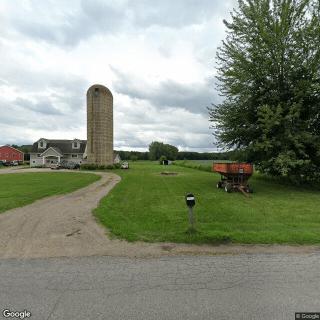

 6 resident community capacity
 Assisted Living
 Cable or satellite TV
 Dining room
 Fully furnished
 Garden
 Housekeeping services
 Move-in coordination
 Outdoor space
 Telephone
 Wi-Fi/high-speed internet available
 Kent County International (12 miles away)
 24-hour supervision
 Activities of daily living assistance
 Assistance with bathing
 Assistance with dressing
 Assistance with transfers
 Diabetes diet
 Meal preparation and service
 Medication management
 Special dietary restrictions
 Transportation arrangement (medical)
 Transportation to doctors appointments
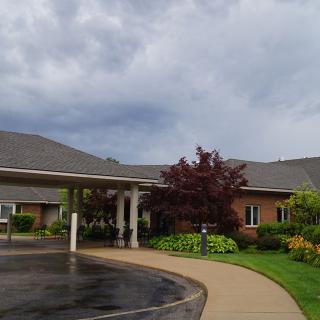
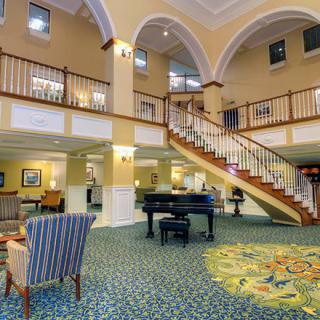
 Small, personalized setting with 24/7 supervision and ADL assistance.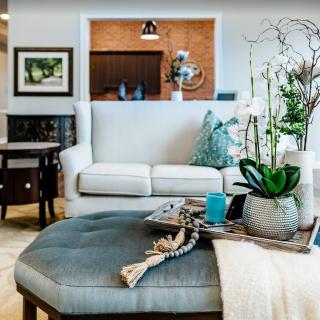
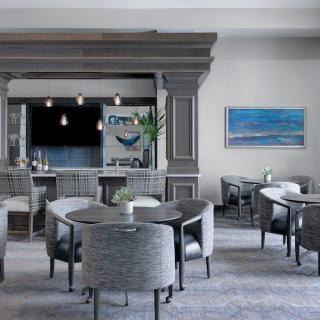

 Exploring the Contrasts Between Assisted Living and Skilled Nursing
 8 Key Indicators That Suggest It May Be Time to Transition from Assisted Living to Skilled Nursing Care
 Vibrant Senior Living: A Comprehensive Guide for Active Older Adults