Heron Manor offers competitive pricing for its residential accommodations, with rates that reflect a thoughtful balance of quality and value. For a one-bedroom unit, the monthly cost is $3,029, which is significantly lower than the Kent County average of $3,483 and slightly below the state average of $3,384. Similarly, the two-bedroom units are priced at $3,527, again providing cost savings compared to Kent County's average of $3,856 and remaining well within market expectations against Michigan's state average of $3,523. These figures highlight Heron Manor's commitment to affordability while maintaining a high standard of living for its residents.
Floor plans
Heron Manor
Kent County
Michigan
1 Bedroom
$3,029
$3,483
$3,384
2 Bedrooms
$3,527
$3,856
$3,523
Memory care communities with a similar price nearby
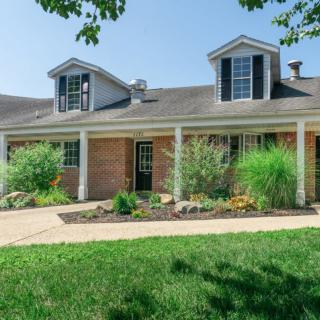
Residents and visitors highlight apartment-style layouts with wheelchair-accessible kitchen features.
Several residents and visitors describe the apartments as spacious and set up for day-to-day independence, including the ability to do laundry. Multiple reviews specifically mention a full kitchen that is wheelchair accessible. Others also point out that it feels less like a single room and more like a standard apartment with windows and a comfortable layout.
common10 reviews mention this
Activities keep residents busy
Activities are a consistent part of life here, with ongoing entertainment and group events.
Reviewers repeatedly describe a steady calendar of activities, including concerts, outings, and indoor group options like cards. Some also highlight community-based creativity, such as art and crafts, along with religious services that are scheduled during the week. Visitors also note strong activity availability when touring, suggesting residents can find things to join without needing to travel off-site for everything.
common8 reviews mention this
Friendly, supportive staff stands out
Staff kindness and helpfulness come up often in resident and visitor feedback.
Many reviews describe the staff as friendly, caring, and exceptionally supportive in day-to-day situations. Several people say they were impressed by how staff attention and support showed up in interactions. A few also mention residents enjoying classes and activities with guidance from the community, reinforcing that staff is present and responsive.
caveat4 reviews mention this
Meal service and diet options vary
Dining quality and meal coverage receive mixed feedback, including concerns with restrictions and dinner.
Some reviews raise concerns that meal service does not consistently meet dietary restrictions, with one person saying the available options did not match what was needed. Others describe food service as poor. Separately, at least a couple of reviewers say meals are limited to breakfast and lunch and that dinner is not served, which can be a major mismatch for families expecting full-day coverage.
caveat3 reviews mention this
Pricing feels like add-ons
Multiple reviews suggest that assistance and services can be itemized beyond the base rent.
While the published pricing falls below county and state benchmarks, several reviews describe additional costs that can come up after move-in. One reviewer says help is charged extra each time assistance is needed, and another mentions cable and health care help being itemized as added expenses. There is also at least one concern about deposit handling when a resident leaves.
How we summarize
Counts show how many written reviews mention each theme; a review can touch several themes, and only frequently mentioned themes are displayed.
Features
Housing
1-bedroom apartments
2-bedroom apartments
Types of Care
Assisted Living
Memory Care
Amenities
Activities off-site
Activities on-site
Air-conditioning
Beautician on-site
Devotional services off-site
Devotional services on-site
Dining room
Financial aid
Full kitchen
Handicap accessible
Hiking trails
Housekeeping services
Indoor common areas
Kitchenette
Outdoor common areas
Security gate
Spa
Swimming pool / hot tub
Wheelchair accessible showers
Transportation
Kent County International (8 miles away)
Transportation & parking
Care Services
Ambulatory care
Assistance with bathing
Assistance with dressing
Blood work
Diabetic care
Incontinence care
Meal preparation and service
Medication management
Walking wheelchair assistance
Dining
Kosher
Meals provided
Room service
Special dietary restrictions
Special dining programs
Vegetarian
Activities
Activities off-site
Activities on-site
Catholic services
Day trips and outings
Devotional activities offsite
Devotional activities on-site
Fitness programs
Happy hour
Karaoke
Live dance or theater performances
Live musical performances
Live well programs
Protestant services
Religious services
Stretching classes
Yoga / chair yoga
Languages Spoken
English
Nearby Places of Interest
Physicians
Maupin, Bernard Orthopaedic Associates of Michigan (0.7 miles)
Eye Plastic And Facial Cosmetic Surgery (0.8 miles)
DBC-Dr DenBoer/Dr Fischer (1.2 miles)
Trinity Health OB/GYN East Beltline (1.4 miles)
Patel Dipa S MD (1.5 miles)
Decatur Vein Clinic (1.9 miles)
Metro Heart & Vascular (2 miles)
Hospitals
Spectrum Health (1 miles)
Blodgett Hospital (2 miles)
Lemmen-Holton Cancer Pavilion (2.6 miles)
Helen Devos Children Emergency Room (2.6 miles)
Richard J. Lacks Sr. Cancer Center (2.8 miles)
Trinity Health Birth Center - Grand Rapids Hospital (2.8 miles)
St Marys Hospital (2.8 miles)
Pharmacies
Family Fare Supermarkets (1.1 miles)
Walgreens (1.4 miles)
Meijer Pharmacy (1.5 miles)
Walgreens (1.6 miles)
Family Fare Supermarkets (1.6 miles)
CVS Pharmacy (2 miles)
The Chemist Shoppe (2 miles)
Places of Worship
Temple Emanuel (1.4 miles)
Ada Bible Church (2.6 miles)
Madison Square Christian Reformed Church (3.8 miles)
Restaurants
Wendy's (1.5 miles)
Applebee's (1.6 miles)
P.F. Chang's China Bistro (1.9 miles)
Wolfgang's Restaurant (2 miles)
Rose's On Reeds Lake (2.1 miles)
Palio - Grand Rapids (2.1 miles)
The Green Well (2.2 miles)
Cafes
Kitchen 67 (1.6 miles)
Rowster New American Coffee (2.6 miles)
The Intersection (3.3 miles)
Biggby Coffee (3.8 miles)
Starbucks (3.9 miles)
Parks
Huff Park (1.6 miles)
Frederik Meijer Gardens & Sculpture Park (1.6 miles)
Belknap Park (2.5 miles)
Riverside Park (2.8 miles)
Provin Trails Park (3.3 miles)
Chesebro Park (4.1 miles)
Theaters
Celebration Cinema Grand Rapids North & IMAX (1.8 miles)
Celebration Cinema Stu (3.1 miles)
Studio Park (3.1 miles)
Transportation
Amtrak - Grand Rapids Vernon J. Ehlers Station (3.3 miles)
Heron Manor offers competitive pricing for its residential accommodations, with rates that reflect a thoughtful balance of quality and value. For a one-bedroom unit, the monthly cost is $3,029, which is significantly lower than the Kent County average of $3,483 and slightly below the state average of $3,384. Similarly, the two-bedroom units are priced at $3,527, again providing cost savings compared to Kent County's average of $3,856 and remaining well within market expectations against Michigan's state average of $3,523. These figures highlight Heron Manor's commitment to affordability while maintaining a high standard of living for its residents.
Heron Manor's features, such as assistance with dressing and bathing, are essential for promoting the dignity and comfort of residents with dementia or Alzheimer's, as they may struggle with these daily tasks. Medication management ensures that residents receive their necessary prescriptions on time, minimizing confusion and enhancing adherence to treatment plans vital for their health. Meal preparation and service cater to individual nutritional needs while also creating a structured routine that can help reduce anxiety associated with mealtime. Additionally, incontinence care is handled discreetly, ensuring that residents feel secure and respected in their living environment. Collectively, these services foster a supportive atmosphere that enhances quality of life for residents by addressing both their physical needs and emotional well-being.
"Memory Care Pathways: A Holistic Guide to Dementia Support" outlines the complexities of dementia and its various types, emphasizing early detection, patient-centered care strategies, caregiver support, and long-term care options while addressing legal and financial considerations to enhance the quality of life for individuals with dementia and their families.
Sundown syndrome, or sundowning, is a phenomenon in dementia patients characterized by increased confusion and agitation during late afternoon and evening, influenced by factors like disrupted circadian rhythms and fatigue. Effective caregiver strategies include establishing routines and managing environmental light while addressing caregiver stress through support services.
Delirium is a rapidly onset, reversible cognitive disturbance often caused by acute medical issues, while dementia is a gradual and irreversible decline due to chronic neurodegenerative diseases. Accurate differentiation between the two is essential for appropriate treatment and management in older adults.
Get PricingAsk A QuestionSchedule A TourContact Senior Advisor
By clicking submit, you agree to our Partner's Terms of Use. You
also consent to receive calls and texts, which may be autodialed, from our Partner. Your consent is not a condition to
using our Partner's service. Please visit our Partner's Privacy Policy for information about their privacy practices.

 1-bedroom apartments
 Assisted Living
 Memory Care
 Activities off-site
 Air-conditioning
 Beautician on-site
 Devotional services off-site
 Dining room
 Financial aid
 Full kitchen
 Handicap accessible
 Hiking trails
 Housekeeping services
 Indoor common areas
 Outdoor common areas
 Security gate
 Spa
Spa Swimming pool / hot tub
 Wheelchair accessible showers
 Kent County International (8 miles away)
 Transportation & parking
 Ambulatory care
 Assistance with bathing
 Assistance with dressing
 Blood work
 Diabetic care
 Incontinence care
 Meal preparation and service
 Medication management
 Special dietary restrictions
 Catholic services
 Day trips and outings
 Fitness programs
 Happy hour
 Karaoke
 Live dance or theater performances
 Live musical performances
 English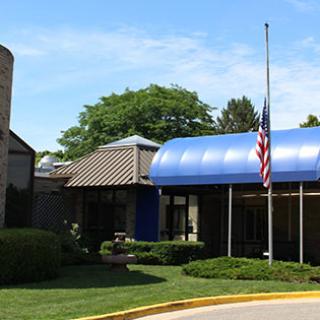
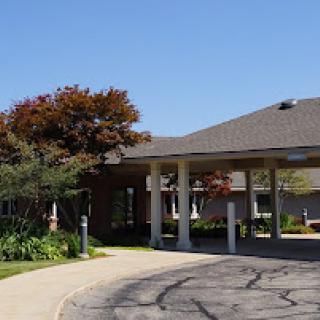
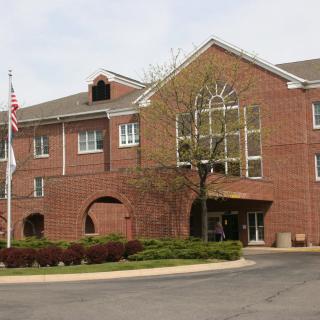
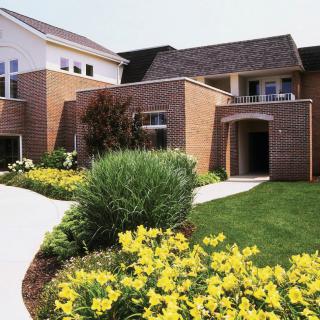
 Knowledgeable admissions staff; friendly overall staff; on-site chapel; multiple room options (including private showers); well-maintained gardens and a clean, spacious environment.

 Memory Care Pathways: A Holistic Guide to Dementia Support
 Comprehending Evening Confusion in Dementia: Causes, Manifestations, and Support
 Delirium and Dementia: Unraveling the Key Differences