For more information about senior living options: (866) 208-4318
3 from 35 reviews
5 stars
14
4 stars
3
3 stars
1
2 stars
3
1 stars
14
Covenant Village of the Great Lakes Costs & Pricing
Covenant Village of the Great Lakes offers competitive pricing for various room types compared to both Kent County and the broader state of Michigan. For instance, a one-bedroom apartment is priced at $1,187, which is significantly lower than the county average of $3,483 and the state average of $3,384. Similarly, a two-bedroom unit is available for $1,384, well below Kent County's average of $3,856 and Michigan's average of $3,523. However, it's worth noting that prices for studio units and private accommodations are higher than county and state averages; for example, a studio costs $4,500 compared to the county's $3,661 and state's $3,824. In contrast, semi-private rooms are offered at $5,700 against an average county price of $3,939 but can be justified by the extensive amenities provided. Overall, Covenant Village stands out for its affordability in one- and two-bedroom options while still offering varied choices that cater to different lifestyle preferences within a vibrant community setting.
Floor plans
Covenant Village of the Great Lakes
Kent County
Michigan
1 Bedroom
$1,187
$3,483
$3,384
2 Bedrooms
$1,384
$3,856
$3,523
Studio
$4,500
$3,661
$3,824
Semi-Private
$5,700
$3,939
$3,189
Private
$6,540
$5,194
$3,674
Assisted Living communities with a similar price nearby
Overall Review of Covenant Village of the Great Lakes
caveat11 reviews mention this
Staffing and care quality vary
Residents and families describe big swings in daily care and staffing.
Some reviewers say they saw excellent care during rehab or assisted living, including comfort at the end of life and a clean, safe environment. Other residents and families report minimal staffing, understaffing, and care gaps such as not receiving needed mobility support, delayed help during a fall, and not enough help overall. Several comments also describe communication barriers that added to the care problems. A separate negative thread focuses on safety and staff behavior, including feeling unsafe after overnight staff actions.
common3 reviews mention this
Clean, well kept facility
Multiple reviewers mention the community as clean and well kept.
Several reviews highlight cleanliness and a safe, well-maintained environment. One reviewer specifically praises very well-kept grounds and cleanliness, and another simply calls out a nice clean facility. A positive comment also pairs cleanliness with excellent care during rehab.
differentiator5 reviews mention this
Faith and activities fit some residents
The community’s faith and activities show up clearly in reviews.
Reviews mention faith-based community life, including Christ-centered programming and building-wide support with prayers and transportation during a family emergency. An activities director is also credited for creating a good time with an outing. At the same time, one reviewer says there isn’t enough to do “with Christ,” suggesting experiences may differ by what residents and families expect.
caveat4 reviews mention this
Communication and follow-through concerns
Several reviewers report problems getting timely responses.
Some families describe leadership as unavailable, inaccessible, and unresponsive when concerns came up. Others say they experienced no response after asking for documentation or reaching out by phone or email. A separate review describes difficulty even getting a call back during the move-in process, and another notes that no one would talk to them after a concern.
How we summarize
Counts show how many written reviews mention each theme; a review can touch several themes, and only frequently mentioned themes are displayed.
Features
Types of Care
Assisted Living
Independent Living
Memory Care
Skilled Nursing Facility
Pets
Cats allowed
Dogs allowed
Amenities
Activities on-site
Devotional services off-site
Indoor common areas
Private
Transportation
Kent County International (12 miles away)
Care Services
Ambulatory care
Dining
Meals provided
Activities
Activities on-site
Devotional activities offsite
Virtual Tour
Nearby Places of Interest
Pharmacies
Family Fare Supermarkets (0.4 miles)
Walgreens (2.3 miles)
Walgreens (2.4 miles)
Meijer Pharmacy (2.5 miles)
Meijer Pharmacy (3.4 miles)
CVS Pharmacy (3.8 miles)
Family Fare Supermarkets (4.2 miles)
Physicians
Lake Michigan Dental (0.5 miles)
Spectrum Health (1.6 miles)
Advantage Health Physician Network Northwest Locations (2.7 miles)
Family & Pediatric Eye Care (3 miles)
Area Wide Ob/Gyn Health Services (3.3 miles)
Orthopaedic Associates Of Mi (3.4 miles)
Hand & Plastic Surgery Center: Luce Paul A MD (3.5 miles)
Parks
Millennium Park (2.2 miles)
Belknap Park (3.3 miles)
Riverside Park (4.3 miles)
Chesebro Park (5.2 miles)
Lemery Park (5.4 miles)
Huff Park (5.7 miles)
Restaurants
Turnstiles (2.3 miles)
Steel Cat Bar (2.3 miles)
Chick-Fil-A (2.3 miles)
Condado Tacos (2.5 miles)
The Knickerbocker (2.6 miles)
The Mitten Brewing Company (2.7 miles)
Uccello's Ristorante (2.8 miles)
Cafes
The Intersection (2.9 miles)
Starbucks (3.5 miles)
Rowster New American Coffee (4 miles)
Starbucks (5.1 miles)
Real Food Cafe (5.4 miles)
Transportation
Amtrak - Grand Rapids Vernon J. Ehlers Station (3.1 miles)
Theaters
Studio Park (3.1 miles)
Celebration Cinema Stu (3.1 miles)
Hospitals
Helen Devos Children Emergency Room (3.2 miles)
Lemmen-Holton Cancer Pavilion (3.3 miles)
St Marys Hospital (3.5 miles)
Trinity Health Birth Center - Grand Rapids Hospital (3.5 miles)
Richard J. Lacks Sr. Cancer Center (3.5 miles)
Blodgett Hospital (5.5 miles)
Places of Worship
Madison Square Christian Reformed Church (4.2 miles)
Covenant Village of the Great Lakes offers competitive pricing for various room types compared to both Kent County and the broader state of Michigan. For instance, a one-bedroom apartment is priced at $1,187, which is significantly lower than the county average of $3,483 and the state average of $3,384. Similarly, a two-bedroom unit is available for $1,384, well below Kent County's average of $3,856 and Michigan's average of $3,523. However, it's worth noting that prices for studio units and private accommodations are higher than county and state averages; for example, a studio costs $4,500 compared to the county's $3,661 and state's $3,824. In contrast, semi-private rooms are offered at $5,700 against an average county price of $3,939 but can be justified by the extensive amenities provided. Overall, Covenant Village stands out for its affordability in one- and two-bedroom options while still offering varied choices that cater to different lifestyle preferences within a vibrant community setting.
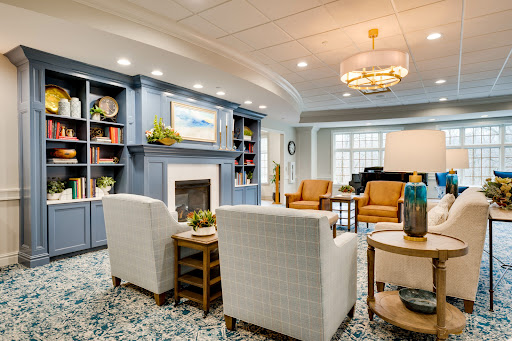
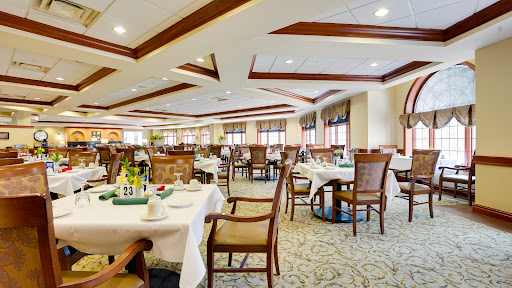
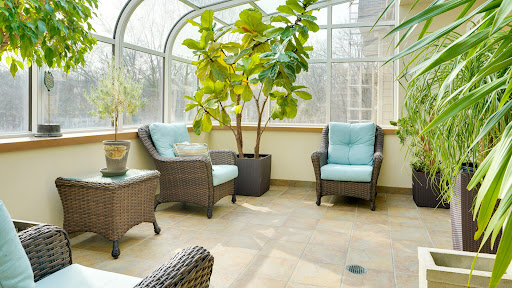
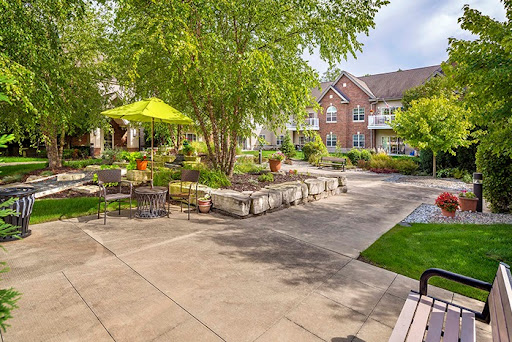
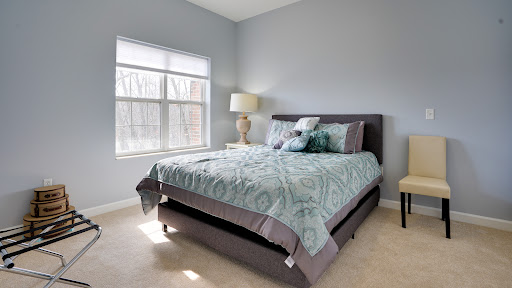
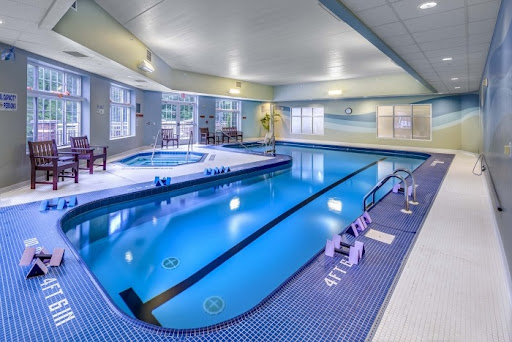
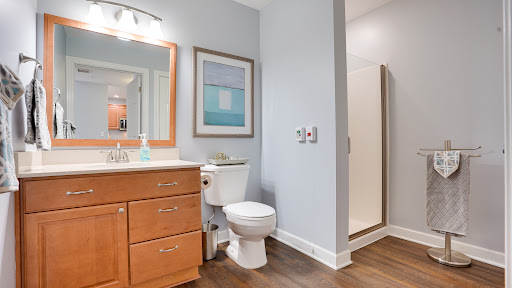
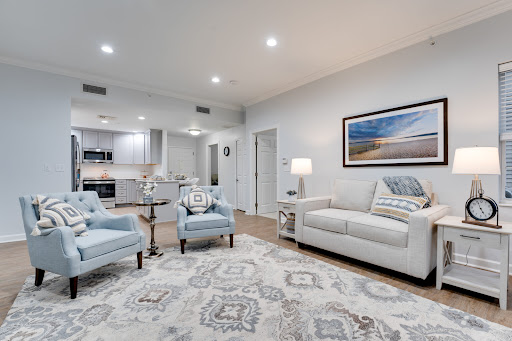
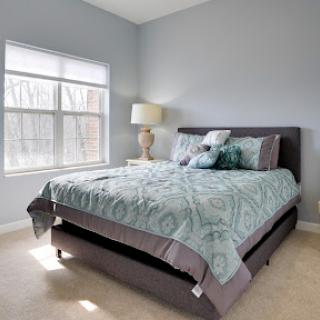
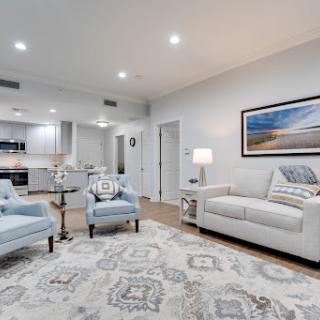
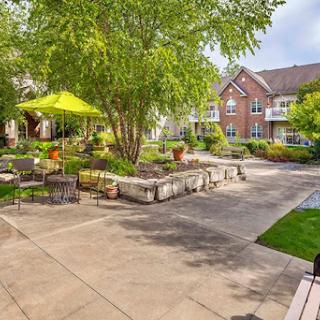
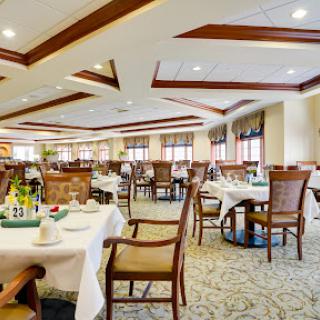
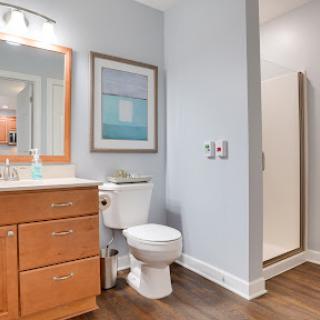
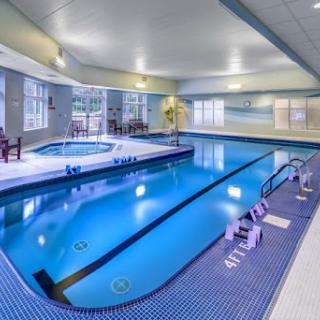
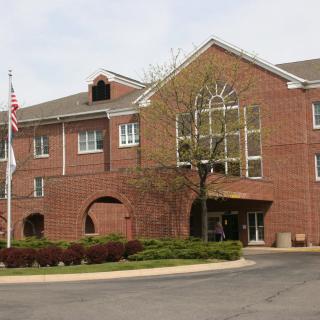
Covenant Village of the Great Lakes on seniors.fyi includes 9 photos including images showing interior, dining, bedroom, decor, bathroom, living room, lighting, landscaping, and more.
Nearby Communities
Covenant Village-The Great Lks
Grand Rapids, MI
3 from 42 reviews
Extensive nearby amenities and healthcare access.
Hope House
Grand Rapids, MI
3.1 from 8 reviews
Small, intimate setting with personalized care.
Faith House
Grand Rapids, MI
Diabetes-focused care with transportation and 24/7 supervision
Marsh Ridge Apartments
Grand Rapids, MI
3.7 from 18 reviews
Extensive nearby amenities and services support an active lifestyle.
Grandview Apartments
Grand Rapids, MI
2.9 from 20 reviews
Vibrant assisted living with extensive nearby amenities and easy access to healthcare and social activities.
Indian Trails Home
Grand Rapids, MI
4.7 from 104 reviews
Fully furnished homes with 24/7 supervision, meals, housekeeping, and transportation coordination.
Villa Maria
Grand Rapids, MI
4 from 110 reviews
$1,470 to $1,685 / month
Active community with on-site/off-site activities, clean facilities, friendly staff, and affordable pricing.
Clark Retirement Community at Franklin
Grand Rapids, MI
3.8 from 62 reviews
$1,700 to $2,790 / month
Clean, well-maintained facility with friendly staff, engaging activities, and excellent dining; solid memory care option.
Westminster Meadows
Grand Rapids, MI
4.8 from 14 reviews
$679 to $799 / month
Well-maintained, friendly community with engaging activities and supportive staff.
Dementia, primarily caused by Alzheimer's disease but also linked to other conditions, leads to cognitive decline impacting memory and daily functioning, with individuals experiencing varied awareness of their impairments. Despite memory loss, emotional connections persist, enabling responses to familiar stimuli, highlighting the need for caregivers to provide compassionate support that recognizes both limitations and retained emotional depth.
The article presents five subtle indicators of dementia, such as memory lapses and mood swings, to help families assess cognitive decline in loved ones. It emphasizes early detection, open communication, and seeking professional help while providing practical support steps.
Dementia encompasses progressive neurological disorders that impair cognitive functions and can lead to paranoia due to cognitive decline and emotional changes. The article discusses the triggers of paranoia in dementia, caregiver strategies for managing it, and the importance of distinguishing between dementia-related paranoia and other psychiatric conditions.
Get PricingAsk A QuestionSchedule A TourContact Senior Advisor
By clicking submit, you agree to our Partner's Terms of Use. You
also consent to receive calls and texts, which may be autodialed, from our Partner. Your consent is not a condition to
using our Partner's service. Please visit our Partner's Privacy Policy for information about their privacy practices.





 Assisted Living
 Independent Living
 Memory Care
 Skilled Nursing Facility
 Cats allowed
 Dogs allowed
 Activities on-site
 Devotional services off-site
 Indoor common areas
 Private
 Kent County International (12 miles away)
 Ambulatory care
 Meals provided
 Extensive nearby amenities and healthcare access.
 Delving into the Inner World of Dementia: Insights into Thoughts and Awareness
 Five Subtle Dementia Indicators to Observe: An In-Depth Guide to Understanding “Does My Mom Have Dementia?”
 Dementia, Paranoia, and Caregiver Guidance: Understanding the Connection