For more information about senior living options: (866) 208-4318
4 from 110 reviews
5 stars
59
4 stars
20
3 stars
16
2 stars
2
1 stars
13
Villa Maria Costs & Pricing
Villa Maria offers competitive pricing for its accommodations compared to the broader market in Kent County and Michigan as a whole. For instance, a studio at Villa Maria is priced at $1,470 per month, significantly lower than the county average of $3,661 and the state average of $3,824. Similarly, the one-bedroom unit is available for $1,570 while Kent County averages $3,483 and Michigan reaches up to $3,384. Even for larger two-bedroom units, Villa Maria's cost of $1,685 stands out against the county's average of $3,856 and the state's average of $3,523. These comparisons highlight Villa Maria as an appealing option for those seeking quality living arrangements without overwhelming financial burdens.
Floor plans
Villa Maria
Kent County
Michigan
Studio
$1,470
$3,661
$3,824
1 Bedroom
$1,570
$3,483
$3,384
2 Bedrooms
$1,685
$3,856
$3,523
Independent Living communities with a similar price nearby
Residents and visitors consistently describe friendly, caring staff.
Many reviews say staff and residents are welcoming and that people remember visitors. Several residents and family members also describe day-to-day interactions as kind or supportive, with occasional calls for better follow-through. A few reviews mention responsiveness concerns or staff feeling indifferent, but even those include that some housekeeping staff were kind.
caveat9 reviews mention this
Dining is a mixed point
Food quality is a frequent point of agreement and disagreement.
Some residents and family members praise the food, describing it as good and even improving for at least one person after moving in. Others are sharply critical, including comments about terrible meals, a kitchen that needs work, and dissatisfaction despite expectations set by how the community is marketed. A few reviews also mention variety on the menu.
caveat3 reviews mention this
Power outages raise safety questions
Power outage experiences point to limited emergency backup.
Multiple reviews describe serious disruption during outages, including loss of heat and lights, lack of elevator service, and difficulty accessing phones or medications. Residents also mention no backup generator, with one review describing evacuation and being bused to shelters. Another review goes further into outage limitations like nonworking emergency equipment and concerns for residents needing oxygen.
common7 reviews mention this
Value is a key theme
Many reviews frame rent as strong value for the community.
Several reviews describe the rent as affordable, economical, or good value relative to what the community offers. At the same time, a few reviews criticize cost in different ways, including claims about overcharging and a separate complaint that the community is expensive. Overall, pricing shows as positioned well below county and state benchmarks across unit types.
common5 reviews mention this
Activities keep residents busy
Residents describe a steady calendar of activities and outings.
Reviews frequently mention residents staying engaged with excursions, daily events, and on-site activities. Families also describe church services and exercise classes, along with shopping trips that keep residents busy after moving in. The activities are supported by offerings like on-site and off-site activities and a visiting chaplain or priest.
caveat6 reviews mention this
Upkeep concerns show up too
Some reviews raise concerns about maintenance and cleanliness.
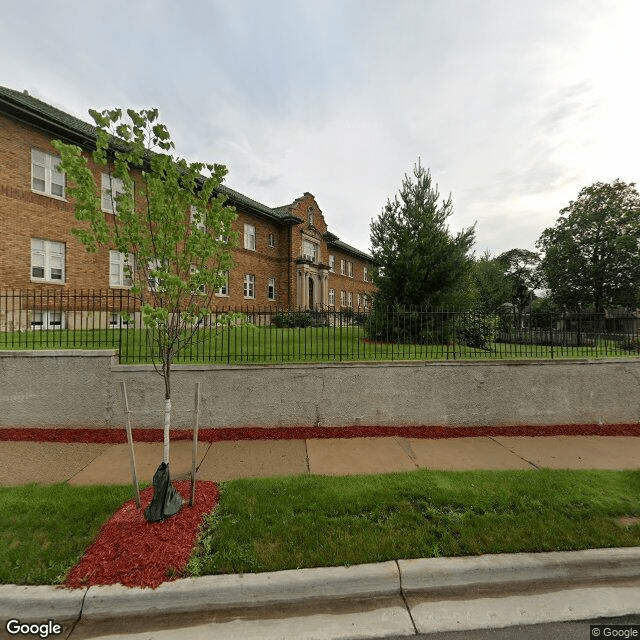
Several reviews mention the building or apartments as clean and the grounds as organized, but other residents report serious cleanliness or upkeep problems. Criticisms include bed bugs that were allegedly not handled promptly, carpets described as filthy, and needed repairs. One review also calls out neglected gardens and fountain upkeep, while another points to difficulty getting promised items fixed.
How we summarize
Counts show how many written reviews mention each theme; a review can touch several themes, and only frequently mentioned themes are displayed.
Features
Types of Care
Independent Living
Pets
Cats allowed
Dogs allowed
Amenities
Activities off-site
Activities on-site
Bath tubs
Beautician on-site
Indoor common areas
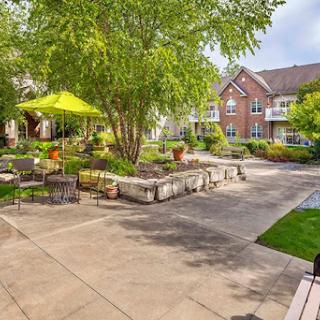
Outdoor common areas
Wheelchair accessible showers
Transportation
Kent County International (11 miles away)
Care Services
Medication management
Dining
Meals provided
Activities
Activities off-site
Activities on-site
Visiting chaplain or priest
Nearby Places of Interest
This part of Grand Rapids, Michigan offers a convenient and accessible location with a variety of amenities nearby. There are several pharmacies within a short distance, making it easy to access necessary medications and healthcare supplies. The area also boasts a diverse selection of restaurants, cafes, and theaters for entertainment and dining options. For medical needs, there are reputable physicians and hospitals in close proximity, ensuring quality healthcare services. Additionally, there are parks for outdoor recreation and relaxation. Overall, this neighborhood provides a well-rounded environment with essential services and recreational opportunities for seniors looking to settle in the area.
Pharmacies
Walgreens (0.6 miles)
Meijer Pharmacy (1.7 miles)
Family Fare Supermarkets (2 miles)
Family Fare Supermarkets (3.1 miles)
Walgreens (3.2 miles)
Walgreens (3.2 miles)
Walgreens (3.3 miles)
Restaurants
The Mitten Brewing Company (1 miles)
Turnstiles (1.1 miles)
Steel Cat Bar (1.2 miles)
Condado Tacos (1.3 miles)
The Knickerbocker (1.4 miles)
Linear (1.5 miles)
City Built Brewin (1.5 miles)
Physicians
Lake Michigan Dental (1.3 miles)
Family & Pediatric Eye Care (1.9 miles)
Area Wide Ob/Gyn Health Services (2 miles)
Orthopaedic Associates Of Mi (2.1 miles)
4D Moments (2.2 miles)
Advantage Health (2.2 miles)
Alpine Oral Surgery (2.3 miles)
Parks
Belknap Park (1.8 miles)
Riverside Park (2.5 miles)
Millennium Park (3.8 miles)
Huff Park (3.9 miles)
Chesebro Park (4.9 miles)
Hospitals
Helen Devos Children Emergency Room (2 miles)
Lemmen-Holton Cancer Pavilion (2 miles)
Richard J. Lacks Sr. Cancer Center (2.6 miles)
Trinity Health Birth Center - Grand Rapids Hospital (2.6 miles)
St Marys Hospital (2.6 miles)
Blodgett Hospital (4.4 miles)
Spectrum Health (5.2 miles)
Cafes
The Intersection (2.1 miles)
Starbucks (2.7 miles)
Rowster New American Coffee (3.1 miles)
Real Food Cafe (5.2 miles)
Theaters
Studio Park (2.2 miles)
Celebration Cinema Stu (2.2 miles)
Transportation
Amtrak - Grand Rapids Vernon J. Ehlers Station (2.4 miles)
Places of Worship
Madison Square Christian Reformed Church (3.8 miles)
Villa Maria offers competitive pricing for its accommodations compared to the broader market in Kent County and Michigan as a whole. For instance, a studio at Villa Maria is priced at $1,470 per month, significantly lower than the county average of $3,661 and the state average of $3,824. Similarly, the one-bedroom unit is available for $1,570 while Kent County averages $3,483 and Michigan reaches up to $3,384. Even for larger two-bedroom units, Villa Maria's cost of $1,685 stands out against the county's average of $3,856 and the state's average of $3,523. These comparisons highlight Villa Maria as an appealing option for those seeking quality living arrangements without overwhelming financial burdens.
Caring staff with 24-hour supervision and daily living assistance, plus on-site amenities (beauty salon, restaurant-style dining) in a welcoming, intimate community.
Westminster Meadows
Grand Rapids, MI
4.8 from 14 reviews
$679 to $799 / month
Well-maintained, friendly community with engaging activities and supportive staff.
Medilodge of Grand Rapids
Grand Rapids, MI
3.4 from 101 reviews
$1,600 to $3,090 / month
Friendly staff, supportive community, and multiple care levels in a well-appointed setting.
Clark Retirement Community at Franklin
Grand Rapids, MI
3.8 from 62 reviews
$1,700 to $2,790 / month
Clean, well-maintained facility with friendly staff, engaging activities, and excellent dining; solid memory care option.
The guide outlines the eligibility criteria for home health care services, emphasizing clinical requirements, insurance options, and application processes. It distinguishes between Medicare's strict and Medicaid's flexible qualifications while addressing challenges families may face in securing necessary care at home.
Elder abuse affects many older adults worldwide and includes physical, emotional, neglectful, and financial harm, with about one in six individuals over 60 experiencing abuse annually. Prevention and intervention strategies focus on awareness, support for caregivers, and mandatory reporting, while recovery necessitates comprehensive support for both physical and emotional needs.
The guide details ten essential responsibilities of senior caregivers, including personal care, mobility assistance, medication management, and emotional support, while emphasizing the importance of safety, nutrition, and maintaining a safe living environment to enhance seniors' quality of life and independence.
Get PricingAsk A QuestionSchedule A TourContact Senior Advisor
By clicking submit, you agree to our Partner's Terms of Use. You
also consent to receive calls and texts, which may be autodialed, from our Partner. Your consent is not a condition to
using our Partner's service. Please visit our Partner's Privacy Policy for information about their privacy practices.

 Independent Living
 Cats allowed
 Dogs allowed
 Activities off-site
 Bath tubs
 Beautician on-site
 Indoor common areas
 Outdoor common areas
 Wheelchair accessible showers
 Kent County International (11 miles away)
 Medication management
 Meals provided
 Visiting chaplain or priest
 24/7 supervision with diabetes-friendly dining and furnished, move-in-ready residences

 Comprehensive Guide to Qualifying for Home Health Care Services
 Powerful Realities of Elder Abuse and the Most Effective Ways to Report It
 Ten Vital Duties of a Senior Caregiver: A Comprehensive Guide