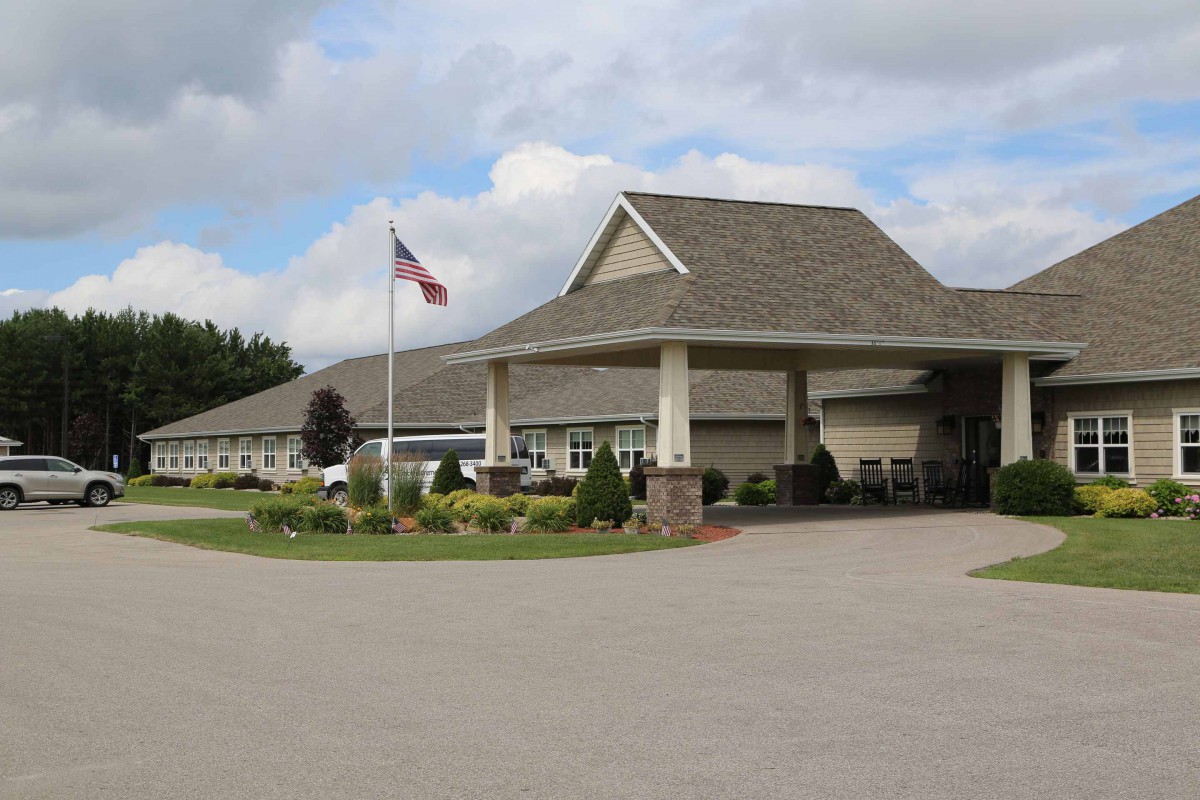
900 Hayes Rd, Gaylord, MI 49735
To contact a resident: (989) 745-6500
For more information about senior living options: (866) 208-4318
The Brook Retirement of Gaylord Costs & Pricing
The Brook Retirement of Gaylord offers a competitive pricing structure for its residents, particularly when compared to the broader market in Otsego County and the state of Michigan. Monthly costs for studio apartments at The Brook are $1,530, significantly lower than the county average of $3,129 and the state average of $3,824. Similarly, one-bedroom units are priced at $2,020, which is more affordable than both the county's rate of $3,559 and Michigan's average of $3,384. Notably, two-bedroom apartments are attractively priced at $2,450 - aligning with the county average while still falling short of the state's higher average of $3,523. These rates reflect The Brook's commitment to providing quality living options that not only cater to the needs of its residents but also prioritize affordability in a competitive landscape.
| Floor plans | The Brook Retirement of Gaylord | Otsego County | Michigan |
|---|---|---|---|
| Studio | $1,530 | $3,129 | $3,824 |
| 1 Bedroom | $2,020 | $3,559 | $3,384 |
| 2 Bedrooms | $2,450 | $2,450 | $3,523 |
Assisted Living communities with a similar price nearby
-
About the same
The Brook of Boyne City
$1,530 to $2,450 / month20.7 miles away
Overall Review of The Brook Retirement of Gaylord
Pros
 The Brook of Gaylord’s staff are tremendous, polite, nice, and very helpful.
- It’s a newer facility that is kept up very well, with a lot of activities.
- The staff are caring and genuinely look out for residents’ needs.
- The environment feels safe and home-like, supporting residents to stay engaged socially.
- It is very clean and well taken care of, with a beautiful setting.
- Families report positive changes in residents, such as increased sociability and activity, and would recommend the care and value.
Cons
 The facility is not licensed with the state.
- The staff appear to lack standard training and act as they please.
- Corporate management is criticized for lacking care.
- He was kicked out after a behavior issue and told he couldn't return.
- His health declined rapidly after these events.
- Flu was spreading and staff kept the illness to themselves rather than alert residents.
- Side entrance doors are not checked and several exits are unsafe due to lack of daily staff.
Review
The Brook Retirement of Gaylord is best suited for families seeking a newer, well-kept environment where daily caregiving feels personal and visible. It works well for seniors who benefit from a campus that looks and feels fresh, with front-line staff that are consistently courteous, responsive, and genuinely engaged in residents’ well‑being. For residents who thrive on structured social programming and a homelike atmosphere, with family members who intend to be present and involved, this community can deliver a reassuring, well-supported living experience. In short, it’s a solid fit for households willing to invest in a modern setting and hands‑on, attentive care.
Those weighing alternatives should be mindful of two major red flags: state licensing and consistent clinical oversight. Several reviewers raise questions about licensure and whether staff training follows a uniform standard, which translates into concerns about who coordinates medical needs and how dementia or complex health issues are managed day to day. Add to that reports of abrupt discharges and management practices that seem to tolerate inconsistent decision‑making, and the case for alternatives strengthens. For families requiring predictable governance, documented licensing, and clear escalation paths should a problem arise, other communities with transparent regulatory compliance merit careful comparison.
On balance, the positives are compelling. From several accounts, the staff’s warmth and professionalism stand out: residents feel seen, safety is emphasized, and the facility’s upkeep is consistently described as excellent. The environment supports social engagement, the amenities, common areas, and dining spaces foster interaction, and the ability for family members to stay and monitor care adds a meaningful layer of reassurance. The newer build also translates into modern conveniences, better accessibility, and a sense that residents are living in a current, well-maintained setting. These strengths do offset some hesitations for families who value hands‑on attention and a proactive caregiving culture.
However, the financial side cannot be ignored. Affordability is repeatedly flagged as a hurdle, with some reviewers noting that costs are high unless wealth is substantial. Food quality is described as variable, pleasant and satisfying at times, with occasional concerns about warmth or consistency, so dining should be a specific focus during tours and samples. Safety considerations extend beyond courtesy and cleanliness; reports of infection control lapses and security gaps, plus warnings about management responsiveness, temper overall confidence. When costs are high and governance is uncertain, the cumulative risk becomes a meaningful factor in the decision.
Practical due diligence can tilt the balance. Prospective buyers should verify current licensure status and request copies of licensing and survey results, ask for a written care plan process for residents with dementia, and probe how emergencies and discharges are handled. Inquire about staffing ratios by shift, ongoing training policies, and the mechanism for addressing family concerns without delay. Clarify all fees, what is included, and whether any financial assistance or subsidy options exist, so total monthly costs are transparent. A trial period or extended visit with a family member present can reveal how well the staff tracks individual needs and how smoothly the operation handles daily routines.
The bottom line: The Brook Retirement of Gaylord can be a strong match for families who want a newer, clean, resident-centered environment and are comfortable with a higher price tag, plus an expectation that family involvement remains welcomed and actionable. It is less suitable for those who require unimpeachable licensing, consistent clinical governance, and assured affordability. For families leaning toward alternatives, use a rigorous checklist that weighs licensing, care-coordination reliability, and long-term financial feasibility, alongside firsthand impressions of staff warmth and resident engagement. When the choice lands here, insist on concrete policies, document-driven oversight, and a trial experience that confirms care quality will endure as needs evolve.
 Assisted Living
 Independent Living
 Cats allowed
 Dogs allowed
 Activities off-site
 Beautician on-site
 Devotional services off-site
 Indoor common areas
 Outdoor common areas
 Wheelchair accessible showers
 Ambulatory care
 Diabetic care
 Medication management
 Kosher



 Is Assisted Living Deductible on Your Taxes? Understanding the Complexities of Assisted Living Expenses and Deductions
 Assisted Living Support for Veterans: A Complete and Detailed Overview
 Exploring the Contrasts Between Assisted Living and Skilled Nursing