
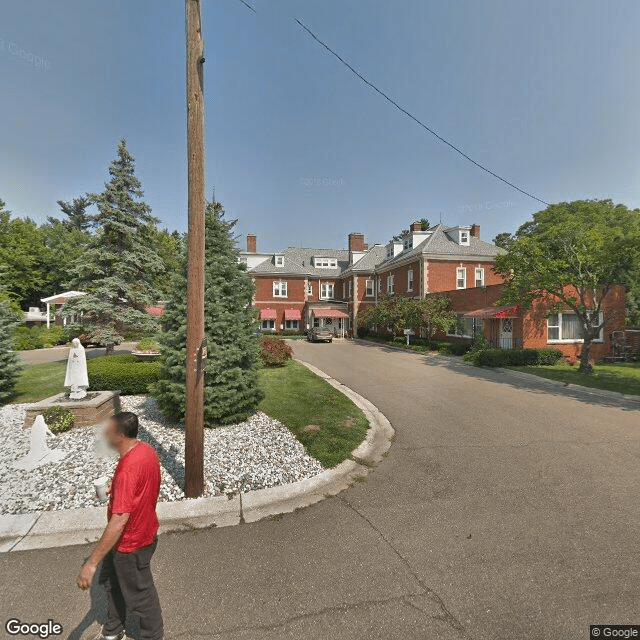
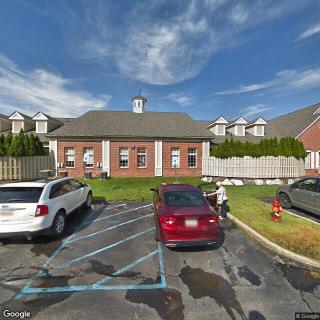
39315 North Woodward Avenue, Bloomfield Hills, MI 48304
To contact a resident: (248) 644-1011
For more information about senior living options: (866) 208-4318
St Elizabeth Briarbank Costs & Pricing
St. Elizabeth Briarbank offers competitive pricing for its residents, with a monthly cost of $2,400 for a one-bedroom apartment and $3,300 for a two-bedroom unit. When compared to the broader market, these prices are significantly lower than the average costs in Oakland County, which stand at $3,507 for one bedroom and $3,881 for two bedrooms. Additionally, St. Elizabeth's rates are also more affordable than the state averages of $3,384 for one-bedroom and $3,523 for two-bedroom accommodations in Michigan. This makes St. Elizabeth Briarbank an attractive option for those seeking quality living arrangements without the higher price tag often seen in the region.
| Floor plans | St Elizabeth Briarbank | Oakland County | Michigan |
|---|---|---|---|
| 1 Bedroom | $2,400 | $3,507 | $3,384 |
| 2 Bedrooms | $3,300 | $3,881 | $3,523 |
Assisted Living communities with a similar price nearby
-
from -$205 / mo

Simply Beautiful Adult Foster Care Homes
$2,195 to $4,100 / month8.9 miles away -
from +$200 / mo
Angelic Foster Care
$2,600 to $3,380 / month12.5 miles away -
from -$125 / mo
Pleasant Valley Family Care
$2,275 to $7,000 / month7.2 miles away -
About the same
Unlimited Care
$2,460 to $2,500 / month9.2 miles away -
from +$263 / mo
Clausen Manor
$2,663 to $5,227 / month8.7 miles away
Overall Review of St Elizabeth Briarbank
Pros
 The facility is wonderful, and the nuns are awesome.
- The environment is simple but adequate, and it is clean and well organized.
- The wooded grounds are beautiful and inviting.
- Her quality of life appeared excellent during her stay.
- The residents are consistently attended to by the staff.
- Games and crafts are encouraged.
- The atmosphere was described as the best the reviewer had experienced in five years of care.
- Outstanding care and compassion come from all the staff, all the time.
- The facility is clean, cheerful, and home-like, making it a good fit for a loved one.
- It is a Catholic community with Mass and Rosary, enriching the environment.
Cons
 The reviewer noted that only one staff member was met during the tour and no residents were seen.
- There was a musty smell in the community.
- The reviewer decided to leave the community due to stories about COVID and staff.
- The reviewer claimed the aunt was not cared for appropriately, resulting in her ending up in the parking lot twice.
- There were no meaningful activities, with residents left sitting in front of the TV.
- The reviewer urged the state of Michigan to look into St Elizabeth's Briarbank.
- The reviewer found it odd that non-ambulatory residents were not admitted.
Review
St Elizabeth Briarbank is best suited for older women who want a quiet, faith-centered environment where staff relationships feel personal and care is delivered with warmth. The community leans into its Catholic identity, with daily Mass, a chaplain on site, and a daily rhythm that includes Rosary and organized activities. It is particularly appealing to families valuing simple, home-like surroundings, clean and modest accommodations, and a pronounced emphasis on individualized attention from caregivers who know residents by name. The setting, wooded grounds, a smaller, intimate campus, and a suite option that provides a private sitting room alongside the bedroom, supports a sense of belonging over bustle.
That said, St Elizabeth Briarbank may not satisfy every senior or family, and several red flags point to considering alternatives. The facility appears to operate best for ambulatory residents who can walk with a cane or walker, and it is not presented as a memory-care or high-acuity option. One reviewer described a policy of not accepting non-ambulatory individuals, while another noted a troubling incident where dementia care was not handled appropriately, culminating in a resident ending up in a parking area. Tours can leave questions unanswered, with some visitors reporting limited exposure to residents and a perception that the facility prioritizes tours over firsthand observation of daily life. These signals matter for families narrowing options for someone who needs robust cognitive support or 24/7 skilled nursing.
The strongest pros, compassionate staff, a serene, welcoming atmosphere, and a strong sense of community, often offset the concerns. Staff consistently receive praise for attentiveness, and several reviews describe the sisters as warm and approachable. The resident population is portrayed as calm and friendly, with families noting excellent quality of life, personal connections, and a climate where residents are engaged in activities rather than left in front of televisions. The on-site chapel, priest-led Mass, and the broader Catholic culture provide a meaningful framework for those who desire spiritual continuity as part of daily life. For many families, these elements translate into reliable, ongoing emotional and social support for their loved ones.
Equally compelling are the practical benefits: a simple, clean, and home-like environment; predictable routines; and carefully structured activities, including chair exercises, crafts, bingo, and other volunteer-led events, that foster participation without overwhelming residents. The pricing is described as favorable relative to other options, and the suite configuration, private living space with a connected bathroom, offers a comfortable balance of privacy and community. The facility’s staff and residents often feel like a close-knit circle, where familiar faces and routine contribute to a sense of safety and dignity. These assets can be decisive for families who want stability, predictable care, and a faith-infused backdrop to daily living.
Nevertheless, the cons are not trivial and must be weighed carefully. The most troubling risks lie in care for residents with dementia or higher medical needs, where anecdotes suggest inconsistent handling and safety concerns. The tension between a strong spiritual culture and the needs of non-young, cognitively impaired, or male residents can create misalignment with some families' expectations. The facility’s age and understated amenities relative to contemporary “state-of-the-art” communities may also matter to those who equate newer finishes and high-tech supports with higher quality. Finally, the impression that not all tours capture the full resident experience, seeing staff without a fuller view of daily life, can leave families with unresolved questions about resident happiness and care quality.
When deciding, families should align their choice with priorities: if faith-based life, personal attention, and a serene, affordable environment for an ambulatory, female senior are paramount, St Elizabeth Briarbank stands as a compelling option and often a strong fit for Catholic households. If memory-care needs, male residents, or a demand for more modern facilities and robust high-acuity services are at the top of the list, alternatives may prove more suitable. A prudent path includes scheduling multiple visits, requesting concrete conversations with care leadership, and asking to observe activities during peak hours to assess engagement and staff-resident interactions. For those seeking a community where spiritual life and individualized care shape everyday living, Briarbank delivers with sincerity and steadiness; for others, the search should continue until alignment on care intensity and resident demographics is guaranteed.
 Assisted Living
 Activities off-site
 Beautician on-site
 Devotional services off-site
 Indoor common areas
 Outdoor common areas
 Respite or short term stays offered
 Ambulatory care
 Diabetic care
 Incontinence care
 Medication management
 Meals provided
 Birthday parties
 Catholic services
 Live musical performances
 Stretching classes



 Assisted Living Support for Veterans: A Complete and Detailed Overview
 Exploring the Contrasts Between Assisted Living and Skilled Nursing
 8 Key Indicators That Suggest It May Be Time to Transition from Assisted Living to Skilled Nursing Care