
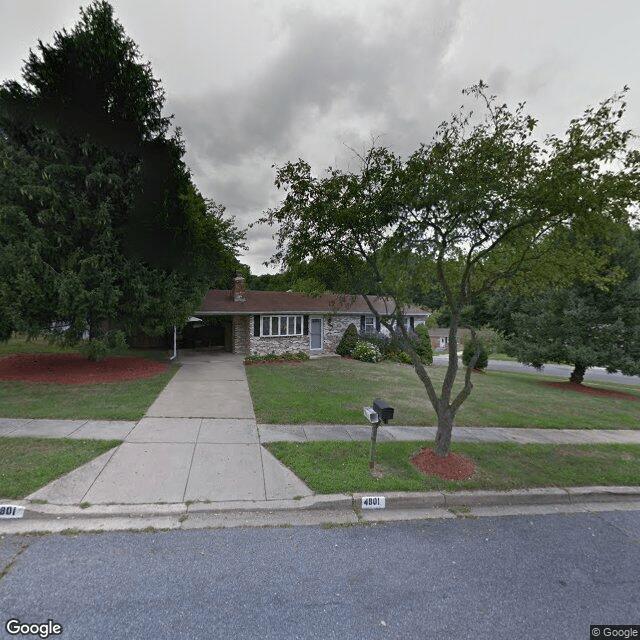
4801 Parkmont Lane, Upper Marlboro, MD 20772
For more information about senior living options: (866) 208-4318
House Of Joseph Costs & Pricing
House Of Joseph offers competitive pricing for its accommodations, standing out in both Prince George's County and the broader Maryland market. For a semi-private room, residents can expect a monthly cost of $2,500, significantly lower than the county average of $3,058 and well below the state average of $3,545. Those opting for a private room will find similarly attractive rates at $2,800, compared to Prince George's County's average of $3,792 and Maryland's overall average of $4,112. This positioning not only reflects House Of Joseph's commitment to affordability but also underscores its dedication to providing quality care in a welcoming environment.
| Floor plans | House Of Joseph | Prince George's County | Maryland |
|---|---|---|---|
| Semi-Private | $2,500 | $3,058 | $3,545 |
| Private | $2,800 | $3,792 | $4,112 |
Assisted Living communities with a similar price nearby
-
from +$200 / mo
Lifesprings Eldercare II
$2,700 to $3,100 / month6.0 miles away -
About the same

Amazing Grace Senior Care
$2,500 to $3,000 / month8.9 miles away -
from +$100 / mo
My Parent's Place
$2,600 to $3,000 / month4.6 miles away -
About the same
Ovalstone Comfort Home
$2,470 to $3,300 / month12.5 miles away -
from -$400 / mo

Mamie's Loving Care III
$2,100 to $3,000 / month7.2 miles away
Overall Review of House Of Joseph
Pros
 The owner was very nice and caring.
- Bea Hive is a nice, cozy, small house with a caring environment.
- The floor plan is wheelchair accessible.
- An aide could assist mom with lifting and bathing.
- For about three years, there were no complaints about the care he received.
- Bea's Hive has been highly recommended for those needing assisted living.
Cons
 She says placing her mom in this facility was a huge mistake, citing safety issues including men sharing bathrooms with women and a man in a wheelchair knocking her down and injuring her, with no apology and no caregivers found.
 - She reports the room provided for her mother was not move-in ready and required multiple complaints to the owner to fix.
- She notes the owner incorrectly claimed Maryland law prohibited baby monitors or cameras, offering only a public-area camera and suggesting permission from other residents, which she found illogical.
- She was forced to move her mother out less than 24 hours after moving her in, following multiple delays and heated discussions about state laws.
- She describes the experience as traumatic for her mother with dementia and for herself as caretaker, and says the contract did not state that monitors or cameras were disallowed; the denial of such devices was a red flag.
- She would not recommend Bea Hive to elderly who cannot speak or defend themselves.
- Her tour experience was only okay and the location wasn’t ideal, leading her to choose a different place.
Review
House Of Joseph in Upper Marlboro is best suited for families seeking a small, home-like assisted living setting where the owner is visibly involved and residents can enjoy a cozy, easy-to-navigate floor plan. This arrangement appeals to those who want personal attention, quicker access to the owner, and a level of intimacy not found in larger campuses. It can work well for a resident who is relatively independent but prefers light assistance with lifting, bathing, or daily routines, and for families who value a warm, caregiver-focused environment over institutional formality. Those needing robust, round-the-clock supervision, formal safety protocols, or highly structured resident management should look elsewhere.
Pros consistently point to a compact, welcoming atmosphere. The home-like layout is praised for wheelchair accessibility and the potential for easy movement throughout the space. The owner is described as caring and attentive to patient needs, which translates into a sense of being personally looked after rather than simply processed through a facility. In at least one account, staff interaction and the ability of aides to assist with lifting and bathing were cited as concrete positives. For families prioritizing close-knit relationships with caregivers and a setting where staff are readily available, these factors can translate into meaningful, day-to-day reassurance.
Yet the positives coexist with significant red flags that cannot be ignored. A troubling incident described by a reviewer involves a male resident injuring a female resident, with little apparent accountability or immediate caregiver presence in the moment. Add to that the reported experience of delayed or insufficient staffing during emergencies, and the overall safety calculus shifts. Another recurrent concern is the practical arrangement of living spaces and gender dynamics, with at least one review noting a preference for male-to-male interaction and questioning whether the living setup fully accommodates the resident’s comfort and safety. These elements collectively tilt the balance away from a blanket endorsement.
The way these pros and cons interact is decisive. The intimate, owner-involved environment can offset some concerns when staffing is reasonably reliable and emergencies are handled promptly. However, the severity and frequency of safety-related red flags, especially when they involve injury, perceived lack of accountability, or inconsistent caregiver presence, can overwhelm the benefits of a homelike setting. Families must demand concrete assurances: exact staffing ratios, on-site presence during off-hours, clear protocols for fall-prevention and incident response, and transparent reminders about how emergencies are escalated. Without these, the charm of a small house can give way to genuine risk.
Those contemplating House Of Joseph should consider alternatives if safety, predictability, or highly structured care is non-negotiable. Larger assisted living communities or facilities with dedicated memory-care wings typically offer more robust supervision, standardized emergency response, and clearer staffing patterns, which are crucial for residents with dementia or higher dependency. For families who want a quieter, more individualized experience and can tolerate some uncertainty around staffing, the House Of Joseph model may still be appealing, provided due diligence is performed and owners agree to verifiable safety guarantees and staffing commitments.
In the end, House Of Joseph delivers a compelling mix of warmth and risk. It is practical to view this community as a potential fit for families prioritizing a small, personal, hands-on caregiving approach, who can tolerate occasional safety concerns and insist on strong, verifiable safeguards. For those who require consistent, formal oversight and a rigorously safe environment, alternatives with larger staff rosters and more defined protocols will usually serve better. A purposeful site visit, direct conversations with current residents and their families, and a clear, written safety plan are essential steps before making a placement decision.
 5 resident community capacity
 Assisted Living
 Board and Care Home
 Cable or satellite TV
 Dining room
 Fully furnished
 Garden
 Housekeeping services
 Move-in coordination
 Outdoor space
 Private
 Telephone
 Wi-Fi/high-speed internet available
 Ronald Reagan Washington National (12 miles away)
 24-hour supervision
 Activities of daily living assistance
 Ambulatory care
 Assistance with bathing
 Assistance with dressing
 Assistance with transfers
 Diabetes diet
 Diabetic care
 Meal preparation and service
 Medication management
 Special dietary restrictions
 Transportation arrangement (medical)
 Transportation to doctors appointments



 Exploring the Path to Senior Living: A Comprehensive Look at Independent Living and Assisted Living
 Is Assisted Living Deductible on Your Taxes? Understanding the Complexities of Assisted Living Expenses and Deductions
 Assisted Living Support for Veterans: A Complete and Detailed Overview