








10301 Gainsborough Road, Potomac, MD 20854
For more information about senior living options: (866) 208-4318
Atrium Kosher Home Costs & Pricing
Atrium Kosher Home offers private room accommodations at a competitive rate of $5,000 per month. This pricing is slightly below the average for Montgomery County, where similar facilities charge around $5,009 monthly. In comparison, the broader state average in Maryland stands at a more affordable $4,112 for private rooms. While Atrium Kosher Home's costs align closely with county benchmarks, it provides a unique value proposition through its kosher-centric environment and specialized services that cater to its residents' cultural and dietary needs. This makes it an appealing choice for those seeking quality care within a community-focused setting.
| Floor plans | Atrium Kosher Home | Montgomery County | Maryland |
|---|---|---|---|
| Private | $5,000 | $5,009 | $4,112 |
Assisted Living communities with a similar price nearby
-
from +$200 / mo

Avalon House On Laburnum Street
$5,200 / month6.8 miles away -
from +$500 / mo

Glen Hill
$5,500 / month16.2 miles away -
About the same

Necitas
$5,000 to $5,500 / month9.3 miles away -
from +$500 / mo

Autumn Hill
$5,500 / month14.7 miles away -
About the same

Parry Home
$5,000 / month9.1 miles away
Overall Review of Atrium Kosher Home
Pros
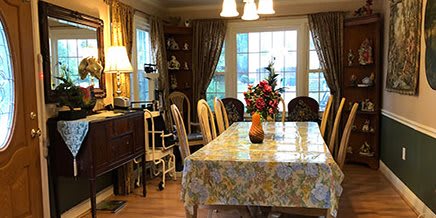
 Atrium Kosher Home has great services and wonderful people.
- The facility is lovely and clean.
- It feels like a private home with warm, qualified staff to support residents.
- Atrium Kosher Home has done an awesome job; families report their loved ones love it.
- The service has been excellent and very intimate, with friendly and professional staff.
- The administrator has been fantastic to work with.
- The setup features all on one floor, with access to the basement via a stair climber.
- The home observes all Jewish holidays.
Cons
 The owner tells staff not to notify family members about injuries.
- Meals consist mostly of carbohydrates served daily.
- Residents go from bed to chair and back to bed.
- Watching TV is the dominant activity.
- They disliked that the facility is kosher, believed it costs more, and noted no dairy with meat.
- The weekend manager could not answer financial questions.
Review
Atrium Kosher Home in Potomac is best suited for observant Jewish seniors who want a small, home-like assisted-living experience with a dedicated kosher kitchen and a highly intimate care team. The community’s one-floor layout, quiet atmosphere, and staff-to-resident intimacy make it ideal for residents who prioritize personal attention, predictable routines, and easy mobility. Families pursuing a faith-forward setting where Jewish holidays are observed and meals align with dietary laws will find the environment a natural fit, especially when a sense of belonging within a small, like-minded community matters more than flashy programming.
Those who may want to consider alternatives include families seeking more transparent communication from leadership or more expansive social programming. A notable caution is the need for clear, ongoing information about incidents and injuries and how they are shared with families. For households requiring non-kosher dining or flexible dietary options, the kosher-only model can feel restrictive and costlier. Additionally, families looking for a robust, varied activity calendar beyond TV time and occasional outings may want to compare other communities with more programmatic engagement or with a menu of daily enrichment that goes beyond traditional observances.
On the positive side, Atrium Kosher Home consistently presents as a clean, warm, and private-home-like setting with staff described as friendly and professional. Residents benefit from a single-story footprint that minimizes stair risk and supports easy navigation, with practical features like a chair lift and generator noted in the building’s infrastructure. The administration earns mentions for responsiveness and collaboration, and there are concrete examples of daily activities and scheduled outings, such as theater trips, that help maintain social connection within the resident group. The facility also honors Jewish holidays, reinforcing a sense of cultural continuity for observant families.
Yet the most contentious issues circle around safety transparency and dietary constraints. A troubling claim, that ownership has instructed staff not to notify families about injuries, undermines trust and casts a shadow over otherwise strong caregiving. Even when the staff themselves appear devoted, this policy would rightly alarm families who need timely updates on a loved one’s well-being. Dietarily, the kosher framework comes with higher costs and a stricter dining structure that can feel limiting to those not aligned with kosher rules or who desire more variety in meals. Adding to the calculus, some reviews describe a programming pattern where the dominant activity is watching television, with occasional outings but inconsistent, less actionable engagement for residents who crave structured enrichment.
When weighing pros against cons, the intimate, home-like setting and one-floor design provide meaningful offsets to several disadvantages, but not all. The closeness of care and the administrator’s evident commitment can deliver a reassuring sense of partnership for families who value personalized attention. The consistent observance of Jewish holidays and the potential for meaningful outings are real strengths that help sustain social connection without sacrificing faith-based routines. However, without transparent injury communication and a clear financial dialogue, those advantages can be eroded by anxiety and mistrust. The cost and rigidity of kosher dining also tilt the decision toward families who already prioritize or require those dietary parameters; for others, the trade-off may feel excessive.
Ultimately, Atrium Kosher Home serves a distinct niche well: a compact, faith-aligned setting where care feels individualized, mobility is practical, and daily life centers on familiar rhythms and small-scale social events. Families who place a premium on trust, cultural continuity, and neighborhood familiarity will likely move forward with confidence after an in-person experience, while ensuring their questions about injury reporting, financial transparency, and menu flexibility are answered clearly. For those who require a richer activity calendar, unambiguous, proactive communication from leadership, or non-kosher dining options, it is prudent to compare with larger or non-kosher communities that offer broader programming and a different approach to safety and openness.
In short, Atrium Kosher Home is a strong fit for observant families seeking a quiet, well-maintained home-like environment with devoted staff and a clear cultural framework. It is less suitable for those who cannot prioritize kosher dietary structure, demand transparent incident reporting, or want a more vigorous, varied activity slate and unambiguous financial guidance from leadership. A careful visit, guided by questions about injury notifications, menu flexibility, and the day-to-day social program, will clarify whether this community’s strengths align with the specific needs and expectations of the resident and family.
 8 resident community capacity
 Assisted Living
 Board and Care Home
 Activities off-site
 Cable or satellite TV
 Devotional services off-site
 Dining room
 Fully furnished
 Garden
 Housekeeping services
 Indoor common areas
 Move-in coordination
 Outdoor common areas
 Private
 Telephone
 Wheelchair accessible showers
 Wi-Fi/high-speed internet available
 Ronald Reagan Washington National (14 miles away)
 24-hour supervision
 Assistance with bathing
 Assistance with dressing
 Assistance with transfers
 Diabetes diet
 Diabetic care
 High acuity care
 Incontinence care
 Meal preparation and service
 Medication management
 Special dietary restrictions
 Transportation arrangement (medical)
 Transportation to doctors appointments
 Christian services






 8 Key Indicators That Suggest It May Be Time to Transition from Assisted Living to Skilled Nursing Care
 Vibrant Senior Living: A Comprehensive Guide for Active Older Adults
 When to Transition from Assisted Living to Memory Care: Key Indicators, Steps, and Finding the Right Community