
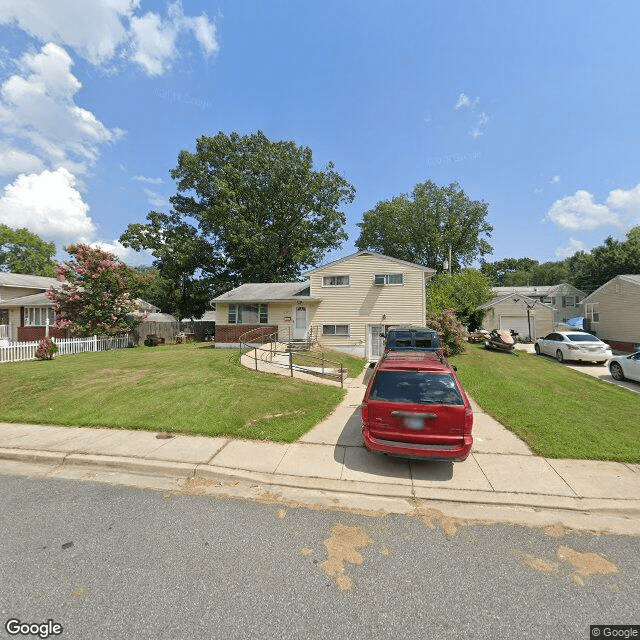
727 Delmar Ave, Glen Burnie, MD 21061
To contact a resident: (301) 440-3361
For more information about senior living options: (866) 208-4318
Marians Assisted Living Costs & Pricing
Marians Assisted Living offers competitive pricing that stands out favorably against the broader economic landscape of both Anne Arundel County and the state of Maryland. With monthly costs set at $2,000 for semi-private rooms and $2,500 for private accommodations, residents can expect to enjoy a high standard of care while benefiting from significant savings compared to the county's average costs of $4,109 and $4,162 respectively. Even when considering Maryland's overall pricing trends, which hover around $3,545 for semi-private and $4,112 for private rooms, Marians Assisted Living provides an attractive option for those seeking quality care without the financial strain typically associated with assisted living facilities.
| Floor plans | Marians Assisted Living | Anne Arundel County | Maryland |
|---|---|---|---|
| Semi-Private | $2,000 | $4,109 | $3,545 |
| Private | $2,500 | $4,162 | $4,112 |
Senior living communities with a similar price nearby
-
About the same
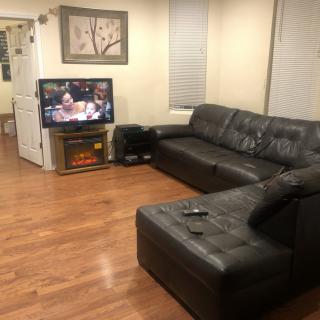
Mabel's House Assisted Living
$2,000 / month12.6 miles away -
About the same
Senior's Place
$2,000 to $2,500 / month18.3 miles away -
from +$350 / mo

Ammahl Homes Inc
$2,350 / month22.8 miles away -
from -$300 / mo
Moms & Pops Place
$1,700 to $2,000 / month16.6 miles away -
from +$85 / mo

The Willows at Victoria Falls
$2,085 / month14.6 miles away
Overall Review of Marians Assisted Living
Pros
 The place is really nice and the staff are very friendly.
- They communicate very well regarding mom's care.
- Mom is always clean, well cared for, and in good spirits when visited.
- The staff puts time into providing great care.
- Mom's mood has improved since being there.
- Marianne's Assisted Living provides engaging activities, including outings like bowling and outdoor singing.
- Cheryl is very caring and treats all residents with respect.
Cons
 The reviewer notes that the cost is too high for what they can afford.
- They worry they won’t be able to keep mom there much longer due to the price.
Review
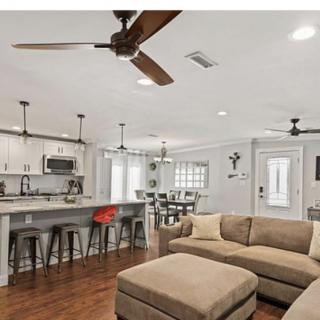
Marians Assisted Living in Glen Burnie, MD, is best suited for families seeking a warm, person-centered environment where care quality is clearly a priority and daily life for residents includes intentional social engagement. This community shines for seniors who value attentive staff, transparent communication about ongoing care, and a setting that feels well cared-for and cheerful. It is particularly compelling for relatives who want regular updates on their loved one’s well-being and who observe meaningful mood improvements after a transition to the house, as the experiences described indicate.
The core strengths lie in the front-line care and the relational tone set by staff. Visitors consistently encounter friendly, approachable caregivers who take the time to explain how care is delivered and to address concerns as they arise. Cleanliness and overall presentation reinforce a sense of respect and reliability; the residents appear well cared for and are described as being in good spirits during visits. The consistency of attention, visible effort and a tangible investment in the residents’ daily comfort, contributes directly to perceived quality of life for many families.
A robust calendar of social and recreational activities further differentiates the community. Outings such as bowling and outdoor singing presentations, plus daytime engagements at a senior center when possible, provide meaningful interaction opportunities that support social health. In-house games and group activities add variety, reducing isolation and creating predictable routines that residents can thrive within. The care team, including notable staff like Cheryl, is highlighted as genuinely caring and respectful, which reinforces trust and reinforces the sense that residents are treated with dignity in every facet of daily life.
The most significant drawback, one that can limit long-term feasibility for some families, is cost. The reviews consistently point to price as the primary constraint, with family members acknowledging excellent quality but worrying about affordability over time. While the care experience here justifies a premium for many, the financial hurdle means that this option may not be sustainable for every budget, regardless of the perceived value. This confluence of high standards and high cost means financial planning is not optional but essential for anyone considering ongoing placement.
For decision-makers, this translates into a clear tipping point: affordability will determine whether the positive attributes translate into a long-term solution. Families with the means to sustain the monthly investment will likely be rewarded with dependable care, strong communication, and a vibrant social milieu that supports well-being. Those constrained by budget or seeking more economical or more medically intensive arrangements should explore alternatives early in the process, ensuring that care quality does not come at the expense of financial stability or access to needed services.
Overall, Marians Assisted Living stands out as a top-tier option for families who place equal emphasis on daily care quality and life-enriching activities, and who can accommodate the price. The combination of friendly, responsive staff; transparent communication; a clean, respectful environment; and a rich menu of outings and social opportunities creates a compelling value proposition, provided the financial commitment is sustainable. For households where budget is the dominant consideration, it is prudent to compare other communities that offer similar levels of engagement and care at a more attainable price point, to avoid compromising long-term continuity of care.
 Board and Care Home
 Activities off-site
 Bath tubs
 Beautician on-site
 Devotional services off-site
 Indoor common areas
 Outdoor common areas
 Private
 Private bathrooms
 Respite or short term stays offered
 Baltimore-Washington International (3 miles away)
 Ambulatory care
 Diabetic care
 High acuity care
 Medication management
 Meals provided


 Is a Geriatric Care Manager the Right Choice for Your Family?
 Compassionate Conversations: How to Comfort Someone Who Is Grieving
 Home Health Care Aides: Understanding Their Role and Supporting Your Family