
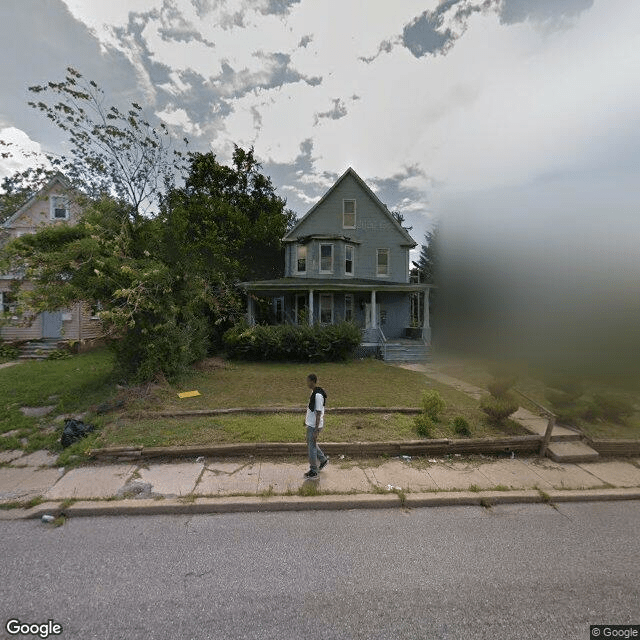
2603 Hamilton Ave, Baltimore, MD 21214
To contact a resident: (443) 759-5574
For more information about senior living options: (866) 208-4318
Overall Review of MJ Happy Homes
Pros
 The facility had plenty of room.
- A chair glider was available to help transport residents up the steps.
- Care for the client was discussed, indicating attention to their well-being.
- Renovations were planned to improve bathrooms, add a privacy curtain in the bedroom, and update furniture for a consistent style.
Cons
 The reviewer notes there are no bars in the bathroom to assist clients, compromising safety.
- The lack of bathroom grab bars persists despite the presence of a tub chair and staff assistance.
- In the semi-private bedroom, there would be no privacy between the two clients if either needed to use the portable commode at night.
- The portable commodes are placed on opposite sides of the room, further reducing privacy.
- The reviewer would wait for renovations to be completed before reconsidering the facility, indicating doubts about its current state.
Review
MJ Happy Homes in Baltimore is best suited for seniors who value generous living space and rely on consistent staff-assisted mobility, while being comfortable with a transitional setup as renovations roll out. The community appears well-suited for residents who can tolerate a shared bedroom arrangement for a period and are patient about improvements to bathrooms, privacy, and furniture. It favors those who prioritize practical daily support over immediate, high-end privacy features, and who are willing to evaluate progress as renovations unfold.
Those who should consider alternatives are individuals who insist on strong, immediate privacy and autonomous bathroom safety. A private room and fortified bathroom safety measures, such as grab bars and clearly partitioned toilet areas, are not guaranteed in the current configuration. Families prioritizing independent living with private spaces, or those with residents who require more robust, real-time safety accommodations, will likely find the present setup insufficient without seeing substantial renovations completed first.
On the upside, the facility’s space is a tangible asset. Ample room reduces congestion and supports easy movement, an important factor for mobility-focused care. The presence of a chair glider designed to assist with stair transfers reflects attention to practical, day-to-day mobility needs. Staff involvement in planning care is called out, suggesting that residents will receive attentive supervision and assistance when needed. The stated renovation plan, upgrading bathrooms, adding privacy curtains in the bedroom, and refreshing furniture for a consistent interior, signals a commitment to improvement that could meaningfully elevate daily life once implemented.
Yet the most salient drawbacks loom large for residents who cannot compromise on safety and privacy. The absence of bathroom grab bars represents a concrete safety gap for anyone relying on assistance while bathing or transferring. In the semi-private bedroom, privacy between roommates is compromised if either occupant must use a portable commode at night, with two units positioned on different sides of the room. The intention to install a privacy curtain and to standardize furnishings addresses some concerns, but until those changes are realized, daily routines are exposed to potential embarrassment and increased risk. The plan to renovate is encouraging, but it does not eliminate current hazards or the immediate need for more secure, private configurations.
The key question for decision-makers is whether the potential improvements align with the timeline and risk tolerance of the resident and family. The space and staff-oriented strengths can offset certain inconveniences for short to moderate stays, particularly for those who welcome hands-on assistance and can endure a shared room while renovations proceed. However, for households prioritizing immediate, independent living with robust bathroom safety features and guaranteed privacy, the current state argues for exploring alternatives or at least scheduling a detailed, milestone-driven renovation update before committing. The balance rests on the expectation that renovations will proceed promptly and deliver tangible gains in privacy and safety.
In final terms, MJ Happy Homes presents a practical option for residents who can tolerate a transitional arrangement with visible improvements on the horizon. Prospective families should enter with clear expectations: space and staff support are strengths, but privacy and bathroom safety are contingent on renovations. If immediate privacy and enhanced bathroom safety are non-negotiable, or if the resident’s care plan requires private accommodations from day one, pursuing other communities would be prudent. For those willing to wait for scheduled upgrades and who can function within a semi-private framework, this community may prove to be a solid, scalable choice as improvements come online.
 Activities on-site
 Bath tubs
 Devotional services on-site
 Indoor common areas
 Outdoor common areas
 Wheelchair accessible showers
 Baltimore-Washington International (14 miles away)
 Ambulatory care
 Diabetic care
 High acuity care
 Incontinence care
 Meals provided



 8 Essential Assistive Devices for Older Adults
 Navigating the Financial Road to Nursing Home Care: In-Depth Guidance and Resources
 Supportive Employee Benefits That Help Caregivers Attain Better Work-Life Harmony