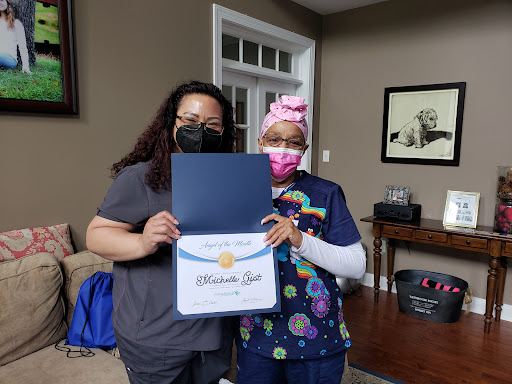
Families consistently describe clear, timely communication and responsive support from the office.
Multiple reviewers say the office was quick to respond to concerns, scheduling glitches, or changing needs. Residents and families also describe communication as clear and reassuring during stressful transitions. Several reviews specifically mention follow-through and coordination as part of what made care easier to manage day to day.
common3 reviews mention this
Care fits dementia needs well
Reviews frequently connect the care style to dementia-friendly companionship and engagement.
One reviewer describes dementia support built around conversation and companionship rather than constant hovering. Others describe dementia-related needs in the context of bathing, dressing, and help with routine, with caregivers treating the person with dignity and respect. At the same time, one review raises concerns about how illness and caregiver practices can affect a vulnerable resident’s health.
caveat3 reviews mention this
Staffing reliability gets mixed reviews
Some families report problems with caregiver consistency, last-minute changes, or care execution.
While many reviewers praise care quality, a smaller set report staffing disruptions, including call-offs and frequent caregiver changes. One reviewer describes late arrival issues and caregivers not following through on what was requested, while another includes examples of caregivers falling asleep and not being able to be reached promptly. A third review also notes a coverage commitment falling through at the last minute, leading to alternate arrangements.
common3 reviews mention this
Daily support includes meals and hygiene
Families describe hands-on help with day-to-day needs like meal prep, bathing, and dressing support.
Several reviewers mention caregivers helping with personal care tasks such as bathing and dressing, along with encouragement and respectful assistance. Others describe practical support that helps make the day run smoothly, including shopping and meal preparation. In the positive reviews, families frame this support as enabling independence and easing their own workload.
How we summarize
Counts show how many written reviews mention each theme; a review can touch several themes, and only frequently mentioned themes are displayed.
Medicaid waivers for assisted living services provide vital support for seniors and individuals with disabilities in need of long-term care, with varying state-specific eligibility criteria and benefits. These waivers cover personal care and case management but often do not fully cover room and board, leading to waiting lists for many applicants.
The article examines the complexities of assisted living for individuals with disabilities, emphasizing the need for tailored care solutions that enhance quality of life and social inclusion, while addressing financial challenges and advocating for community integration. It discusses various housing options, the importance of financial assistance through public benefits, and highlights trends towards integrated and technology-driven solutions in disability-focused housing.
Assisted living for adults with disabilities has transformed to provide personalized care and support services aimed at improving residents' quality of life while balancing independence and assistance. However, low-income individuals often face challenges in affording these services, requiring navigation of various financial resources and advocacy for better policies and solutions.
Get PricingAsk A QuestionSchedule A TourContact Senior Advisor
By clicking submit, you agree to our Partner's Terms of Use. You
also consent to receive calls and texts, which may be autodialed, from our Partner. Your consent is not a condition to
using our Partner's service. Please visit our Partner's Privacy Policy for information about their privacy practices.











 2 resident community capacity
 Assisted Living
 Cable or satellite TV
 Dining room
 Fully furnished
 Garden
 Housekeeping services
 Move-in coordination
 Outdoor space
 Telephone
 Wi-Fi/high-speed internet available
 24-hour supervision
 Activities of daily living assistance
 Assistance with bathing
 Assistance with dressing
 Assistance with transfers
 Diabetes diet
 Meal preparation and service
 Medication management
 Special dietary restrictions
 Transportation arrangement (medical)
 Transportation to doctors appointments
 Friendly community with active activities, compassionate staff, and affordable 1- and 2-bedroom options.




 A Detailed Exploration of Assisted Living Medicaid Waivers Across the United States
 Comprehensive Residential Support and Assisted Living Solutions for Individuals with Disabilities
 Comprehensive Supportive Living Arrangements for Adults with Disabilities