For more information about senior living options: (866) 208-4318
4 from 30 reviews
5 stars
21
4 stars
1
3 stars
1
2 stars
2
1 stars
5
The Azaleas Assisted Living At Woldenberg Village - Level 3 Costs & Pricing
The Azaleas Assisted Living at Woldenberg Village offers a range of accommodation options at competitive rates compared to both Orleans Parish and the broader state of Louisiana. For those considering semi-private living arrangements, the cost is set at $989 per month, significantly lower than the parish average of $4,013 and the state average of $3,598. Similarly, the one-bedroom units are priced at $1,720, which is substantially more affordable than the local average of $3,787 and the state average of $3,413. The two-bedroom option is available for $2,200 per month - again demonstrating a favorable comparison to Orleans Parish's figure of $3,982 and Louisiana's average of $3,878. For residents seeking studio accommodations, the monthly fee is $2,756; this also presents a cost-effective choice in light of Orleans Parish's average of $3,377 and Louisiana's overall average of $3,235. Overall, The Azaleas provides an attractive pricing structure that stands out within its local context while maintaining a focus on quality assisted living services.
Floor plans
The Azaleas Assisted Living At Woldenberg Village - Level 3
Orleans Parish
Louisiana
Semi-Private
$989
$4,013
$3,598
1 Bedroom
$1,720
$3,787
$3,413
2 Bedrooms
$2,200
$3,982
$3,878
Studio
$2,756
$3,377
$3,235
Overall Review of The Azaleas Assisted Living At Woldenberg Village - Level 3
common7 reviews mention this
Cleanliness stands out
Residents and families repeatedly describe the facility as spotless and well maintained.
Multiple reviewers highlight that the building and rooms are consistently clean and kept in good condition. Several specifically mention an environment that feels odor-free and spotless during stays. A few also point to the appearance of the grounds and common areas as part of what made the experience feel well cared for.
common12 reviews mention this
Caring, capable staff
Many reviewers praise staff members for being attentive, patient, and supportive.
Across positive reviews, residents and families describe staff as professional and genuinely caring, including nurses and day-to-day caregivers. Reviewers also mention frequent patience and help during the admission and care process. Some comments name individuals and describe staff going above and beyond with therapy coordination, updates, and day-to-day support.
differentiator6 reviews mention this
Skilled nursing and therapy
Skilled nursing and rehabilitation therapy receive strong support in resident experiences.
Several reviews focus on inpatient rehabilitation therapy and the results people saw during recovery. Reviewers mention physical therapy and other therapy services helping residents regain strength and improve function. Others describe the therapy team as capable and the facility as well staffed during their stay.
common2 reviews mention this
Dining and meal satisfaction
Food quality and appetite come up positively in resident experiences.
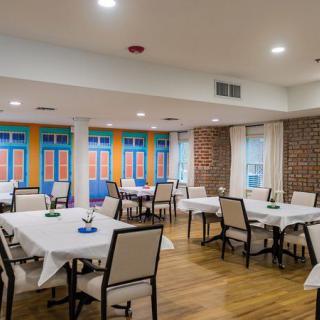
Some reviewers describe the food as delicious, while others say residents are eating well. This aligns with the community offering meals as part of daily life. While dining appears to be a recurring positive point, the reviews available here are limited in number.
common4 reviews mention this
Activities are part of daily life
Residents have multiple opportunities for activities during their stay.
Reviewers mention that the community offers a number of activities and that residents are able to participate. A few describe residents enjoying activities and socializing as part of what made the stay feel worthwhile. One review also notes therapy-related participation options and hands-on involvement for residents.
caveat2 reviews mention this
Uneven care and communication
Some reviews raise serious concerns about care responsiveness and communication.
A couple of reviews report negative experiences with nursing responsiveness, including concerns about help not being provided when needed. These same reviewers also describe issues with follow-through, including missed needs during appointments or inadequate attention to hygiene. Taken together, the feedback suggests care quality can vary depending on staff and timing.
How we summarize
Counts show how many written reviews mention each theme; a review can touch several themes, and only frequently mentioned themes are displayed.
Features
Types of Care
Assisted Living
Independent Living
Memory Care
Skilled Nursing Facility
Pets
Cats allowed
Dogs allowed
Amenities
Activities on-site
Devotional services off-site
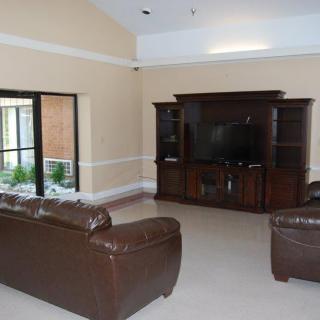
Indoor common areas
Transportation
New Orleans International (15 miles away)
Care Services
Ambulatory care
Diabetic care
Dining
Meals provided
Activities
Activities on-site
Devotional activities offsite
Nearby Places of Interest
Physicians
Heitmeier,Armani&Langhetee Medical &Surgical Eyecare (0.4 miles)
O Sullivan, Jennifer Vigour Pediatrics (0.7 miles)
Dimitri Dermatology (2.2 miles)
Bone & Joint Clinic (2.2 miles)
Smith Demarcus DDS (2.4 miles)
Martin D. Claiborne (4.3 miles)
Touro Med Building (4.5 miles)
Cafes
Starbucks (0.4 miles)
French Truck Coffee (3.5 miles)
HiVolt Coffee (3.5 miles)
Cafe Du Monde (3.9 miles)
French Truck Coffee (3.9 miles)
Cafe Envie (4 miles)
CC's Community Coffee House (4.1 miles)
Pharmacies
Walgreens (0.5 miles)
Winn-Dixie (0.7 miles)
Walgreens (1.7 miles)
Winn-Dixie (2.1 miles)
Rouses Markets (2.3 miles)
CVS Pharmacy (2.3 miles)
Walgreens (3.2 miles)
Places of Worship
St Andrew the Apostle School (1.3 miles)
Restaurants
Sweet Shack Snowballs (1.3 miles)
Chick-Fil-A (2.9 miles)
Turkey And The Wolf (3.4 miles)
Cochon Restaurant (3.4 miles)
Cochon (3.4 miles)
Barrel Proof (3.5 miles)
Pêche (3.6 miles)
Hospitals
Seaside Hospial (1.6 miles)
St Charles Surgical Hospital (3.8 miles)
LSU Medical - 1400 Poydras (4.3 miles)
Touro Infirmary (4.4 miles)
West Jefferson Medical Center LCMC Health (4.8 miles)
The Azaleas Assisted Living at Woldenberg Village offers a range of accommodation options at competitive rates compared to both Orleans Parish and the broader state of Louisiana. For those considering semi-private living arrangements, the cost is set at $989 per month, significantly lower than the parish average of $4,013 and the state average of $3,598. Similarly, the one-bedroom units are priced at $1,720, which is substantially more affordable than the local average of $3,787 and the state average of $3,413. The two-bedroom option is available for $2,200 per month - again demonstrating a favorable comparison to Orleans Parish's figure of $3,982 and Louisiana's average of $3,878. For residents seeking studio accommodations, the monthly fee is $2,756; this also presents a cost-effective choice in light of Orleans Parish's average of $3,377 and Louisiana's overall average of $3,235. Overall, The Azaleas provides an attractive pricing structure that stands out within its local context while maintaining a focus on quality assisted living services.
Yes, The Azaleas Assisted Living At Woldenberg Village - Level 3 provides memory care services for residents with mild or advanced stages of dementia or Alzheimer's disease.
Transitioning from assisted living to memory care is driven by an individual's cognitive decline and specific needs, requiring careful evaluation of indicators like increased confusion and wandering. The process involves consulting medical professionals, researching suitable communities, considering financial and legal aspects, and ensuring effective communication for personalized care plans.
The article differentiates between assisted living and memory care, explaining that assisted living supports seniors with daily activities while promoting independence, whereas memory care provides specialized services for individuals with dementia, focusing on secure environments and cognitive support. It also addresses staff training, safety considerations, costs, family involvement, and transition strategies for families navigating these care options.
The article outlines effective communication strategies for interacting with loved ones with dementia, highlighting the need for empathy, patience, and understanding while emphasizing supportive approaches like using simple language, minimizing distractions, and focusing on feelings over facts to maintain dignity and foster connection. It also suggests seeking professional guidance when needed as communication challenges evolve.
Get PricingAsk A QuestionSchedule A TourContact Senior Advisor
By clicking submit, you agree to our Partner's Terms of Use. You
also consent to receive calls and texts, which may be autodialed, from our Partner. Your consent is not a condition to
using our Partner's service. Please visit our Partner's Privacy Policy for information about their privacy practices.

 Assisted Living
 Independent Living
 Memory Care
 Skilled Nursing Facility
 Cats allowed
 Dogs allowed
 Activities on-site
 Devotional services off-site
 Indoor common areas
 New Orleans International (15 miles away)
 Ambulatory care
 Diabetic care
 Meals provided
 Excellent access to healthcare and nearby amenities for a holistic lifestyle.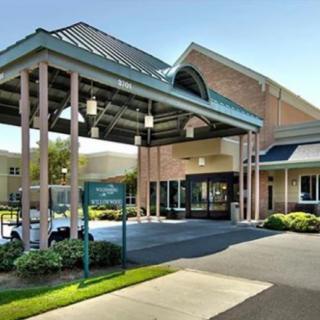
 When to Transition from Assisted Living to Memory Care: Key Indicators, Steps, and Finding the Right Community
 Understanding the Distinctions: Assisted Living and Memory Care Explained
 How to Communicate with a Loved One Living with Dementia: 10 Supportive Strategies