

11725 Madison Pike, Independence, KY 41051
For more information about senior living options: (866) 208-4318
Regency Manor Costs & Pricing
Regency Manor offers a compelling value in senior living, with monthly costs significantly lower than both Kenton County and the broader state of Kentucky. For instance, residents can enjoy a studio or semi-private room at Regency Manor for just $1,300, which contrasts sharply with the county's average of $2,908 and $2,956 respectively, and even more so against the state averages of $3,357 and $3,681. This positions Regency Manor as an attractive option for those seeking quality care without the financial burden often associated with senior living facilities in the region.
| Floor plans | Regency Manor | Kenton County | Kentucky |
|---|---|---|---|
| Studio | $1,300 | $2,908 | $3,357 |
| Semi-Private | $1,300 | $2,956 | $3,681 |
Assisted Living communities with a similar price nearby
-
About the same

Regency Manor North
$1,300 to $1,500 / month10.9 miles away -
from +$100 / mo
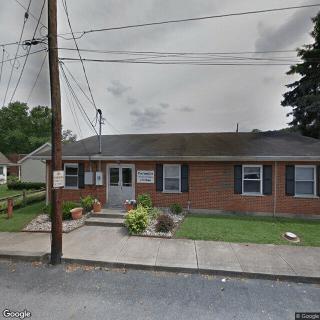
The Front Gate
$1,400 to $1,600 / month12.8 miles away
Overall Review of Regency Manor
Pros
 Staff and people here are very friendly.
- Great place to work and great residents.
Cons
 The facility is unprofessional and disgusting, with residents treated poorly.
- Residents are treated like infants and yelled at.
- A rodent infestation and overall neglect of residents’ welfare are evident.
- Medications are administered by unlicensed staff, with only one licensed nurse on site and after-hours care by untrained workers.
- Communication with families is inconsistent and unreliable.
- Basic hygiene and care are severely lacking (no soap in restrooms, showers limited, care happening down the hall, smells of neglect).
- Staff mishandle residents’ belongings and display disrespectful behavior.
Review
Regency Manor in Independence, KY is best suited for families operating on a very tight budget who are willing to accept minimal care standards and limited oversight. This community will attract those who must place a loved one for financial reasons and cannot afford higher-end options, but who nonetheless expect basic dignity, safety, and reliable routines. In practice, it is not a fit for anyone who requires consistent medical oversight, respectful treatment, or a clean, well-maintained environment. For families weighing safety and quality against cost, Regency Manor represents a very clear trade-off: affordability comes with significant risk and uncertainty.
Those considering alternatives should look at options that guarantee licensed medical supervision, predictable care schedules, and strong rights protections. If a resident needs regular hygiene assistance, dependable medication management, or memory support, Regency Manor should not be the default choice. Reports of unlicensed staff handling medications, limited on-site supervision, confusing or absent family communication, and a perceived erosion of resident rights signal systemic gaps that other facilities, especially those with transparent staffing and licensing, typically address more consistently. For any loved one with health fluctuations, these gaps translate into real safety and quality concerns.
On the upside, there are a couple of practical positives that some reviewers acknowledge. The price point is the primary hinge: Regency Manor can stretch an SSI-based budget far enough to avoid total displacement into more costly care. Some staff members and residents are described as friendly, offering a sense of welcome that, in the right setting, can contribute to daily comfort. For families prioritizing cost containment, these elements provide a minimal cushion against completely destabilizing the care equation, but they do not compensate for the fundamental care and safety vulnerabilities that appear repeatedly in feedback.
The core drawbacks, however, overwhelmingly undermine the overall value proposition. Infrequent bathing and hygiene concerns, shortages of basic supplies like soap, and a pattern of care tasks performed without clear professional accountability point to a facility that struggles with everyday safety and dignity. The most alarming issues involve medication administration by unlicensed personnel, with purportedly only one licensed clinician on site during the day and uncertain after-hours coverage. Communication with families is inconsistent, leaving relatives anxious and out of the loop during emergencies or daily changes. Add in pest concerns and a pervasive sense of neglect, and the risk to residents becomes hard to overlook.
These disadvantages are not offset by the limited positives. The combination of cost savings with questionable care quality, weak oversight, and fragile communication creates a situation where the potential for harm outweighs the stated financial benefit. In practical terms, Regency Manor’s current profile makes it unsuitable as a trusted long-term solution for anyone who cannot tolerate frequent lapses in safety and respect. Families deserve to know precisely who administers medications, what licensing and training the staff hold, and how residents’ rights are protected; without those assurances, the bargain becomes dangerously imbalanced.
For decision-makers, the path forward is clear. Tour comparable facilities with strong licensing records and robust staffing, ideally with 24/7 licensed supervision, or consider shifting more care into in-home services where oversight remains under closer family control. If Regency Manor remains on the short list, insist on concrete evidence: a licensed administrator on duty, documented staffing ratios, full access to medication administration records, transparent incident reporting, and a spotless, well-maintained environment. Engage with the local aging services or long-term care ombudsman for an independent review before placing a loved one. The goal is a setting where safety, dignity, and reliable communication are nonnegotiable, not contingent on the lowest possible price.
 59 resident community capacity
 Assisted Living
 Activities on-site
 Air-conditioning
 Beauty salon
 Cable or satellite TV
 Computer center
 Devotional services off-site
 Dining room
 Fitness room
 Fully furnished
 Gaming room
 Garden
 Housekeeping services
 Indoor common areas
 Kitchenette
 Move-in coordination
 Outdoor space
 Private bathrooms
 Restaurant-style dining
 Small library
 Telephone
 Wellness center
 Wheelchair accessible showers
 Wi-Fi/high-speed internet available
 Cincinnati Northern Kentucky International (11 miles away)
 Community operated transportation
 24-hour call system
 Ambulatory care
 Assistance with bathing
 Assistance with dressing
 Assistance with transfers
 Diabetes diet
 Diabetic care
 Medication management
 Special dietary restrictions
 Concierge services
 Planned day trips





 Understanding Medicaid Coverage for Assisted Living: A Comprehensive Guide
 How and When Medicaid May Cover Assisted Living Costs
 A Detailed Exploration of Assisted Living Medicaid Waivers Across the United States