
2904 West 8Th, Coffeyville, KS 67337
For more information about senior living options: (866) 208-4318
Overall Review of Assisted Living At Windsor Place I
Pros
 Theodosia's home location has worked out well.
- The facility and activities for residents are good.
Review
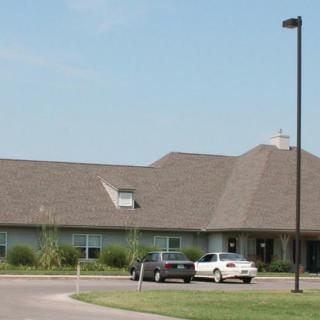
Assisted Living At Windsor Place I in Coffeyville is best suited for active seniors who want a comfortable, home-like environment with reliable social engagement and straightforward assisted-living care. The community clearly serves residents who prioritize daily programming, accessible amenities, and a warm, community-oriented atmosphere over campus-scale amenities or hospital-like care. In practice, families report that the facility delivers solid housing and meaningful activity options, suggesting it fits well for residents who want to stay socially involved and keep a steady routine without requiring intensive medical intervention.
Those considering alternatives should weigh whether the resident’s needs might outgrow what Windsor Place offers. If the plan calls for significant medical services, frequent skilled nursing, or specialized memory care, this setting may not provide the level of clinical support or supervision required. Families seeking a campus with broader medical capabilities, more robust memory-care options, or deeper clinical oversight should evaluate other nearby options. Likewise, if transparency around costs, staffing levels, or escalation paths for changing care needs is a priority, alternative communities may address those questions more directly.
On balance, the strongest pros reside in the facility’s usable, well-maintained environment and the breadth of resident activities. Reviewers consistently highlight a meaningful social calendar and opportunities for residents to stay engaged, which translates into a practical, livable quality of life. The 4.3 overall rating from four reviews, bolstered by three five-star assessments, signals solid satisfaction across most experiences. The combination of dependable housing and reliable programming can deliver real day-to-day benefits for residents who want to remain connected, independent in tasks appropriate to assisted living, and integrated into a small-town community.
However, there is a caveat reflected in the rating mix: one reviewer assigned two stars, indicating at least some dissatisfaction or unmet expectations for that resident. Without additional detail, this signals potential variability in individual experiences, perhaps around responsiveness, value, or fit for specific preferences. The limited public details about staffing levels and the depth of care also leave a meaningful question mark for families assessing how Windsor Place would handle evolving medical needs or urgent requests. In short, the positives may be superb for many, but a portion of residents may encounter friction that should be probed during a visit.
The key takeaway is this: Windsor Place offers practical benefits for residents whose goal is a steady, socially active, low-to-moderate-care environment. The active programming, home-like atmosphere, and overall community feel create a tangible moat against loneliness and isolation, which is a common risk in assisted living. Those benefits do not, however, automatically compensate for the lack of explicit high-acuity services or transparent escalation pathways. If care needs are likely to intensify, or if a resident requires more specialized memory support, the cons become more consequential and warrant careful comparison with alternatives that foreground clinical capacity and proactive care planning.
Prospective families should approach a visit with a clear checklist focused on daily life and care continuity. Inquire about staff-to-resident ratios across day and evening shifts, how quickly staff respond to non-emergency requests, and what happens if a resident’s care needs escalate. Request a breakdown of what is included in monthly fees, what activities residents actually participate in on a weekly basis, and how meals are planned and prepared. If Windsor Place aligns with the resident’s social and light-care goals, it can be a strong, sensible choice. If not, consider options with more explicit medical capabilities, larger care teams, or a broader continuum of care to avoid midstream transitions.
 36 resident community capacity
 Assisted Living
 Beauty salon
 Cable or satellite TV
 Dining room
 Fully furnished
 Garden
 Housekeeping services
 Kitchenette
 Move-in coordination
 Outdoor space
 Telephone
 Wi-Fi/high-speed internet available
 24-hour call system
 Activities of daily living assistance
 Assistance with bathing
 Assistance with dressing
 Assistance with transfers
 Diabetes diet
 Meal preparation and service
 Medication management
 Mental wellness program
 Special dietary restrictions
 Transportation arrangement (medical)
 Transportation to doctors appointments




 Exploring the Contrasts Between Assisted Living and Skilled Nursing
 8 Key Indicators That Suggest It May Be Time to Transition from Assisted Living to Skilled Nursing Care
 Vibrant Senior Living: A Comprehensive Guide for Active Older Adults