
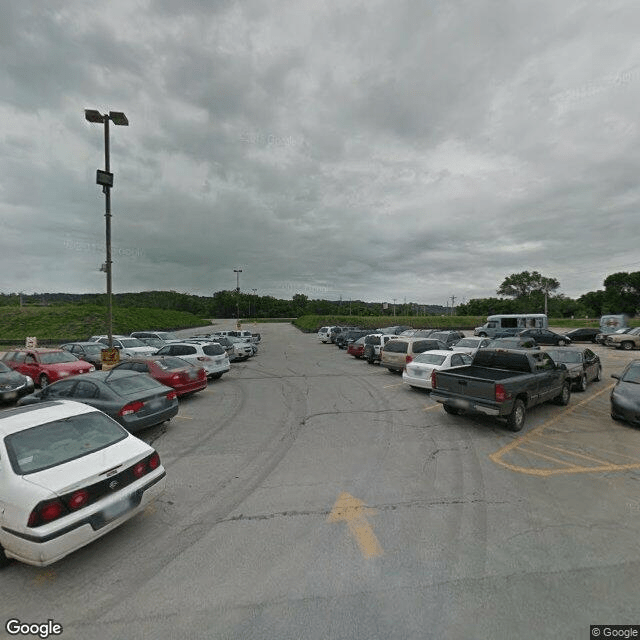
1702 N. 16th St., Council Bluffs, IA 51501
To contact a resident: (712) 256-7284
For more information about senior living options: (866) 208-4318
Immanuel Pathways Costs & Pricing
Immanuel Pathways offers competitive pricing for its semi-private accommodations, with a monthly cost of $3,100. This rate is notably lower than both Pottawattamie County, where the average cost is $3,736, and the wider state average in Iowa at $3,885. By choosing Immanuel Pathways, residents benefit from the quality of care and services provided without the higher expenses typically associated with similar facilities in the region. This makes it an attractive option for individuals seeking comprehensive support in a comfortable living environment while also being mindful of their financial considerations.
| Floor plans | Immanuel Pathways | Pottawattamie County | Iowa |
|---|---|---|---|
| Semi-Private | $3,100 | $3,736 | $3,885 |
Senior living communities with a similar price nearby
-
from -$230 / mo

Elk Ridge Village
$2,870 to $4,100 / month18.2 miles away -
from -$152 / mo

Maple Ridge Retirement Community
$2,948 to $4,330 / month15.9 miles away -
from -$403 / mo
Assisted Living At Trinity Village
$2,697 to $3,051 / month12.6 miles away -
from -$605 / mo
Richmont Senior Living
$2,495 to $3,350 / month9.0 miles away -
from -$250 / mo
Autumn Pointe
$2,850 to $3,790 / month15.0 miles away
Overall Review of Immanuel Pathways
Pros
 Pace is an exceptional option for keeping a loved one safely at home for as long as possible.
- Pace has a unique ability to provide innovative solutions to seemingly insurmountable challenges.
- Pace offers unlimited resources and support to participants and their family members, regardless of income.
- Pace staff is diligent, compassionate, and highly skilled at navigating the most difficult situations.
- The Pace team has become an integral part of the families' support networks.
- Pace demonstrates genuine concern for patients' well-being, reflecting the devotion of their families.
- The doctors, staff, and people who go to Pace are highly valued by those who use the services.
- Pace drivers are appreciated for assisting with transportation to medical appointments.
Cons
 The receptionist was extremely unpleasant upon arrival, and the doctor had no faith in the patient, with a decision that almost cost the grandmother her life.
- The Pace program is accused of potentially causing irreparable damage to the mother’s health due to gross misdiagnosis by unqualified individuals.
- A Pace Physician Assistant allegedly diagnosed dementia on the spot without any formal neurological testing, reducing a vibrant woman in her early 70s to a shell within two weeks.
- The medication prescribed by Pace is described as potentially causing seizures in the reviewer’s mother.
- The reviewer states that this facility should have its doors closed today, not tomorrow.
- The organization is described as being in denial.
- It is claimed that the organization can easily refer families to Adult Protective Services and does not care how families are affected.
- The organization is seen as forcing family members to manage incontinence and home care, leading to higher expenses.
Review
Immanuel Pathways in Council Bluffs is best suited for families seeking a traditional, hands-on assisted-living environment where residents benefit from engaged clinicians, dependable transportation, and a calendar full of activities. The setting appears to deliver steady attention from doctors and care staff, with drivers who facilitate access to appointments and social outings that keep residents linked to the broader community. For families weighing Pace-style home-based support as an alternative, this community offers comparable daily supervision in a center-based setting, reducing the risk that caregivers at home suddenly face overwhelming needs.
Those with moderate or escalating cognitive impairment should approach with caution; reviews raise concerns about the Pace program’s diagnostic practices and the heavy burden placed on family members when dementia is involved. If the plan relies on at-home Pace care, there is a documented risk of misdiagnosis and abrupt medication changes that can worsen health, sometimes dramatically. In such cases, alternatives that provide more robust, facility-based oversight or a more conservative approach to dementia management may be preferable.
On the upside, patients and families report compassionate, capable clinicians and staff; the willingness to navigate difficult situations stands out as a genuine strength. The transportation program and activity scheduling offer tangible quality-of-life gains that can keep residents engaged and connected. However, these strengths do not fully shield the experience from the most serious drawbacks tied to Pace: the potential for misdiagnosis, plus the emotional and operational strain when treatment decisions are challenged or reversed. Reports of inconsistent interpersonal interactions, such as an unpleasant reception on arrival and discord around medical choices, further color the picture.
Families considering this pathway should demand clear governance of Pace within the facility: independent second opinions, transparent care plans, and a strong neurologic review before any dementia diagnosis or medication change is accepted. It is essential to verify that the center handles cognitive concerns with established protocols rather than deferring difficult decisions to unqualified staff. Obtain direct references from current residents’ families about how urgent medical decisions are communicated and how often errors occur, to avoid repeating the most troubling patterns seen in the reviews.
Financial and care expectations require scrutiny: Pace’s model promises broad resources regardless of income, a compelling prospect that can blur limits. Yet the real-world experiences shared here caution against assuming safety simply because resources exist. The risk of inappropriate diagnoses or aggressive medication changes demands independent medical oversight and contingency plans, especially for families reluctant to accept sudden shifts in cognitive labeling. The bottom line is not to dismiss the good care and engagement reported, but to treat Pace-related aspects as a critical risk vector that must be tightly controlled.
Bottom line: Immanuel Pathways offers the strongest case for families who want a home-like level of supervision within a structured facility, with reliable staff and active programming. The most pivotal caveat centers on the Pace component; if this program will play a central role, proceed only with rigorous safeguards, second opinions, and ongoing oversight. For those whose priority is dementia-care integrity and predictable medical decision-making, exploring alternatives, other nearby options with proven dementia protocols or a non-PACE care plan, will pay dividends. In all cases, engage administrators directly, tour the community, and demand concrete care pathways before making a commitment.
 Eppley Airfield (2 miles away)

 Engaging Brain Games and Innovative Apps to Keep Senior Minds Active
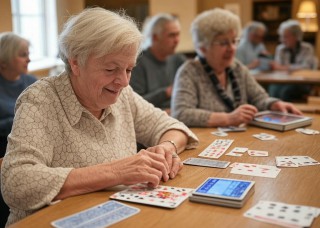 Effective Strategies for Keeping Seniors' Minds Active: A Deep Dive into Brain Games and Apps
 In-Depth Look at the VA Aid and Attendance Program