
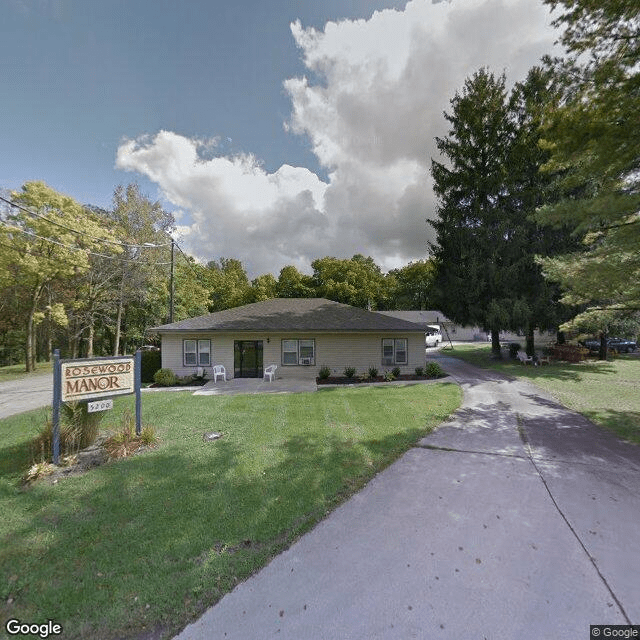
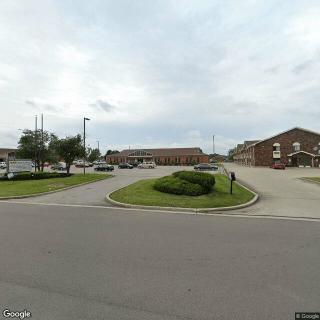
5200 South Burlington Drive, Muncie, IN 47302
For more information about senior living options: (866) 208-4318
Overall Review of Rosewood Manor
Pros
 The staff is friendly and supportive.
- The environment feels like a group home.
- Rosewood Manor is the right place for loved ones who need extra support.
- The residents are fun and polite to staff and to one another.
- The administration is great.
- The kitchen staff is awesome with the meals.
- It is a great place to be for both staff and residents.
- The residents take care of each other and go out of their way to help.
Cons
 The level of care is not the same as a nursing home.
- The environment is more like a group home.
- Most residents have some kind of psychological condition living at Rosewood Manor.
Review
This community is best suited for seniors who crave a warm, residential atmosphere with a true sense of neighborhood feeling and a high-touch staff presence. Rosewood Manor functions like a small, group-home environment where residents benefit from daily companionship, regular meals brought to living spaces, and consistent, approachable support from caregivers. It works particularly well for individuals who have mental health or behavioral needs that require steady oversight and a community that treats daily living as a collective, interdependent experience rather than a clinical, impersonal setting.
Those who may want to consider alternatives are families seeking a more traditional nursing home or a facility with a heavier emphasis on skilled medical oversight. If a loved one requires frequent skilled nursing interventions, intensive wound care, or memory-care protocols that demand a higher level of clinical infrastructure, Rosewood Manor’s model may not deliver the medical acuity some cases demand. Similarly, families prioritizing a highly independent lifestyle with minimal structured programming, or those seeking a facility that is not oriented toward mental health support, may find other options better aligned with expectations and needs.
The strongest positives, friendly, supportive staff; a kitchen team delivering appealing meals; and a genuine, family-like atmosphere, do meaningful work in offsetting the lack of a traditional nursing-home feel. The staff’s warmth translates into a sense of safety and belonging, while the administration’s stability provides continuity that reduces resident disruption. Meals that residents enjoy, delivered when needed, remove a layer of daily friction and free families to focus on social engagement and participation in events. In a setting where residents often look out for one another, these elements counterbalance the absence of a more clinical care framework.
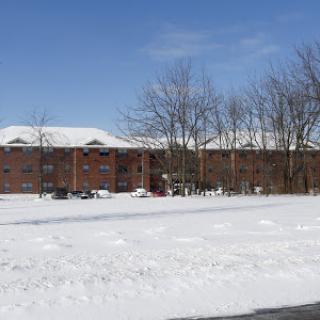
An additional key strength is Rosewood Manor’s quiet, wooded location and its built-in social scaffolding. The environment supports calm routines and reduces overstimulation, which benefits residents who struggle with anxiety or agitation in more institutional spaces. Regularly scheduled activities and opportunities for volunteering or informal engagement create meaningful purpose and peer connections. The result is a community where residents are not merely cared for but involved, contributing to a sense of purpose that can improve mood, cooperation, and overall wellbeing. That social fabric, in particular, can ease transitions for families seeking a homey, reassuring setting rather than a sterile, hospital-like atmosphere.
Still, the central trade-off is evident: this is not a high-acuity medical campus, and for some loved ones the level of medical oversight will feel insufficient. The culture centers on supportive care, daily rhythm, and interpersonal connections rather than an aggressive clinical model. Families must weigh whether the degree of clinical intensity, skilled nursing availability, and specialized memory-care resources meet the specific needs of the individual. If a loved one requires substantial medical supervision or a memory-care environment with dedicated security and trained dementia specialists, those expectations may be better served elsewhere.
In the end, Rosewood Manor stands out for families seeking a close-knit, compassionate home where residents and staff form living communities around meals, activities, and mutual support. It earns strong consideration for those whose loved ones flourish in a less medicalized, more homelike setting, especially when mental health needs are part of the daily care plan and a sense of belonging is paramount. For anyone prioritizing robust medical services, clear pathways to skilled nursing, or a pace and focus more typical of a conventional assisted living or memory-care campus, broader options should be explored to balance medical requirements with living-room warmth and community spirit.
 42 resident community capacity
 Assisted Living
 Activities on-site
 Beauty salon
 Cable or satellite TV
 Devotional services off-site
 Dining room
 Fully furnished
 Garden
 Housekeeping services
 Indoor common areas
 Kitchenette
 Move-in coordination
 Outdoor space
 Resident parking
 Restaurant-style dining
 Security gate
 Small library
 Telephone
 Wi-Fi/high-speed internet available
 24-hour call system
 Ambulatory care
 Assistance with bathing
 Assistance with dressing
 Assistance with transfers
 Diabetes diet
 Diabetic care
 Medication management
 Mental wellness program
 Special dietary restrictions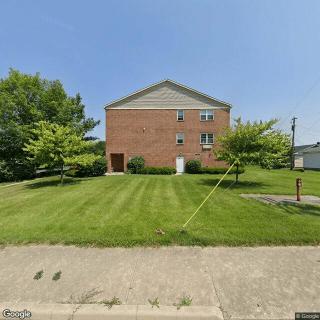

 8 Key Indicators That Suggest It May Be Time to Transition from Assisted Living to Skilled Nursing Care
 Vibrant Senior Living: A Comprehensive Guide for Active Older Adults
 When to Transition from Assisted Living to Memory Care: Key Indicators, Steps, and Finding the Right Community