
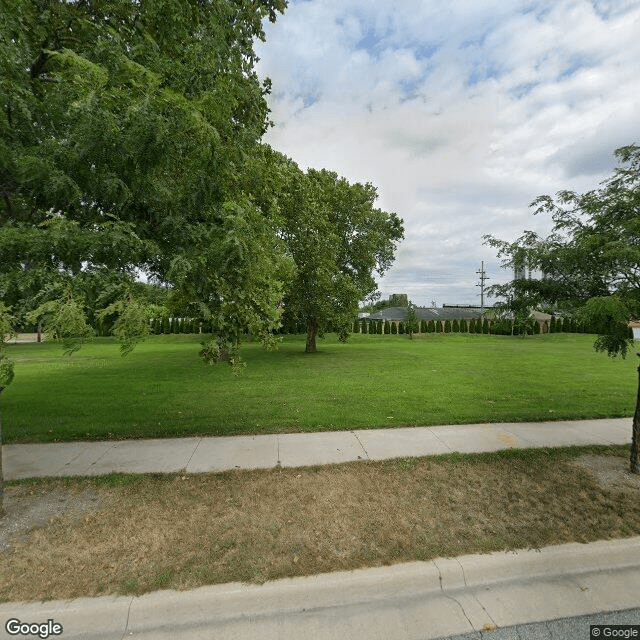
440 Michigan Blvd East, Michigan City, IN 46360
To contact a resident: (219) 879-6115
For more information about senior living options: (866) 208-4318
Silver Birch of Michigan City Costs & Pricing
Silver Birch of Michigan City offers competitive pricing for its residential options compared to both Porter County and the broader state of Indiana. For a studio apartment, residents can expect to pay $3,475 per month, which is slightly lower than the county average of $3,632 and aligns closely with the state figure of $3,258. When considering a one-bedroom unit, the monthly cost at Silver Birch is set at $3,875 - this is above the county average of $3,587 but notably higher than the statewide average of $3,300. Overall, while Silver Birch presents a compelling value proposition for studio living in Michigan City, potential residents should weigh these prices carefully against local and state averages when making their housing decisions.
| Floor plans | Silver Birch of Michigan City | Porter County | Indiana |
|---|---|---|---|
| Studio | $3,475 | $3,632 | $3,258 |
| 1 Bedroom | $3,875 | $3,587 | $3,300 |
Assisted Living communities with a similar price nearby
-
from -$320 / mo
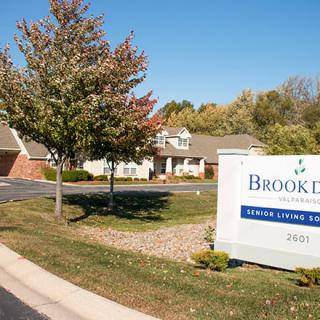
Brookdale Valparaiso Assisted Living
$3,155 to $3,300 / month17.7 miles away -
from +$340 / mo
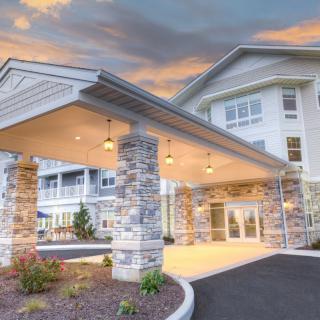
Residences at Coffee Creek
$3,815 to $6,376 / month9.8 miles away -
from -$380 / mo

Aviva Valparaiso
$3,095 to $4,995 / month17.4 miles away -
from +$120 / mo
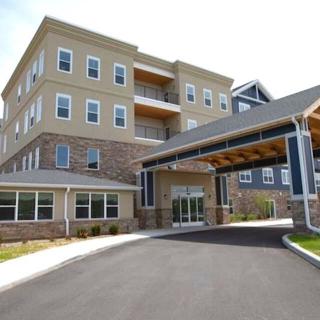
Valparaiso Senior Village
$3,595 to $6,195 / month14.1 miles away -
from -$265 / mo
Avalon Springs Health Campus
$3,210 to $4,560 / month17.2 miles away
Overall Review of Silver Birch of Michigan City
Pros
 Silver Birch of Michigan City is very clean.
- It offers a lot of activities for residents.
- It seems to have a very good meal plan.
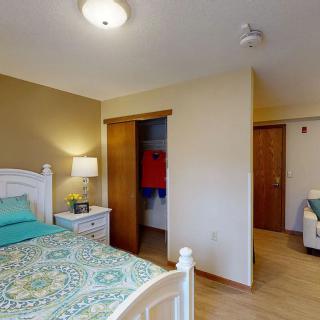
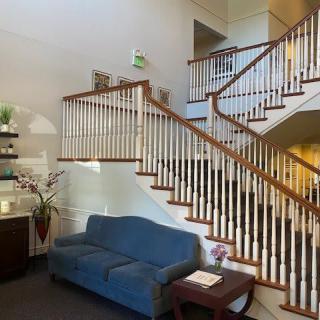
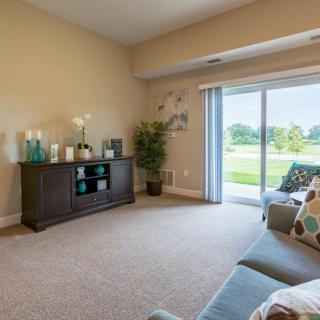
- The rooms are very spacious.
- It offers bingo, a puzzle room, and billiards.
- It organizes a weekly fun night for residents.
Review
Silver Birch of Michigan City is best suited for active seniors who want a socially engaged living environment, clean surroundings, and spacious private rooms, all in a community that prioritizes comfort over intensive on-site medical care. Michigan City location provides convenient access to local services while preserving a self-contained atmosphere that supports independence. This is a setting where daily life centers on activities, meals, and companionship rather than clinical routines. For families seeking a straightforward, low-stress option that keeps residents engaged and connected, Silver Birch is a compelling fit.
From the observed quality, cleanliness stands out as a foundational strength. The facility is described as very clean, which translates into a sense of safety and well-being for residents, important for ongoing health and comfort. The activity roster appears robust for a mid-sized community, featuring bingo, puzzle room, billiards, and a weekly social night organized by volunteers, which helps sustain a vibrant social fabric. The meal plan is characterized as very good, a critical factor for daily satisfaction. Rooms are spacious, offering accommodation for personal belongings and a comfortable living environment.
However, potential residents and their families should note that contact during the visit was limited to a single staff member, leaving questions about day-to-day responsiveness and the consistency of intimate caregiving. This limited firsthand impression suggests a need for diligence during the due diligence process, request a broader tour and several face-to-face conversations with frontline caregivers, nurses, and management. Those who require frequent caregiver interaction, rapid response times, or on-site medical services should consider options with higher staffing visibility and documented care metrics. Memory care and rehab-oriented services are not highlighted here, so clarity is essential.
Yet the pros do not merely compensate for these gaps; they redefine the balance for a certain segment of seniors. Cleanliness and a stable, comfortable environment reduce the risk of neglect-related concerns and promote routine, which in turn supports mental and physical well-being. A strong calendar of activities keeps residents socially engaged, mitigating potential isolation and boredom that can arise in communities with fewer offerings. Generous, well-thought-out meal plans reinforce daily energy and mood, while spacious rooms reduce stress around clutter and provide room for visitors, hobbies, and personal touches. When these positives align with a reasonable caregiving footprint, the overall experience feels coherent and livable.
Families evaluating Silver Birch should prioritize a thorough in-person assessment that confirms staffing parity with resident needs. Prospective residents should ask for an actual floor plan and a weekly activity schedule, review sample menus, and observe dining service. Inquire about staff-to-resident ratios, the availability of nurses on each shift, and the process for non-emergency calls and emergencies. It also makes sense to visit during a busy activity period to gauge how staff engage with participants and manage safety. If this community meets the tone, pace, and social appetite desired, the remaining questions should be about care depth and medical support.
In short, Silver Birch of Michigan City offers notable value for active seniors who prize social life, cleanliness, and comfortable, spacious accommodations. It is a strong match for families prioritizing engagement over intensive medical oversight, and for residents who enjoy structured programming and a ready-made social circuit. Those seeking robust on-site clinical care, frequent staff-assisted daily living assistance, or specialized memory-care programming should look elsewhere and compare options with clearer care metrics. With careful due diligence and a clearer view of staffing practices, Silver Birch can be a practical, satisfying home for the right resident in the greater Michigan City area.
 Assisted Living
 Activities on-site
 Air-conditioning
 Devotional services off-site
 Handicap accessible
 Indoor common areas
 Kitchenette
 Wheelchair accessible showers
 Ambulatory care
 Diabetic care
 Incontinence care
 Medication management
 Guest meals
 BBQs or picnics
 Birthday parties
 Day trips and outings
 Happy hour
 Live musical performances
 Trivia games
 Yoga / chair yoga


 Assisted Living and Memory Care: Understanding Their Core Differences
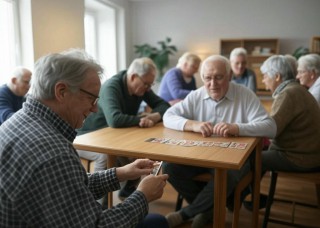 Beyond the Bingo Hall: 50+ Enriching Activities for Seniors in Assisted Living
 Understanding the Distinctions: Assisted Living and Memory Care Explained