
1920 S Highland Ave # 300, Lombard, IL 60148
To contact a resident: (630) 916-4628
For more information about senior living options: (866) 208-4318
Overall Review of Advancare
Pros
 The sister loved Advancare and the therapist helped her recover fully.
- The family is pleased with the service, communication, and support provided by Advancare.
- Padma has been a strong, responsive point of contact offering guidance and immediate answers.
- The staff are highly professional and respond quickly and efficiently to issues.
- The patient is pleased with the physical therapist and has made great progress.
- Padma ensures everything is set up before hospital discharge and walks families through every step.
- The team of PT, OT, and nurses is highly recommended for their expertise.
- Robin and Melanie are caring, knowledgeable, compassionate, and excellent clinicians.
- The nurse and support staff are professional, punctual, and thorough, with clear communication.
- Advancare is described as a life saver and a dependable, top-quality home care provider.
Cons
 Padma allegedly called to pressure removal of a Google review, using a condescending tone and showing a disregard for customer service.
- The reviewer claims they never received a promised return call or timely setup for services and were told a referral was needed, leading them to switch providers.
- The reviewer gave the service 1 star, stating a nurse failed to do her job, band-aids were thrown at them, and they were told to do it themselves, with only the physical therapist being commendable.
- The reviewer accuses the company of incompetence and lies used to cover up issues, portraying the organization as unreliable.
Review
Advancare in Lombard is best suited for families pursuing high-quality, at-home post-acute care, especially after surgery or a significant medical event. The service line leans into skilled nursing, physical therapy, and coordinated care designed to support a patient’s recovery without requiring admission to a facility. When the goal is to regain function at home, with clinicians who can establish a clear plan, monitor progress, and stay in close contact with family members, Advancare consistently delivers strong clinical results and dependable hospital-to-home transition support.
Those who should consider alternatives are the ones who foresee needing round-the-clock supervision, highly intensive ongoing care, or a social environment that a facility-based community provides. If daily, hands-on oversight by licensed nurses around the clock is non-negotiable, or if a family requires a more centralized, non-stop care team with predictable on-site availability, a traditional assisted living or a dedicated in-home agency with stronger 24/7 options may be a better fit. In addition, if there is a heightened sensitivity to administrative missteps or inconsistent communication, the risk profile, based on mixed client experiences, may tilt toward seeking another provider with a more uniform service model.
The strongest advantages lie in the clinical strengths and the care coordination that consistently shows up across multiple cases. Reviewers repeatedly highlight skilled physical therapy, attentive nursing, and prompt, practical responsiveness as core benefits. The teams are praised for setting up services before hospital discharge, maintaining steady communication with families, and guiding complex medical needs with competence. A notable pattern is the ability to deliver measurable progress post-surgery and after acute illness, often accompanied by careful management of medication regimens and coordination with hospitals and social workers. When a client has clear medical needs and relies on timely, professional intervention, Advancare’s depth of clinical talent and proactive discharge planning can shorten hospital stays and support safer, smoother returns home.
Yet the service is not without notable caveats. A minority of experiences reflect gaps in administrative responsiveness and follow-through. Some clients report delayed or incomplete callbacks, misunderstandings about set-up steps, and friction around scheduling, all of which can derail a recovery timeline. A few reviews describe tense interactions with a point person who is perceived as condescending or overly directive, and there are explicit warnings that expectations around service activation and continuity were not met. These accounts underscore that while clinical care can be excellent, the reliability of the front-end process and responsiveness matters just as much to successful outcomes.
Those pros and cons together shape a nuanced calculus. When a family can lock in a dependable care leader, ensure a predictable response pattern, and demand a well-documented care plan with clear milestones, Advancare becomes a compelling option for at-home recovery. The positive, recurring testimonies about progress in PT and the meaningful support around complex medical questions suggest that, for post-acute needs, the benefits often outweigh the risk of less consistent administrative experiences. The providers’ ability to mobilize a robust team, nursing, therapy, and social work, creates a durable foundation for recovery that many families find reassuring.
The practical decision steps are straightforward. Start by confirming the exact services needed now and anticipated in the near term, then specify a single point of contact who will coordinate scheduling, equipment, and transitions. Request recent client references and a concrete response-time commitment for calls and problem resolution. Have a written plan that outlines goals, expected progress intervals, and escalation paths if issues arise. Schedule a trial period with a clearly defined start and end date to evaluate responsiveness and clinical outcomes before committing long term. Finally, assess whether home-based recovery remains the best fit for the longer horizon or if a hybrid approach, combining home health with a nearby assisted living option, better aligns with anticipated needs and lifestyle preferences.
In the end, Advancare stands as a solid choice for families seeking expert home-based rehabilitation and medical support, provided there is careful management of expectations around administrative communication and scheduling. The care quality, continuity of skilled clinicians, and hospital-to-home coordination offer tangible benefits that can translate into faster recovery and safer discharges. If those operational assurances can be reliably secured, Advancare delivers a practical, powerful pathway for recovering at home. If not, alternative providers with a more uniformly reliable administrative process may prevent frustration and ensure that the clinical strengths are matched by equally dependable day-to-day service.
 Chicago O'Hare International (11 miles away)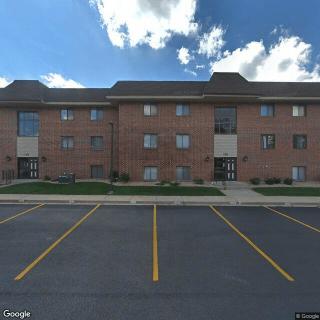






 Caregiver Exhaustion: Recognizing the Signs and Restoring Your Well-Being
 Understanding Hospice Care at Home: Comprehensive Services, Key Benefits, and Eligibility
 Understanding the Full Cost of 24/7 In-Home Care: A Detailed Overview