For more information about senior living options: (866) 208-4318
3.9 from 37 reviews
5 stars
18
4 stars
9
3 stars
3
2 stars
2
1 stars
5
Hancock House Costs & Pricing
Hancock House offers an attractive pricing structure compared to the broader market rates in Cook County and Illinois. For a studio apartment, residents pay just $580 per month, which is significantly lower than the average of $3,762 in Cook County and $4,028 statewide. Similarly, a one-bedroom unit at Hancock House costs $645, whereas the average in Cook County stands at $3,256 and reaches $3,527 across Illinois. Even for two-bedroom apartments, Hancock House maintains competitive pricing at $695 compared to $4,412 in Cook County and $4,208 statewide. These figures clearly highlight Hancock House as a budget-friendly option for those seeking affordable housing without sacrificing quality or convenience.
Floor plans
Hancock House
Cook County
Illinois
Studio
$580
$3,762
$4,028
1 Bedroom
$645
$3,256
$3,527
2 Bedrooms
$695
$4,412
$4,208
Senior living communities with a similar price nearby
from +$85 / mo
Midway Pointe
4.4 from 24 reviews
$665 to $815 / month
10.7 miles away
from -$30 / mo
Montclare Senior Residences of Avalon Park
4.3 from 16 reviews
$550 to $650 / month
5.9 miles away
from +$70 / mo
Friendly Towers
4 from 16 reviews
$650 / month
20.1 miles away
from +$20 / mo
Robbins Supportive Living
3.7 from 37 reviews
$600 to $4,200 / month
3.7 miles away
from -$69 / mo
Hollywood House Apartments
4 from 35 reviews
$511 to $739 / month
21.5 miles away
Overall Review of Hancock House
common5 reviews mention this
People are consistently praised
Residents describe the people here as kind and helpful.
Several residents say the staff and hosts went out of their way to help, including meeting needs from check-in to check-out. Others echo that the people are nice and friendly, including comments about how the common areas feel welcoming. One review also highlights knowledgeable hosts about the home and surrounding areas.
common3 reviews mention this
Building condition and updates
Residents point to a well-kept building and modern touches.
Residents frequently describe the building as nice and well-maintained. One review calls the home stunning and says the rooms include modern amenities such as central air despite the buildingā€™s age. Another review simply reinforces that the building is in good shape.
common2 reviews mention this
Food is a bright spot
Dining quality stands out in multiple reviews.
At least two reviews mention food positively, with one calling the food very good. Another review highlights breakfast as plentiful and delicious during their stay.
caveat4 reviews mention this
Serious access and upkeep concerns
Some residents report significant problems with access or condition.
A few reviews raise concerns that affected day-to-day access or safety, including a broken door/buzzer that prevented entry. Others report the property felt not open and that renovations occurred while tenants were present, described as a health hazard. One review also says the place was unequivocally condemned.
How we summarize
Counts show how many written reviews mention each theme; a review can touch several themes, and only frequently mentioned themes are displayed.
Features
Types of Care
Active Adult Communities (55+)
Transportation
Chicago Midway (10 miles away)
Nearby Places of Interest
This part of Chicago, Illinois offers a convenient and diverse range of amenities for those considering senior living. With a variety of restaurants, cafes, and pharmacies within close proximity, residents have easy access to everyday necessities. The presence of multiple places of worship provides opportunities for spiritual fulfillment and community engagement. Additionally, the availability of transportation options such as Metra stations makes it convenient for seniors to get around the city. For healthcare needs, there are several hospitals and physicians in the area offering quality medical services. The abundance of parks offers opportunities for outdoor recreation and relaxation amidst nature. Overall, this neighborhood provides a well-rounded environment for seniors looking for a comfortable and convenient place to call home.
Restaurants
Dillingers Drive-In (1.2 miles)
Buona Restaurant & Catering (2.7 miles)
Horse Thief Hollow (2.9 miles)
SImply Southern Soul Food (3.3 miles)
McDonald's (3.4 miles)
Wendy's (3.5 miles)
White Castle (4 miles)
Places of Worship
Holy Name Of Mary Church (1.4 miles)
Beth Eden Baptist Church (1.4 miles)
Christ Community Church (6.7 miles)
St Philip Neri Parish (7.1 miles)
Transportation
Metra - Morgan Park / 115th Street (1.8 miles)
Metra - 107th Street (2.3 miles)
Metra (6.6 miles)
59th st Junction (7.8 miles)
Metra/Amtrak (7.9 miles)
Metra - 55th / 56th / 57th St (8.6 miles)
Pharmacies
CVS Pharmacy (2.9 miles)
Walgreens (3 miles)
Walgreens (3.4 miles)
Walgreens (3.4 miles)
Walgreens (4.1 miles)
CVS Pharmacy (4.5 miles)
CVS Pharmacy (4.6 miles)
Hospitals
Little Company of Mary Hospital (4.2 miles)
Ingalls Memorial (4.7 miles)
Advocate Trinity Hospital (5.2 miles)
Advocate Christ Outpatient Pavilion (5.7 miles)
Advocate Children Hospital-Hope Pavilion (5.8 miles)
St Bernard Hospital (7.2 miles)
Ingalls Family Care Center (7.3 miles)
Physicians
Family Christian Health Center (4.7 miles)
Dr Uppuluri, Dr Patel, Dr Chavin Urology (7.8 miles)
United Pain Services (7.9 miles)
Advocate South Suburban Hospital: Smith Sharon C MD (8.1 miles)
Hancock House offers an attractive pricing structure compared to the broader market rates in Cook County and Illinois. For a studio apartment, residents pay just $580 per month, which is significantly lower than the average of $3,762 in Cook County and $4,028 statewide. Similarly, a one-bedroom unit at Hancock House costs $645, whereas the average in Cook County stands at $3,256 and reaches $3,527 across Illinois. Even for two-bedroom apartments, Hancock House maintains competitive pricing at $695 compared to $4,412 in Cook County and $4,208 statewide. These figures clearly highlight Hancock House as a budget-friendly option for those seeking affordable housing without sacrificing quality or convenience.
Home health nursing is an expanding field where licensed professionals provide specialized medical care in patients' homes, addressing the needs of an aging population through personalized services like assessments and medication management. Effective collaboration with healthcare teams, cultural sensitivity, and quality assurance measures are essential for fostering trust and ensuring positive patient outcomes.
Medicare covers in-home health care services, which are medical and provided by licensed professionals under a physician's supervision, whereas non-medical personal assistance is generally not covered unless part of a broader skilled care plan. Eligibility for benefits depends on being homebound and needing intermittent skilled services from a Medicare-certified agency, with specific coverage limitations and additional resources available for navigating options.
In-home care is increasingly sought after by older adults for maintaining independence, with average private home care rates in 2025 varying by state and service type, reflecting geographical and local labor market influences. As demand rises, families are considering funding options like Medicaid waivers and long-term care insurance to manage costs effectively while ensuring quality care.
Get PricingAsk A QuestionSchedule A TourContact Senior Advisor
By clicking submit, you agree to our Partner's Terms of Use. You
also consent to receive calls and texts, which may be autodialed, from our Partner. Your consent is not a condition to
using our Partner's service. Please visit our Partner's Privacy Policy for information about their privacy practices.

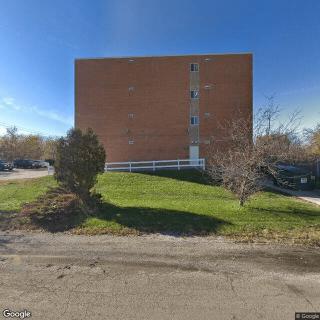
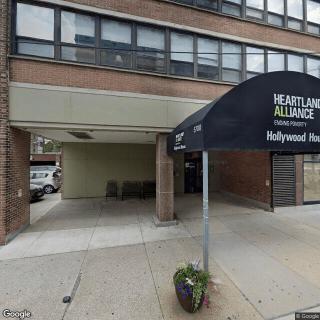
 Active Adult Communities (55+)
 Chicago Midway (10 miles away)
 Strong nearby access to healthcare, dining options, transportation, worship sites, and hospitals.




 Exploring the World of Home Health Nurses: Qualifications, Roles, and Hiring Tips
 Navigating Medicare Coverage for In-Home Care Services
 In-Home Care Costs in 2025: A Detailed State-by-State Exploration