Check-in procedures are sometimes smooth, but navigation and signage can confuse visitors.
Multiple reviewers mention streamlined check-in options like a kiosk and electronic COVID precheck that make visits faster. A couple of visits also describe better organization at signing in and signing out for health and safety. One reviewer, however, says the entrance directions were confusing because the posted signage suggested a different driveway than the main entrance.
common4 reviews mention this
The day program supports families
Residents and families point to the day program as a key part of life here.
Reviewers describe recurring structure through scheduled day program participation, including monthly visits and social time in shared spaces like a rec room. Families also credit day staff with hosting meaningful moments, including a birthday celebration. One reviewer notes how a shared activity interest helped motivate a loved one to engage, with staff shaping the day around individual preferences.
differentiator2 reviews mention this
Care transitions are handled as a team
Families describe a coordinated approach when transitioning into care.
Residents and families mention that staff worked with clinicians and case managers during an intake and transition period, including assessment from medical, physical, mental, and social angles. Another reviewer also says the office and care team helped make the move feel easier and more comfortable for their family member.
common8 reviews mention this
Clean, cared-for spaces stand out
Clean facilities and organized spaces are repeatedly mentioned across visits.
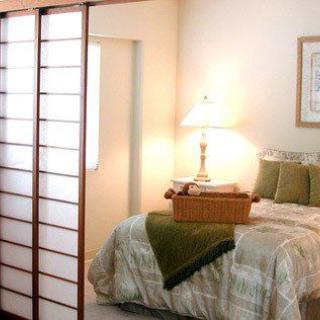
Several reviewers say the building and rooms are clean, including comments about rooms being tidy and the overall environment well kept. Others add that the facility is organized, bright, and welcoming, and some specifically pair cleanliness with positive atmosphere like cheerful surroundings. A few also mention that staff help keep visitors comfortable, reinforcing the sense of order inside the community.
How we summarize
Counts show how many written reviews mention each theme; a review can touch several themes, and only frequently mentioned themes are displayed.
Features
Housing
5 resident community capacity
Types of Care
Assisted Living
Amenities
Cable or satellite TV
Dining room
Fully furnished
Garden
Housekeeping services
Move-in coordination
Outdoor space
Telephone
Wi-Fi/high-speed internet available
Transportation
Honolulu International (3 miles away)
Care Services
24-hour supervision
Activities of daily living assistance
Assistance with bathing
Assistance with dressing
Assistance with transfers
Coordination with health care providers
Diabetes diet
Meal preparation and service
Medication management
Special dietary restrictions
Transportation arrangement (medical)
Transportation to doctors appointments
Dining
Diabetes diet
Special dietary restrictions
Activities
Community-sponsored activities
Scheduled daily activities
Nearby Places of Interest
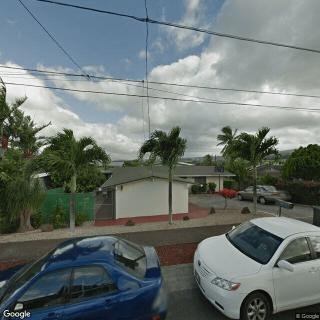
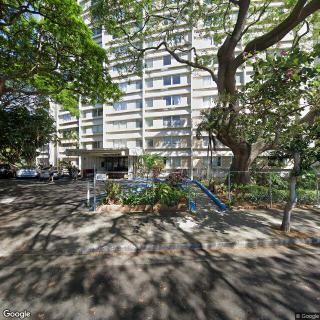
This part of Honolulu, Hawaii, offers a convenient and diverse range of amenities for senior living. With multiple cafes, restaurants, pharmacies, places of worship, parks, physicians' offices, hospitals, and even a theater nearby, residents have access to everything they may need within a short distance. The area is well-connected with transportation options such as rental car services and the international airport nearby. Additionally, there are various healthcare facilities in the vicinity, ensuring easy access to medical care. Overall, this neighborhood provides a comfortable and well-equipped environment for seniors looking to reside in Honolulu.
Cafes
Starbucks (0.6 miles)
Starbucks (1.1 miles)
Starbucks (2 miles)
The Coffee Bean and Tea Leaf (3.7 miles)
The Bishop Museum Café by Highway Inn (3.9 miles)
Restaurants
McDonald's (0.6 miles)
Ani's Bake Shop (0.7 miles)
Restaurant 604 (1 miles)
McDonald's (1.4 miles)
McDonald's (2 miles)
Anna Miller's Restaurant (2.1 miles)
Wendy's (2.3 miles)
Pharmacies
Longs Drugs (0.9 miles)
Times Supermarkets (1.1 miles)
Zee Medical Service (1.3 miles)
Longs Drugs (1.4 miles)
CVS Pharmacy (1.4 miles)
Good Neighbor Pharmacy (1.6 miles)
Longs Drugs (1.8 miles)
Places of Worship
Community Lutheran Church Wels (0.9 miles)
St Philomena Church (1.4 miles)
Izumo Taishakyo Mission of Hawaii (5.2 miles)
Parks
Salt Lake District Park (1.1 miles)
Neal S. Blaisdell Park (2.7 miles)
Manana Neighborhood Park (4.3 miles)
Manana District Park (4.3 miles)
Physicians
Aloha Vision Consultants (1.2 miles)
Women's Health Clinic - VA Honolulu (1.5 miles)
Pali Momi Neurology Clinic (1.7 miles)
Melanie M Lau MD - Lau & Shigezawa MDS (1.9 miles)
Community Living Center (Formerlly Center for Aging) (2.1 miles)
McKoy, James Dr-Kaiser Mapunapuna Clinic (2.2 miles)
Randall Nitta, MD (2.6 miles)
Hospitals
Kaiser Permanente Hospital (1.4 miles)
Kaiser Permanente Moanalua Medical Center (1.4 miles)
Assisted living provides moderate support for seniors seeking independence, while memory care offers specialized support for individuals with dementia or cognitive impairments through structured routines and trained staff. Key differences include care approaches, environment security measures, staff training levels, activity types, and cost considerations.
Assisted living communities offer diverse activities beyond traditional games to enhance seniors' physical health, cognitive well-being, emotional enrichment, and social connections, including fitness classes, creative expression, and intergenerational interactions. These enriching programs foster community bonds and support residents' independence and happiness.
The article differentiates between assisted living and memory care, explaining that assisted living supports seniors with daily activities while promoting independence, whereas memory care provides specialized services for individuals with dementia, focusing on secure environments and cognitive support. It also addresses staff training, safety considerations, costs, family involvement, and transition strategies for families navigating these care options.
Get PricingAsk A QuestionSchedule A TourContact Senior Advisor
By clicking submit, you agree to our Partner's Terms of Use. You
also consent to receive calls and texts, which may be autodialed, from our Partner. Your consent is not a condition to
using our Partner's service. Please visit our Partner's Privacy Policy for information about their privacy practices.

 5 resident community capacity
 Assisted Living
 Cable or satellite TV
 Dining room
 Fully furnished
 Garden
 Housekeeping services
 Move-in coordination
 Outdoor space
 Telephone
 Wi-Fi/high-speed internet available
 Honolulu International (3 miles away)
 24-hour supervision
 Activities of daily living assistance
 Assistance with bathing
 Assistance with dressing
 Assistance with transfers
 Diabetes diet
 Meal preparation and service
 Medication management
 Special dietary restrictions
 Transportation arrangement (medical)
 Transportation to doctors appointments
 Small, intimate setting with personalized care and comprehensive services.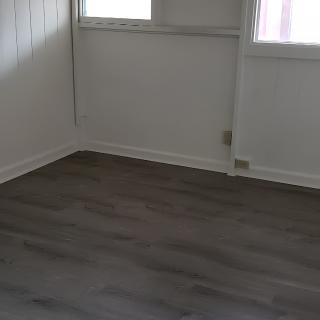
 Assisted Living and Memory Care: Understanding Their Core Differences
 Beyond the Bingo Hall: 50+ Enriching Activities for Seniors in Assisted Living
 Understanding the Distinctions: Assisted Living and Memory Care Explained