

4171 Marietta St Suite 300B, Powder Springs, GA 30127
To contact a resident: (678) 504-5686
For more information about senior living options: (866) 208-4318
Allwell Healthcare of Georgia Costs & Pricing
Allwell Healthcare of Georgia offers competitive pricing for semi-private rooms, with a monthly cost of $3,000. This rate is slightly below the average for Paulding County, where costs reach approximately $3,162 monthly. In contrast, the overall average for such accommodations across the state of Georgia stands at a more affordable $2,529. These figures highlight that while Allwell's pricing is favorable compared to local county rates, it remains higher than the broader state average, which may reflect variations in services offered or facility quality. Overall, Allwell seems to present a balanced option for those seeking care within this region.
| Floor plans | Allwell Healthcare of Georgia | Paulding County | Georgia |
|---|---|---|---|
| Semi-Private | $3,000 | $3,162 | $2,529 |
Senior living communities with a similar price nearby
-
from -$500 / mo

Serenity Living Personal Care Home
$2,500 to $4,050 / month6.6 miles away -
from -$500 / mo
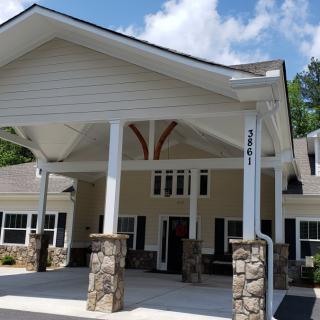
Green Park at Kennesaw
$2,500 to $5,500 / month13.2 miles away -
from -$500 / mo
Love Touch Personal Care Home
$2,500 / month20.1 miles away -
from -$500 / mo

Fite Living Center
$2,500 / month22.4 miles away -
from -$500 / mo

Grace Living Personal Care Home Of Marietta
$2,500 to $3,500 / month13.5 miles away
Overall Review of Allwell Healthcare of Georgia
Cons
 Prescriptions are more expensive even after meeting the deductible.
- They have to decide which medications to skip due to cost.
- The plan doesn't provide the specialty nurse they need.
- The referral company skips therapy and the patient only attends once a week.
- The service is terrible.
- The dental office gave the patient the wrong doctor to replace five missing teeth.
- The patient is very stressed and plans to leave the plan as soon as possible.
Review
This community is best suited for seniors who want straightforward medical coverage and a plan that does not depend on complex care coordination for specialists. It works best for those who can tolerate gaps in ancillary services and who are not counting on a strong, in-house therapy program or guaranteed specialty nursing. In short, it serves healthier, lower-need patients who are comfortable managing fluctuating out-of-pocket costs and who won’t rely on a single plan to deliver seamless rehab, dental coordination, or rapid specialist access.
From the experience captured in the review, the biggest red flags are about medications and care delivery. Prescriptions run higher even after meeting the deductible, leaving residents deciding which drugs to skip or skimp on. There is no access to a specialty nurse who can navigate complex medication regimens or coordinate high-need care. Therapy is outsourced to a company that shows up irregularly, and in this case therapy visits were limited to once per week, undermining rehabilitation goals. The dental referral went off course, an incorrect doctor was provided for multiple missing teeth, and the associated dental office reportedly functions as a surgery-only facility, compounding stress and delays.
Those failures in care coordination are not cosmetic gaps; they directly erode quality of life for residents who depend on reliable therapies and careful medication management. The lack of a dependable specialty nurse means higher fragility for those with chronic conditions. The inconsistent therapy schedule translates to stalled progress and can trigger fear about overall safety and independence. The dental misstep compounds frustration and expense, confirming that the system may not be ready to handle more than basic needs. In short, the friction between expectations and delivery is painful and persistent, overshadowing any possible convenience the plan might offer.
Families weighing alternatives should look for options with strong care coordination, secure access to a specialty nurse when needed, and a reliably scheduled PT/OT program. A plan or provider with integrated dental referrals and in-network specialists who actually see patients on the promised cadence is essential for ongoing autonomy. Check pricing transparency and whether high-drug-cost scenarios can be mitigated by formulary design, tiered copays, or pharmacy support. If any of these elements are missing, it’s a sign to compare other communities or plans that promise tighter integration and real accountability.
Before deciding, request a detailed cost projection for medications, including what is deductible and what remains after, plus a plan-specific explanation of how therapy and nursing services are arranged, whether through in-house teams or preferred vendors. Ask for a case manager or care coordinator who can be reachable and responsive, and confirm that dental referrals match recognized providers with licensed dentists. Verify how errors are handled and what the escalation process looks like. These steps help separate a provider’s paperwork from lived experience and prevent painful surprises.
Overall, this particular option shows serious risk for anyone who must rely on steady medication support, reliable PT/OT, or consistent dental access. If care coordination, predictable therapy scheduling, and dental integration matter, alternatives should be pursued aggressively. For those who can tolerate a leaner support structure and are prepared to monitor costs closely, a careful review of current benefits and provider networks may still be warranted, but the default recommendation is to explore other communities or plans first and bring back concrete, verifiable improvements before committing.
 William B Hartsfield-Atlanta International (21 miles away)
 Memory-care focus with 24/7 supervision and tailored programming.





 Urinary Tract Infections in Older Adults: Comprehensive Insights on Symptoms, Treatment, and Prevention
 California's Form 602A: An In-Depth Examination of Senior Care Assessment
 Comprehensive Look at Senior Blood Pressure Charts: Normal and Elevated Levels by Age