
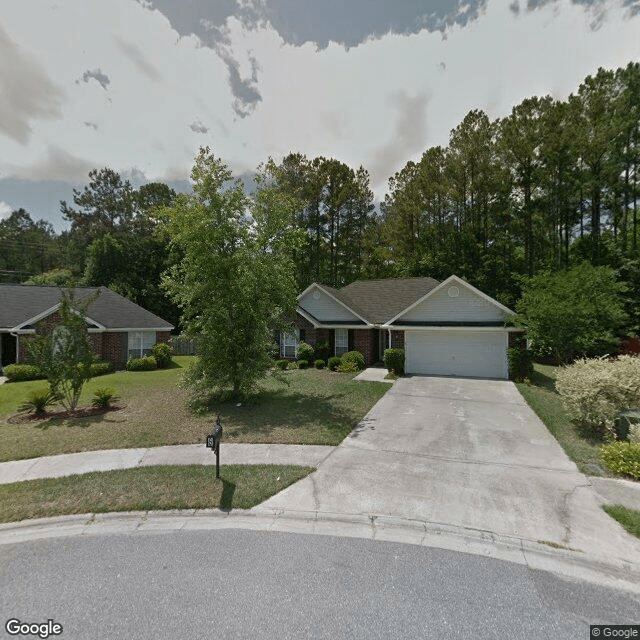
6 Nantucket Court, Pooler, GA 31322
To contact a resident: (912) 920-5701
For more information about senior living options: (866) 208-4318
Overall Review of Open & Loving Arms Personal Care Home LLC
Pros
 Open Arms & Loving Hands is described as highly professional and extremely informative for those new to caregiving.
- The management is praised for honesty and integrity.
- The services are recommended by families, with clients ready to endorse them.
- Referrals from friends reflect trust and satisfaction with Open Arms & Loving Hands.
- The family felt confident using Open Arms & Loving Hands during dementia care, with zero regrets.
Review
Open & Loving Arms Personal Care Home LLC in Pooler, GA is best suited for families that want a small, hands-on, caregiver-focused setting where memory-care needs are present and a transparent, supportive management team guides the process. The model favors personal attention over institutional scale, making it a strong choice when a loved one with dementia benefits from consistent staff interaction, clear communication, and a straight-forward approach to caregiving. In short, this community targets families seeking honesty, reliability, and practical guidance as they navigate the realities of transitioning a parent into assisted living.
Those weighing alternatives should consider options with broader medical support or larger campuses. If a resident requires intensive skilled nursing, complex medical supervision, or a wide array of on-site therapies and structured memory-care programs, a bigger facility may deliver the density of services and the pharmacologic oversight that a small home cannot guarantee. Families prioritizing extensive social programming, enhanced rehabilitative services, or a campus atmosphere with more amenities could find more value elsewhere. A careful comparison of care levels, staffing patterns, and reimbursement structures will reveal where this option stands relative to the field.
From the available feedback, the strongest pros center on professionalism, caregiver-facing communications, and the integrity of management. The account describes a setting where staff conduct and administrative transparency reduce anxiety for families first learning the rhythms of dementia care. The management team’s honesty and integrity appear to create a foundation of trust, enabling families to participate meaningfully in care decisions without second-guessing directions or billing. These strengths translate into practical advantages, less guesswork, quicker access to answers, and a clear, accountable line of communication when concerns arise.
The lack of explicit drawbacks in the lone review does not mean risks vanish; it simply signals that the positive attributes are prominent enough to overshadow potential downsides in this snapshot. For a small home, the natural questions revolve around whether the scope of services aligns with evolving medical needs and whether staffing levels keep pace with resident requirements at all hours. Prospective families should probe these dimensions: what daily care routines look like, how memory-care strategies are implemented, how emergencies are handled, and how the facility coordinates with external health professionals. Understanding these elements helps determine if the apparent strengths persist under changing conditions.
Practical decision-making guidance follows a clear path. Initiate contact with a direct conversation about the home’s care philosophy, dementia-management approach, and incident-handling protocols. Schedule a guided tour to observe interactions between caregivers and residents, noting warmth, responsiveness, and safety practices. Inquire about daily routines, nutritional oversight, activity options, and how families stay involved in planning and reviews. Compare the all-in cost, what services are included, and any add-on charges, ensuring a transparent trajectory from admission through ongoing care. For families prioritizing trustworthy leadership, straightforward communication, and a nurturing small-community environment, Open & Loving Arms stands out as a compelling option; for those who require a broader medical footprint, exploring other communities is a prudent step.
Bottom line: this community serves a distinct niche well, families seeking a trustworthy, personally engaged setting for memory-care needs in a small, home-like environment. It is less likely to satisfy those who demand heavy medical oversight, a wide array of on-site therapies, or a large, activity-rich campus. With the single-positive-review backdrop, the core strengths, professionalism, caregiver-oriented communication, and principled management, are genuine and consequential. Prospective residents should verify current staffing realities, care protocols, and pricing to confirm alignment with ongoing needs, but the evidence points toward a practical, confident choice for the right family.
 Board and Care Home
 Savannah International (6 miles away)


 Understanding the Nuances of Palliative Care and Hospice: A Comprehensive Exploration
 Fecal Incontinence in Older Adults: A Comprehensive Guide
 Nurturing Well-Being Through Gardening: A Detailed Guide for Senior Enthusiasts